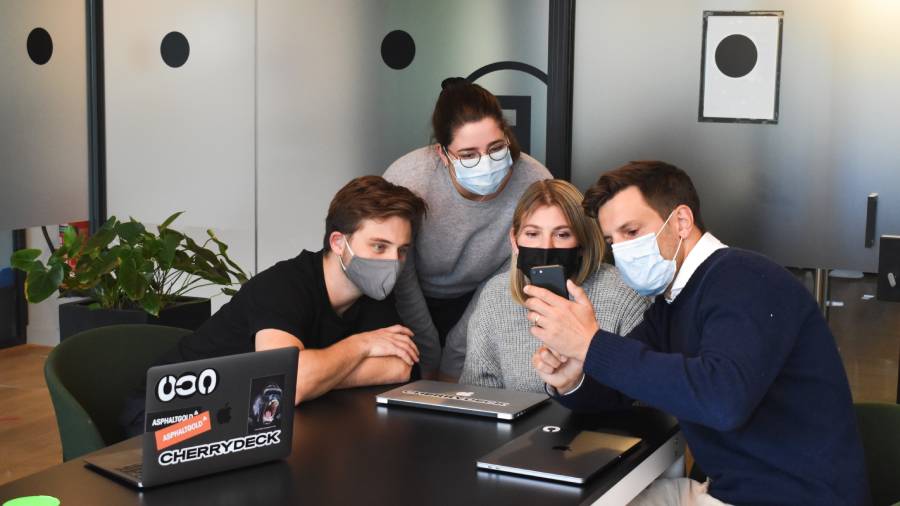
New research has found that hybrid working is set to stay, and employers are unlikely to demand COVID vaccinations from their workforce.
A survey by Willis Towers Watson shows that just three in ten employers are expecting their whole workforce back in the office within two years’ time.
However, as offices begin to fill up once more, employers seem unlikely to force employees to get a COVID-19 vaccine.
The survey found that as little as one in five employers had encouraged staff to get vaccinated via communication campaigns.

Many employers may look to increase their advocacy for the vaccine, with 18 per cent considering a communication campaign to encourage vaccine uptake.
At present, nearly two thirds (60 per cent) said they were not planning to use incentives for vaccination, and just one in seven were offering people rewards for vaccination at present, such as cash offerings or time off.
No organisation surveyed had demanded that staff be vaccinated before returning to the office, and only 12 per cent said they were considering doing so.
Many employees have indicated a desire to return to the office, and over four in five (85 per cent) of businesses anticipated that those employees who would like to return to the workplace will have done so by the end of this year.
However, the pandemic has had a seismic effect on the way people work, and as such, the return to the office will not represent a return to old ways of working.
Employers have estimated that around one in four (23 per cent) of the workforce will work remotely on a full-time basis in two years’ time.
Hybrid working is set to be the most favourable option for many employees, with nearly half (41 per cent) ready to embrace it as their future working method.
Lucie McGrath, director of health and benefits GB at Willis Towers Watson, commented:
We’ve all weathered a huge amount of change over the last two years. Employers should think carefully about how to support their employees’ mental health as we adjust to the new working world.

Megan McElroy is a second year English Literature student at the University of Warwick. As Editorial Intern for HRreview, her interests include employment law and public policy. In relation to her degree, her favourite areas of study include Small Press Publishing and political poetry.
- Megan McElroy

- Megan McElroy
- Megan McElroy
- Megan McElroy