


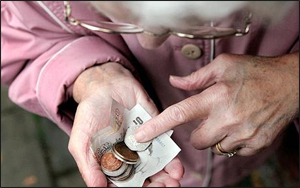
Only a third (33 per cent) have made provision for their dependents after they die by taking out life insurance, with 48 per cent never planning to
New research by price comparison website, MoneySuperMarket, reveals many people in the UK haven’t even started thinking about saving for when they stop working. Most have no idea how much they need to save to live a comfortable life in the future and worryingly, nearly half are not considering buying life insurance to protect their dependants from debt and provide for their financial needs.
Using consumer research based on 1000 respondents, MoneySuperMarket has built an interactive tool that people can use to see how prepared they are compared to their demographic, with results tailored by the user’s age and gender.

Pension Pains
The average Brit needs £370,000 to retire, based on £26,000 a year to live off. However, the survey results revealed some shock findings:
- Nearly half (48%) of respondents have no idea how much is in their pension pot
- Over a quarter (26%) of respondents don’t have a pension.
- On average, respondents estimated they needed £200,915 for their retirement – a 46% underestimation.
- 67% of respondents do not have life insurance, and only 18% of these plan on purchasing it in the future.
Pension Pains – By Gender
There is a pension gender gap in the UK, with women found to both be less likely than men to have a pension, and also have a more unclear understanding of how much their pension was actually valued at.
- Women are less likely to have a pension than men (29% vs 21%).
- Women are also less likely to know how much they have in their pension pot (19% vs 32%).
- On average, women have £1500 less savings than men.
Pension Pains – By Age Group
At what age did you start considering saving for retirement – or preparing for the rest of your life? Whilst milennials were shown to be the least knowledgeable, there was also found to be a high lack of knowledge across all age groups.
- Milennials (18 to 34 year olds) underestimate the amount they need for retirement by 58%
- 39% of 18 to 24 year olds are predominantly saving for a house, and only 1% are predominantly saving for retirement.
- Even over 55s underestimated the amount the need for retirement by over £145,000.
- 51% of 45 to 54 year olds have no idea how much they currently have in their pension pot.
- 66% of over 55s do not have life insurance.
The study also identifies key regional differences with regard to savings and preparation for life after work.
Despite the high cost of living, Londoners are the biggest savers, with £14,611 saved on average. This is 55% more than those from the West Midlands, who have saved the least on average, despite being most aware of their pension pot amount. Only 35% of East Anglian respondents were aware of the actual amount in their pension pot.
Scottish and Northern Irish respondents are the most prepared for their futures, with the majority (50% of Northern Irish and 55% of Scottish) of respondents revealing that they have life insurance. Overall, respondents from the North (51%) of the UK underestimate the recommended pension pot amount by nearly 10 per cent more than those from the South (42%).
Kevin Pratt, consumer affairs expert at MoneySuperMarket, commented:
“Brits face all sorts of calls on their money and it’s easy to see why the cost of everyday living can trump longer-term objectives such as saving for retirement – especially if you’re not fully aware of how much you’ll need in retirement. But anyone who can get into the savings habit gives themselves a better chance of building up the sort of pension kitty that’s needed to fund a comfortable lifestyle once they stop work.
“Anyone who has dependents should make life insurance an absolute priority, as the financial consequences of an early death can be catastrophic. Policies can be set up to pay off a mortgage and other debt, and also to provide money to meet the day-to-day financial needs of those left behind if the policyholder dies. As a result, it’s important that people take the time to look for a policy that’s best suited for their needs.”

Rebecca joined the HRreview editorial team in January 2016. After graduating from the University of Sheffield Hallam in 2013 with a BA in English Literature, Rebecca has spent five years working in print and online journalism in Manchester and London. In the past she has been part of the editorial teams at Sleeper and Dezeen and has founded her own arts collective.
- Rebecca Clarke

- Rebecca Clarke
- Rebecca Clarke

- Rebecca Clarke








