

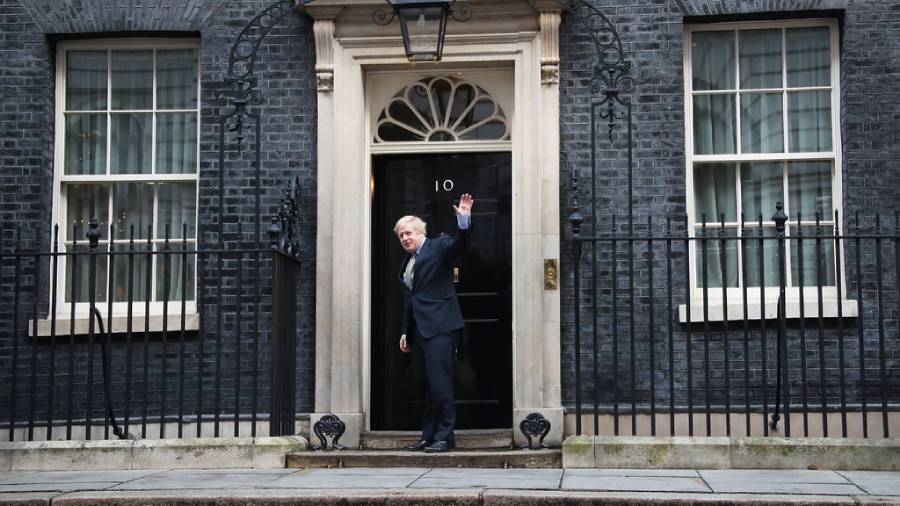
Prime Minister Boris Johnson has unveiled a roadmap for lifting lockdown restrictions, with all current restrictions to be lifted by 21st June at earliest.
The Government has announced a roadmap which outlines the various stages at which COVID-19 restrictions currently in place will be lifted.
Taking a phased approach where measures are lifted gradually, the pace of this roadmap will depend on various factors such as the vaccine rollout occurring as planned and the infection rate keeping at a level that does not risk a surge in hospital admissions.
Although there has been no mention yet of whether the Coronavirus Job Retention Scheme will be extended, Chancellor Rishi Sunak is expected to announce the future of job support schemes in the Budget which occurs on the 3rd March.

However, the Prime Minister has pledged that he will not “pull the rug out” for workers who are relying on these schemes and further stated that “for the duration of the pandemic the government will continue to do whatever it takes to protect jobs and livelihoods”.
8th March
- All schools and colleges are set to re-open.
- Wraparound childcare, childcare that schools provide outside of normal school hours, such as breakfast clubs or after school childcare, will also return for vulnerable pupils and where it is needed for parents or carers to go to work.
29th March
- Outdoor sports facilities will open and the stay at home rule will come to an end.
- In addition, the “rule of six” will be instated which allows a group of this size to meet outside.
No earlier than 12th April – Stage 2 comes into effect
- All shops will be permitted to be opened including non-essential retail, restaurants, spas, hairdressers and beauty salons
No earlier than 17th May – Stage 3 comes into effect
- Museums, theatres, cinemas, hotels and sports stadiums will be allowed to be open. People will be allowed to meet in groups up to 30 outdoors or six people are allowed to meet indoors.
No earlier than 21st June – Stage 4 comes into effect
- All limits on social contact will be removed and nightclubs will be allowed to reopen.
Alan Price, CEO of BrightHR, reflected on how these measures could affect working from home guidelines:
What we can take from today’s news is that we now have much more of an idea when we can expect restrictions to be lifted over the coming months and that, crucially, at least one week’s notice will be provided to businesses if there are changes to the plan.
People will continue to be advised to shield until at least the end of March, meaning employers should consider their circumstance even if they have had a vaccine. Guidance on working from home is also set to remain the same for some time until at least April, although the government is to review whether this provision can be relaxed at a currently unspecified point.
Laura Jackson, Associate at specialist employment solicitors LexLeyton, analysed how school re-opening could ease childcare responsibilities for working parents :
The reopening of schools will come as a welcome move for parents, easing the burden on those who have had to juggle working from home with home schooling. It is also a huge bonus for employers, reducing the impact of childcare on their employees’ working patterns. While employers have generally been extremely accommodating with employees in terms of supporting childcare needs, we are likely to see a shift in how working parents manage their time, replacing home schooling with school runs. Employers should take this opportunity to proactively reach out to employees to discuss how they can best accommodate these changes.
Some working parents who were furloughed for childcare reasons may be able to return to the workplace from the 8th of March. In these cases, it is crucial that employers carefully consider how best to integrate these returning employees into teams to ensure a smooth transition and avoid any resentment from employees who have not been furloughed.
Finally, Sabby Gill, CEO of Thomas International, outlined the further guidance that employers may need to ensure the transition to the new normal runs as smoothly as possible:
Making a success of hybrid working requires a culture of change. One that understands not all roles are the same as they once were. There must be tangible support for businesses from government and industry bodies in creating a hybrid workforce as restrictions are eased.
Now is the time to reassess talent – both internally and new hires – ask questions about team fit, and understand what really makes your culture tick. Only by gaining clarity on these things can British business successfully move to hybrid working and move forward with confidence.

Monica Sharma is an English Literature graduate from the University of Warwick. As Editor for HRreview, her particular interests in HR include issues concerning diversity, employment law and wellbeing in the workplace. Alongside this, she has written for student publications in both England and Canada. Monica has also presented her academic work concerning the relationship between legal systems, sexual harassment and racism at a university conference at the University of Western Ontario, Canada.
- Monica Sharma

- Monica Sharma

- Monica Sharma

- Monica Sharma





