

The Trades Union Congress (TUC) is urgently calling for new employment laws to protect workers’ rights.
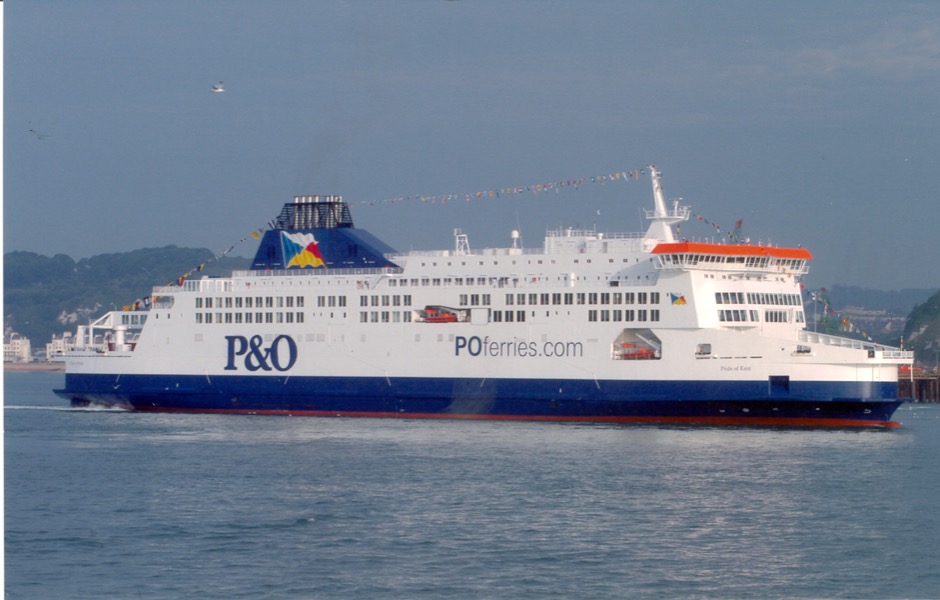
This follows the sacking of 800 P&O crew members with no notice by a pre-recorded Zoom message. Reports suggest they are planning to replace them with cheaper agency workers.
Employment Barrister at No5 Barristers’ Chambers, Alex Mellis, says that there “will no doubt be legal implications for P&O.”
The union has called the “scandalous treatment of P&O workers to be a turning point for worker’s rights in the UK.” Francis O’Grady, TUC General Secretary, calls on ministers to bring an employment bill to stop workers from “being treated like disposable labour”.

“This is a national scandal. It has to be a catalyst for change on workers’ rights,” he adds.
The TUC says that these events show that UK employment law urgently needs strengthening to penalise bad employers.
Putting an end to fire and rehire style practices
To protect worker’s rights, union suggests the law should state no notices of dismissal can be given until a consultation has been completed.
Also, they suggest the employment bill must end fire and rehire style practices, which P&O exploited to sack their employees at will. Research by TUC showed that 9 percent of workers have been forced to re-apply for their jobs on inferior terms of conditions.
The union also suggests increasing penalties on companies that break employment law. Additionally, they suggest banning other forms of exploitative practices, such as zero-hours contracts.
Breach of largescale redundancy laws
The P&O sackings could cost the company millions in compensation.
Solicitor at JMW Solicitors, Chris Deely, comments that P&O’s actions commit them to “flagrant breaches of employment law.”
Katie Maguire, Employment Partner at Devonshires, said: “P&O are potentially looking at compensation pay outs of several million pounds for unfair dismissal claims and for failure to collectively consult”.
This is because employers have a duty to collectively consult in largescale redundancy situations.
Legal Services Director at ESP Law, Nina Robinson, highlights that the “consultation must start ‘in good time’ and last a minimum period of 30 days in situations where between 20 and 99 employees are to be dismissed, or a period of 45 days where 100 or more employees are to be dismissed.”
“There are very limited exceptions whereby an employer can demonstrate that ‘special circumstances’ make consultation not reasonably practicable. This ‘special circumstances’ principle is narrowly interpreted by tribunals and applies only in exceptional cases.”
“Insolvency – or risk of insolvency – of the employer does not necessarily amount to special circumstances. Even if special circumstances do exist, the employer will not benefit from the exception unless they have conducted whatever level of consultation was ‘reasonably practicable’ under the circumstances.”
“Getting it wrong can prove costly. Not only will qualifying employees have grounds to claim unfair dismissal, but there is also a special ‘protective award’ of up to 90 days actual gross pay per affected employee.”
In response to the P&O scandal, there is an urgent need to reform employment law to protect workers’ rights in the UK.

Amelia Brand is the Editor for HRreview, and host of the HR in Review podcast series. With a Master’s degree in Legal and Political Theory, her particular interests within HR include employment law, DE&I, and wellbeing within the workplace. Prior to working with HRreview, Amelia was Sub-Editor of a magazine, and Editor of the Environmental Justice Project at University College London, writing and overseeing articles into UCL’s weekly newsletter. Her previous academic work has focused on philosophy, politics and law, with a special focus on how artificial intelligence will feature in the future.
- Amelia Brand

- Amelia Brand
- Amelia Brand
- Amelia Brand








