

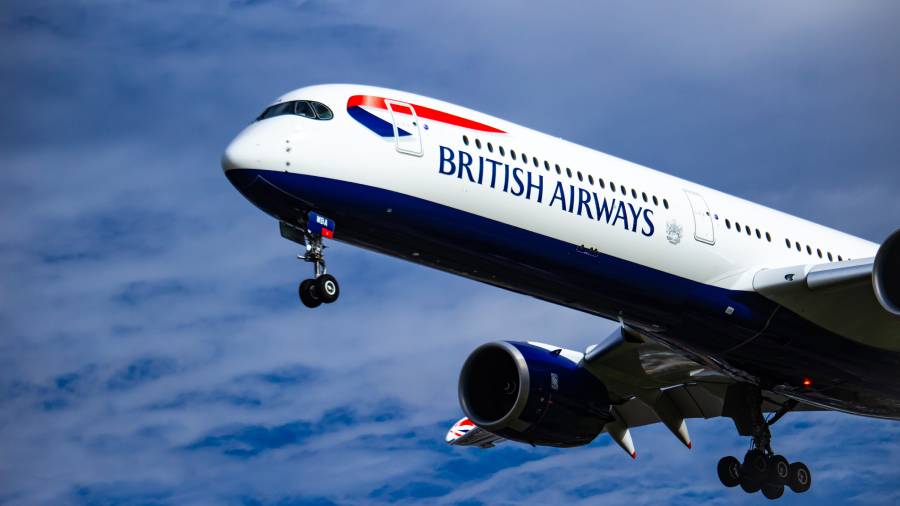
A senior flight attendant has been awarded £40,000 after an employment tribunal found she was discriminated against by her employer, British Airways CityFlyer.
An employment tribunal has found that British Airways CityFlyer carried out indirect sex discrimination after the airline failed to give a new mother part-time hours following the birth of her daughter.
Chloe Daly, an In-Flight Business Manager, fell pregnant in late 2016. Following a certain point in her pregnancy, Mrs. Daly was permitted to work from home part of the time and from the office, working normal hours.
Following the birth of her daughter in July 2017, Mrs. Daly was unable to find adequate childcare which would be flexible around the variable days she would have to work under her current shift pattern.

In light of this, Mrs. Daly put in a flexible working request.
This included an overall reduction of hours by 25 per cent and set days off during the week.
However, the claimant also proposed more flexible working on her side in order to accommodate the new schedule including working more weekends and summer holidays, if needed, as her husband was at home to take care of the baby on these days.
Mrs. Daly ultimately proposed a six month trial period “to see if it works for both the company and [herself]”.
However, this request was ultimately rejected in August 2017 with the respondent stating there was an inability to reorganise work amongst existing staff and that this move would have a detrimental impact on quality and performance, notably team morale.
The employment tribunal noted that the respondent “scarcely engaged with the detail of [Mrs. Daly’s proposals]”, failed to make enquiries of other In-Flight Business Managers (despite stating the detrimental impact on team morale in the rejection letter) and “gave no proper consideration to the question of how any adverse impact could be minimised”.
This decision did not surprise Mrs. Daly as, in her capacity as a manager, she herself had to apply the policy and noted their employer “was overall very resistant to granting flexibility”.
As such, the majority of cabin crew who took maternity leave either left immediately after the end of their leave, or shortly after returning on a full-time basis.
On their side, BA CityFlyer failed to show any evidence that showed the company had granted flexible working by reason of childcare responsibilities.
Additionally, it could not say whether there had been any occasions when crew were allowed to return to work part-time after coming back from maternity leave.
Although trying to appeal against this decision, Mrs. Daly ultimately resigned in May 2018, primarily due to the flexible working request being denied.
Ultimately, Employment Judge Massarella concluded that the claim of indirect sex discrimination did succeed.
The Tribunal found that the Respondent was open to flexible working requests when they arose out of medical circumstances, but resistant when they arose by reason of childcare responsibilities.
This amounted to indirect sex discrimination as the tribunal noted “part-time working, and a more predictable working pattern, are often of particular benefit to women” and “primary childcare responsibility still falls disproportionately on women”.
As such, the Tribunal awarded Mrs. Daly £38,741,55 in compensation for unlawful discrimination.

Monica Sharma is an English Literature graduate from the University of Warwick. As Editor for HRreview, her particular interests in HR include issues concerning diversity, employment law and wellbeing in the workplace. Alongside this, she has written for student publications in both England and Canada. Monica has also presented her academic work concerning the relationship between legal systems, sexual harassment and racism at a university conference at the University of Western Ontario, Canada.
- Monica Sharma

- Monica Sharma
- Monica Sharma
- Monica Sharma








