


Workplaces are suffering from persistent presenteeism as up to 28 million[1] employees may be coming into work when ill
Presenteeism remains a pervasive problem in UK office culture, as nearly half (47 per cent) of employees surveyed reveal they didn’t take a sick day in 2017 according to new research from Canada Life Group Insurance.
While there has been a small decrease in the number of employees not taking a sick day from 2016 (54 per cent), the tendency to come into the workplace when suffering from a minor illness persists, as nine in ten (88 per cent) admit they go into the office.

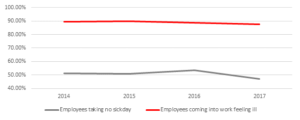
Figure 1: Percentage of employees taking sick days and percentage of employees coming into work when unwell
The reasons why employees were reluctant to stay at home when ill varied. Over half (53 per cent) stated that even though they were unwell they felt it did not warrant a day off. A quarter (25 per cent) said their workload was too great for them to take time off and one in ten (9 per cent) admitted they didn’t feel secure enough in their role to take a sick day.
For those concerned about how their colleagues would perceive them, one in five (19 per cent) believe they would be viewed as weak, 17 per cent believe they would be perceived as lazy and 15 per cent believe they would be viewed as inconsiderate. However, positive perceptions were also popular with 17 per cent of workers believing they would be viewed as sensible or genuine and 15 per cent as honest.
| How do you feel you would be perceived by others if you were to take time off for a short-term illness? | per cent of employees |
| Weak | 19 per cent |
| Sensible | 17 per cent |
| Genuine | 17 per cent |
| Lazy | 17 per cent |
| Honest | 15 per cent |
| Inconsiderate | 15 per cent |
| Practical | 14 per cent |
| Undedicated | 14 per cent |
| Considerate | 13 per cent |
| Dishonest | 7 per cent |
Figure 2: Top 10 perceptions people think their colleagues would view them as if they take time off
Number of sick days rises as presenteeism takes its toll
For employees who took time off when unwell, the average number of days taken rose in 2017, from 2.8 to 4.4.
The majority of those who took time off for illness in 2017 were out of the office for between one and five days. Overall, the number who took this amount of time off remained fairly static, at 30 per cent in 2016 and 28 per cent in 2017. However, around one in twelve (8 per cent) took between 11 and 20 sick days in total – the highest proportion since 2015.
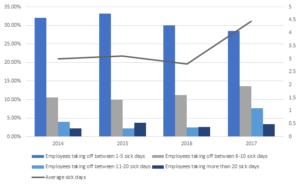
Figure 3: Average sick days taken 2014-2017
Employees want help to take preventative measures
Employees say their wellbeing would improve with flexible working, a positive attitude towards the issue and increased workplace support. Three in ten (28 per cent) say flexible working options would help with both their physical and mental health and this was particularly popular amongst women, with one third (33 per cent) agreeing.
A similar number of workers (27 per cent) also said a more positive workplace attitude towards health and wellbeing would help, while a fifth (19 per cent) said better workplace support (for example, Employee Assistance Programmes) would be beneficial.
Paul Avis, Marketing Director at Canada Life Group Insurance, comments:
“Presenteeism is a vicious cycle; the drive to remain in the office can cause illness to spread or end up leading to a longer recovery time. It is encouraging to see that many employees view those taking time off for illness in a positive way, being described as genuine, honest and sensible. To reduce presenteeism, these positive perceptions must be encouraged so workplaces can reduce any stigma attached to taking time off.
“Failing to take a sick day can have a significant impact on business performance as employees fail to recuperate properly. As well as changing perceptions, employers can offer much more to support staff when they are unwell.
“Early Intervention Services are available alongside Group Income Protection products and include proactive absence management interventions to facilitate a return to work when employees are fit and able to do so. Employee Assistance Programmes are also provided at no extra cost and provide daily practical support as well as communicating an employer’s commitment to their staff’s health and wellbeing.”

Rebecca joined the HRreview editorial team in January 2016. After graduating from the University of Sheffield Hallam in 2013 with a BA in English Literature, Rebecca has spent five years working in print and online journalism in Manchester and London. In the past she has been part of the editorial teams at Sleeper and Dezeen and has founded her own arts collective.
- Rebecca Clarke

- Rebecca Clarke
- Rebecca Clarke

- Rebecca Clarke







