


People are starting to wake up to the damage humans are inflicting on the planet. Growing demands to act are being vocalised through the global Climate Strikes started by Greta Thunberg and the campaigns of Extinction Rebellion. In response, the government has announced we are facing a Climate Emergency and many local authorities are doing the same.
All this might seem far removed from the daily pressures faced by HR Managers but increasingly global environmental impacts are starting to collide with the expectations and daily lives of employees.
One of the most immediate indications that environmental damage is impacting on individual well-being is in the quality of air we breathe. Scientific understanding of the health impacts of poor air quality is growing. A report earlier this year estimated that there are as many as 8.8 million deaths globally per annum attributable to poor air quality, a number exceeding those killed by smoking.

Poor air quality can affect all organs of the body across the course of a lifetime. Recent revelations include links to reduced cognitive abilities, diabetes and the first direct evidence of pollution particles in mother’s placentas. Given that the average British worker spends nearly 85,000 hours at work in their lifetime, and more than 14,000 hours getting there and back it is clear that businesses have a significant role to play in addressing this public health crisis.
Despite this growing body of evidence, recent polling from the environment charity Hubbub suggests that businesses are slow to act. The polling revealed that nine in ten UK employees are in the dark as to whether their employer has policies to protect them from poor air quality both on the commute and in work. 60 per cent believe their employer has no policy, 20 per cent didn’t know and less than 10% receive regular communication on the issues.
This indicates that there is a gaping hole in many corporate well-being programmes. The polling revealed this is a cause for concern amongst employees with more than two thirds of those surveyed believing that their employer should take responsibility to ensure the air they are breathing in the workplace is safe.
There is plenty of scope for HR policies to make a significant and positive impact on employee well-being. Earlier this year Hubbub teamed up with Kings College London to put highly sophisticated air quality monitors on 13 Londoner’s tracking their daily exposure to poor air quality. The headline findings were that:
- Some of the highest readings of poor air quality were recorded by a lorry driver. It is a common misconception that cyclists and pedestrians are likely to face the poorest air quality, but this result indicates that is not the case.
- Taking a less busy route whilst walking or cycling makes a significant difference. Back-street routes reduced exposure to poor air quality by up to a factor of 10.
- Air quality on the tube is poor. The deeper the tube the poorer the air quality.
- Poor air quality is very localised. Taking routes which have less traffic or travelling at different times of the day make a significant difference to personal exposure rates.
- Modern office buildings with efficient filter systems tend to have good air quality. In leakier buildings the situation is very different.
These results indicate the scope of options for HR managers to build policies into their well-being programmes that will reduce exposure to poor air quality. These could include flexible working, sharing information about local clean air routes and incentivising active travel.
Building air pollution policies into company well-being programmes would not only help enhance the health of employees, but the polling suggests it would help recruitment and retention. When job-hunting, nearly two thirds (64 per cent) of workers would find a potential employer attractive if they had an air pollution policy in place.
When asked what their own boss could do to help them reduce their exposure to air pollution, the most popular ideas were: installing air purifiers in the workplace (47 per cent), allowing flexible working or home working (42 per cent) and cash incentives to encourage people to cycle, walk or take public transport to work instead of driving (40 per cent). One in five workers would consider grouping online shopping deliveries with colleagues to avoid lots of polluting vans delivering individual parcels to their office.
Hubbub is now working with a small group of businesses to explore how to build concerns around air quality into their well-being programmes. One of these pioneer businesses is Grosvenor Britain and Ireland, who is the first private sector organisation to join the London Air Quality Network enabling them to track progress in reducing air pollution exposure on street for workers, residents and visitors.

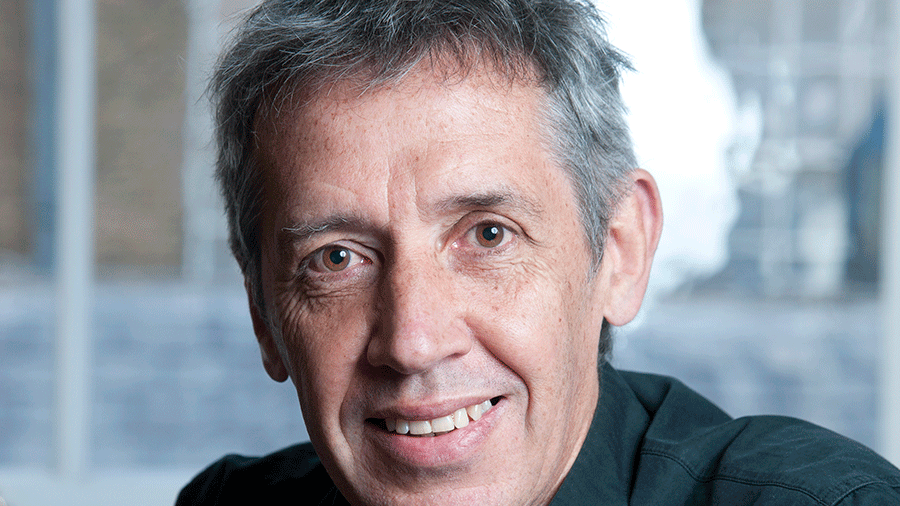
Trewin Restorick is Founder and CEO of the award-winning charity Hubbub UK which transforms the way environmental messages are communicated by bringing people and organisations together as a force for good.
Previously Trewin created Global Action Plan the UK’s leading environmental behaviour change charity. Trewin is a frequent media commentator on environmental issues and was trained by Al Gore as one of his climate change ambassadors. He has Chaired Student Hubs and been a trustee for the New Economics Foundation
Before starting Global Action Plan, Trewin was Director of Fundraising at Friends of the Earth where he created PaperRound London’s leading community recycling business. Prior to Friends of the Earth, Trewin worked at Plymouth City Council and produced a youth TV programme for the BBC called Something Else.




