

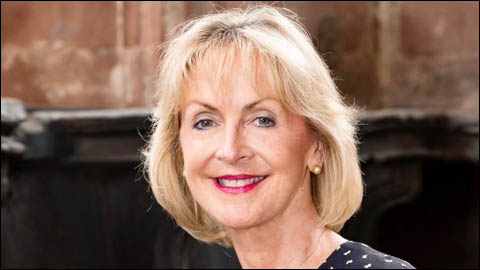
Lady Cobham, CBE, Director General of The 5% Club, discusses how businesses can build a diverse workforce, from employing ex-offenders and care leavers to attracting individuals who are neurodiverse.
The proverb, ‘from little acorns mighty oaks do grow’ reminds us that big things can come from small beginnings.
Recently, The 5% Club welcomed over 80 members (largely from HR teams) to the Heathrow Skills and Employment Academy for our Diversity and Inclusion conference. Every quarter, we run a bespoke event for members, and this quarter, the focus was on how we can ‘break the deadlock’ to bring about a more diverse and inclusive uptake of ‘earn and learn’ placements – and quickly.
The week before, our 300th member, Amey, signed our charter and set out their aspiration to reach 5% of their workforce in ‘earn and learn’ employment. In November, it will be five years since our inception, starting out with five founder members. It is hard to express how proud I am to be part of The 5% Club and the scale of its growth, enabling us to reach an incredible tally of 300 like-minded members, from across many sectors, all of whom are committed to offering as many ‘earn and learn’ opportunities as possible.

A complex and multifaceted issue
Importantly, we are coming together with our members, to lead the conversation on the issue of diversity and inclusion. It is a complex and multifaceted issue; to grasp this, one need only look at the variety of sectors and industries that were represented at The 5% Club Diversity and Inclusion conference. From construction to cyber security, all sectors need to look at how to diversify their workforce in order to benefit from the variety of skills that an inclusive workforce brings. We know from McKinsey, that businesses with a diverse workforce perform better financially than those without.
The issues of gender equality and BAME representation have been well-publicised, rightly, with the gender wage gap coming under increasing widespread scrutiny.
There are also other aspects of diversity in the modern world that we should consider and that are not so widely covered or talked about. At The 5% Club conference, I was fascinated to hear from a number of members who are leading the field in diversity by developing specific strategies to include ex-offenders, care leavers and people who are neurodiverse, to apply for ‘earn and learn’ opportunities:
‘Small changes can make the biggest difference’
It is perhaps when looking at neurodiverse individuals that the phrase ‘small changes can make the biggest difference,’ truly comes into its own. ‘Neurodiverse’ encompasses those with autism, dyslexia, dyspraxia and a variety of other neural conditions, and inherently implies that the norm can present a challenge.
I was shocked to discover from CyberExchange, that only 16% percent of autistic people are in long term paid employment. Many of these people possess cyber aptitude and skills, that with the right environment, role and leadership, can far outperform their peers. Currently, there is a cyber skills gap, and this group of people who possess new ways of thinking could contribute significantly to the solution.
Yet traditional job interviews that include group-centred tasks and prolonged eye-contact to judge inter-personal skills, can prove to be insurmountable obstacles. Going forward, we should be changing the wording of questions or the format of an interview. This can drastically help and increase the chances of employment for neurodiverse individuals.
Supporting ‘Ban the Box’
We heard at The 5% Club’s conference from several of our members who are backing the international Ban the Box campaign – designed to offer a level playing field and fair chance of employment to ex-offenders. There are currently 11 million people in the UK who have a criminal record, representing a significant portion of the adult population. At the moment, ex-offenders must tick a box that asks them to disclose their criminal record when filling in a job application, immediately categorising them in the eyes of the employer. Banning the Box seems a simple step to take and could really make a difference to people’s lives.
The ‘invisible minority’
Sometimes referred to as the ‘invisible minority’, care leavers are young adults who have often not had the stability and support within the care system that their peer group from stable family backgrounds have had. This lack of stability can often result in a disrupted educational experience. As a result, many care leavers enter adulthood without the necessary qualifications to begin applying for jobs.
At The 5% Club conference, we heard from Kier, who have successfully implemented specific care leaver programmes, actively recruiting and targeting those leaving the care system, offering opportunities to those who need it – a key component in diversifying the workforce. I fully support Kier’s approach that it is time for businesses and employers to look beyond the traditional means of quantifying ability. Just because someone does not have the required qualifications, does not mean that they are unsuitable for work or unable to learn.
To conclude, sitting and listening to The 5% Club members share their thoughts on diversity and approaches to inclusion certainly gave me great confidence that we are heading in the right direction to ensure a more representative workforce of the future. Allowing the best people to be found and flourish has to always be at the forefront of our minds – but to do that, our recruitment approaches must be flexible, fluid and most of all fair.
—
Lady Cobham, CBE, is Director General of The 5% Club. Read The 5% Club’s recommendations for Breaking The Deadlock: accelerating towards a genuinely diverse workforce
@5PercentClubUK

Rebecca joined the HRreview editorial team in January 2016. After graduating from the University of Sheffield Hallam in 2013 with a BA in English Literature, Rebecca has spent five years working in print and online journalism in Manchester and London. In the past she has been part of the editorial teams at Sleeper and Dezeen and has founded her own arts collective.
- Rebecca Clarke

- Rebecca Clarke
- Rebecca Clarke

- Rebecca Clarke







