


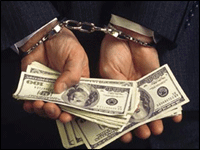
More than eight-tenths of UK employees would fine their colleague monetarily if they were unnecessarily rude or offensive as well as other “office” offences.
This is according to research from SavoyStewart.co.uk, a commercial property agent which found that 81 per cent of employees would fine a colleague £25 for being rude or offensive in the office. It also found that 77 per cent of employees would fine a co-worker £30 for not meeting a set deadline.
Last month (November) that Frank Lampard, Chelsea’s manager imposed fines for his players if they fail to keep to certain rules. Such as a £20,000 fine for being late for the start of training.

Just under three-quarters (74 per cent) feel their workmates should receive a £22 fine when late for a meeting and 69 per cent believe a £14 fine should be administered for taking a personal phone call during work hours.
Over half of employees (53 per cent) think £8 is a justified fine for a colleague not coming to a work social after agreeing to attend.
Darren Best, managing director of SavoyStewart.co.uk said:
Working in an office can be fun as well as challenging. It’s an environment where people don’t have control over who they necessarily work with but should make every effort to be respectable and professional at all times. But unfortunately, this does not always happen, and people’s actions/behaviour in an office can be aggravating. This research highlights the unprofessional actions/behaviours that office workers most have grievances with, certainly enough to fine their colleagues considerable amounts for committing them.
When asked what should be done with the money accumulated from these fines, over a third (35 per cent) think it should be used to improve the office environment such as new furniture, new equipment and technology.
Only 3 per cent believed the money should be awarded to the top performers of the month in their department.
SavoyStewart.co.uk surveyed 1,466 UK office workers to obtain these results.

Darius is the editor of HRreview. He has previously worked as a finance reporter for the Daily Express. He studied his journalism masters at Press Association Training and graduated from the University of York with a degree in History.
- Darius McQuaid

- Darius McQuaid
- Darius McQuaid
- Darius McQuaid








