

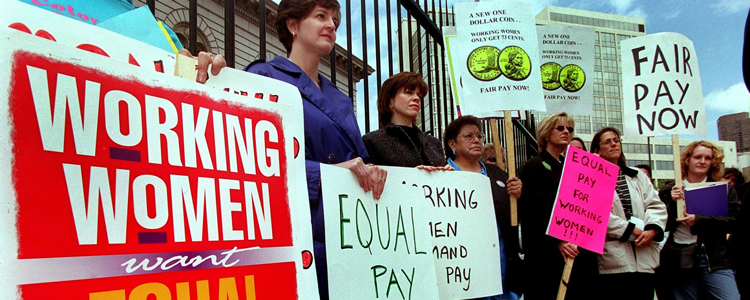
In its young women’s manifesto, ‘Working for young women’, Young Women’s Trust calls on all parties to invest in jobs and skills for young women, improve support at job centres and end the discrimination that sees young people paid less than their older counterparts for the same work.
This comes as polling shows that a quarter of young women are yet to decide who to vote for – more than almost any other voter group.
Young Women’s Trust chief executive Dr Carole Easton said:
“Political parties are ignoring young women, many of whom are unsure who to vote for – or whether to vote.
“Young women are telling us they want to work and be able to live independently, but insecure work, low pay and a lack of jobs are holding them back. It’s not just families that are losing out from this but businesses and the economy too.
“Politicians must listen to young women and give them the support they need to gain skills, find jobs and get on in life. Millions of votes are at stake.”

Young Women’s Trust is urging the next government to:
- Invest in jobs and skills for young women, including by increasing the £3.50 an hour minimum wage for apprentices
- Improve employment support for young women, including at the job centre, to ensure it is flexible, personalised and responsive to their needs
- End the age discrimination against young people that sees under-25s paid less money than older workers for the same jobs, despite having the same living costs
- Make work an affordable option for people with caring responsibilities by moving towards year-round free childcare, improving maternity rights for the self-employed and making flexible working the default
- Mainstream gender across government by assessing the impact of all policies on women and ensuring Brexit does not disadvantage young women
Young Women’s Trust advisory panel member Laura Davies, 26, said:
“I’m still undecided about who to vote for. I want to find a party that really supports and reflects my needs as a young woman and a young parent. I’m looking for a party that will help young women like me into jobs that pay enough to live on, will invest in skills for young people and will champion flexible working, so we can balance work with our families.
“At the moment I’m feeling a bit disenfranchised with politics. Even though I know I am going to vote no matter what, I’m struggling to find a party that really represents me.”
Panel member Tia Spencer, 19, said:
“I think that politicians should help by increasing the apprenticeship minimum wage. As a care-leaver, I found that trying to live independently on such a small wage was sometimes impossible. I couldn’t afford the basics! Apprenticeships are fantastic and I want to see more young women taking them up and gaining skills. Increasing apprentices’ wages would really help with that.”
Young Women’s Trust will be working with The Debrief to encourage young women to vote and ensure politicians listen to young women’s views. Young Women’s Trust will also host a women’s hustings along with other women’s charities on 22 May to push parties for plans to support women.

Rebecca joined the HRreview editorial team in January 2016. After graduating from the University of Sheffield Hallam in 2013 with a BA in English Literature, Rebecca has spent five years working in print and online journalism in Manchester and London. In the past she has been part of the editorial teams at Sleeper and Dezeen and has founded her own arts collective.
- Rebecca Clarke

- Rebecca Clarke
- Rebecca Clarke

- Rebecca Clarke







