HRreview 20 Years
This field is for validation purposes and should be left unchanged.
Subscribe for weekday HR news, opinion and advice.
This field is hidden when viewing the form
Optin_date
This field is hidden when viewing the form

Infographic: Workforce planning

-

Workforce planning often fails because of poor execution, a new guide from the Institute of Employment Studies (IES) shows.

The guide encourages HR professionals to keep the process as simple and focused as possible, relying on quality over quantity when it comes to gathering data.

Peter Reilly, author of the guide, said:

“HR should be close enough to the business to know the principal challenges in matching workforce supply to work demand. It should then be able to identify the means by which gaps are closed or surpluses dealt with.”

HRreview Logo

Get our essential weekday HR news and updates.

This field is for validation purposes and should be left unchanged.
Keep up with the latest in HR...
This field is hidden when viewing the form
Optin_date
This field is hidden when viewing the form


“We wrote the guide because so often HR complains that its workforce planning is ineffective and business leaders complain that HR processes are too cumbersome. Both groups have unrealistic expectations that workforce planning will solve all their resourcing problems, ignoring the benefits of identifying and thinking through the workforce challenges.”

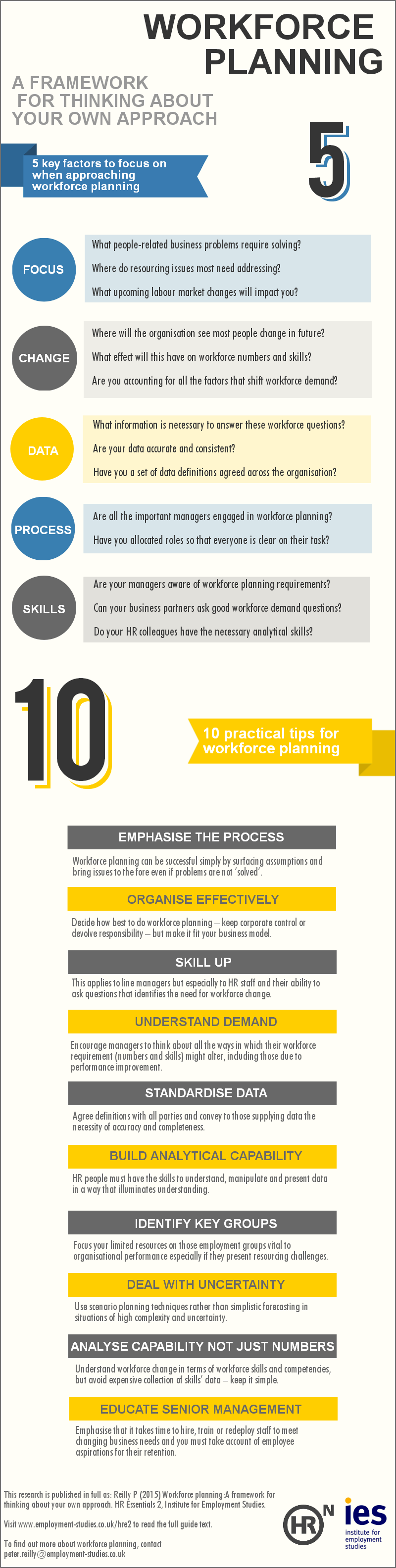
The following infographic draws on 45 years of research to deliver the ten top tips for HR practitioners to improve the process of workforce planning:
Workforce planning

Steff joined the HRreview editorial team in November 2014. A former event coordinator and manager, Steff has spent several years working in online journalism. She is a graduate of Middlessex University with a BA in Television Production and will complete a Master's degree in Journalism from the University of Westminster in the summer of 2015.

Latest news

Felicia Williams: Why ‘shadow work’ is quietly breaking your people strategy

Employees are losing seven hours a week to tasks that fall outside their core job description. For HR leaders, that’s the kind of stat that keeps you up at night.

Redundancies rise as 327,000 job losses forecast for 2026

UK job losses are set to rise again as redundancy warnings hit post-pandemic highs, with employers cutting roles amid rising costs and economic pressure.

Rise of ‘sickfluencers’ and AI advice sparks concern over attitudes to work

Online influencers and AI tools are shaping how people approach illness and employment, heaping pressure on employers.

‘Silent killer’ dust linked to 500 construction deaths a year as 600,000 workers face exposure

Hundreds of UK construction workers die each year from silica dust exposure as a new campaign calls for stronger workplace protections.
- Advertisement -

Leaders ‘overestimate’ how much workers use AI

Firms may be misreading workforce readiness for artificial intelligence, as frontline staff report far lower day-to-day adoption than executives expect.

Cost-of-living pressures ‘keep unhappy workers in their jobs’

Many say economic pressures are forcing them to remain in jobs they would otherwise leave, as pay and financial stability dominate career decisions.

Must read

Robert Leeming: A brave new world – things to look out for in 2016

2016 is just around the corner, believe it or not, so what can the HR world anticipate as we enter the latter half of the second decade of the 21st century. Here are some key events to be prepared for:

Emma Mamo: What employers can do to support an employee mental health

Staff who need to take time off due to stress or mental health problems should be treated exactly the same as those who take sick leave for a physical health problem, says Emma Mamo, Head of Workplace Wellbeing at MIND.
- Advertisement -

You might also likeRELATED
Recommended to you