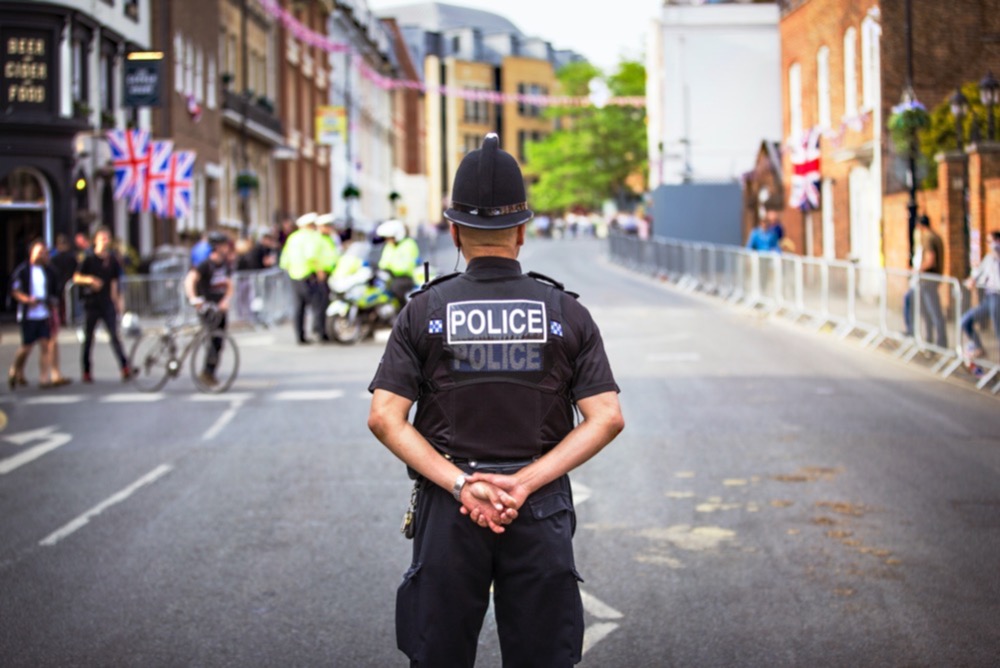
Police Scotland has decided to abandon its beard ban for officers after facing strong resistance from its personnel who argued that the policy was impractical and burdensome.
The ban demanded that hundreds of officers remove their beards and moustaches by the end of May, citing the need for a clean-shaven face to properly wear protective masks.
However, the deadline was not met due to mounting criticism from officers, the Scottish Police Federation (SPF), and the LGBTI Police Association.
The SPF, representing rank-and-file officers, voiced concerns that some officers would be required to shave twice daily to comply with the FFP3 mask usage, and failure to do so could lead to misconduct charges.

In response to the outcry, Police Scotland has backtracked on the policy. Assistant Chief Constable Alan Speirs stated that the implementation would be postponed, and the controversial decision would be reviewed again in 12 months. The decision came after seeking further health and safety advice and taking into account the concerns raised by officers.
What opposition did it face?
David Kennedy, the SPF’s general secretary, praised the move, saying that the policy had faced significant criticism from various sectors within the police force. He emphasised the importance of understanding the necessity behind such a policy before implementing it, making the postponement a wise decision.
The initial policy, announced by Mr. Speirs in April, had aimed to mandate clean-shaven faces to ensure that officers could effectively use FFP3 masks during certain duties. Despite a perceived decrease in Covid risks, the requirement was intended to apply to officers attending fires, road accidents, and chemical incidents.
The policy faced backlash as officers argued that the risks had diminished and that the proposed rule was causing unnecessary distress. While Police Scotland has 17,000 officers and 6,000 staff, making it the UK’s second-largest force, it had not consulted with the personnel before announcing the ban.
Numerous officers expressed their grievances, and some even took legal action against the ban, alleging potential breaches of health and safety, discrimination, and human rights laws. The SPF reported an influx of complaints from officers opposing the policy, leading to employment tribunal cases and requests for legal opinions.
As of now, Police Scotland has not disclosed whether any resolution has been reached with the four officers who initiated legal action against the ban. Meanwhile, the Metropolitan Police’s most recent facial hair policy, introduced in September 2022, allows beards and moustaches but requires officers to maintain a neat and tidy appearance.

Amelia Brand is the Editor for HRreview, and host of the HR in Review podcast series. With a Master’s degree in Legal and Political Theory, her particular interests within HR include employment law, DE&I, and wellbeing within the workplace. Prior to working with HRreview, Amelia was Sub-Editor of a magazine, and Editor of the Environmental Justice Project at University College London, writing and overseeing articles into UCL’s weekly newsletter. Her previous academic work has focused on philosophy, politics and law, with a special focus on how artificial intelligence will feature in the future.
- Amelia Brand

- Amelia Brand
- Amelia Brand
- Amelia Brand