

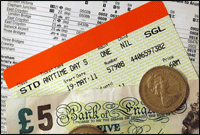
 Recent announcements that fares are set to rise above the rate of inflation are yet another hit on the bank balances of long-suffering commuters. Despite the recession, employers who want to retain their best staff are also likely to be under pressure to compensate in salary packages. However, a new solution has recently been launched that provides a welcome alternative to the crush of the daily commute.
Commuters in England routinely spend between 5-10% of their salary getting to work and in some towns in the South East costs can be as much as up to 15%*. NearDesk, described as the ‘Oyster card’ for desk space, provides productive workplace near an employee’s home for around £25-50 per day and you only pay for the time you use.
If the days spent away from the central office are staggered across the company the employer can easily offset this cost by reducing the capacity at expensive central locations.
NearDesk slashes the need for employees to commute while maintaining the many advantages of working from an office. As users are not tied to one specific location, they are able to use whichever hub happens to be most convenient on any particular day.

NearDesk is the brainchild of serial entrepreneur, Tom Ball. He explained, “Nobody likes commuting but when costs keep rising without relative improvements in services, we have to ask if it’s really worth the misery of being squashed up next to a sweaty fellow commuter every day of the week.
Can you imagine how much nicer it would be if we all worked 2 to 3 days near home instead? The trains would be much emptier and we would slash our commute costs.”




