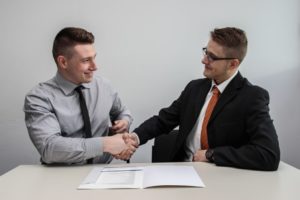
Despite the average length of an interview being 45 minutes long, a quarter of hiring managers have said they make a decision regarding the candidate in the first five minutes.
This research comes from ThriveMap, a pre-hire assessment specialist who found that 25 per cent of hiring managers just take five minutes to make a decision relating to a candidate during an interview.
Above a third (36 per cent) of hiring managers said they know within six to 10 minutes of the start of the interview if the candidate is right for the role.

A small minority (9 per cent) said it took them longer than 30 minutes to make a decision. As hiring managers seem to be making a decision so quickly, ThriveMap asked whether candidates are going through a fair and consistent process?
Only 2 per cent of hiring managers say they do not make a decision during the interview. ThriveMap believes that gut instinct is playing a big part in recruitment and said:
Organisations looking to be more inclusive and increase the diversity of their workforce could find this challenging if they don’t ensure their hiring managers are using more than gut instinct to select candidates.
Chris Platts, CEO of ThriveMap said:
This research indicates that hiring managers let unconscious bias play a major role in the recruitment process. If more than a third of managers are making up their mind in under 10 minutes, what’s the point in having a structured and thorough interview process?
Organisations need to put measures in place such as interview training and technology to help managers make more rational choices. Pre-hire assessments that provide objective candidate comparisons can help managers to delay their intuition and hire based on suitability, not unconscious likeability or similarity. Not only is this fairer for candidates, it’s proven to lead to better hiring outcomes.
This research was obtained by speaking to 202 hiring managers.

Darius is the editor of HRreview. He has previously worked as a finance reporter for the Daily Express. He studied his journalism masters at Press Association Training and graduated from the University of York with a degree in History.
- Darius McQuaid

- Darius McQuaid
- Darius McQuaid
- Darius McQuaid