

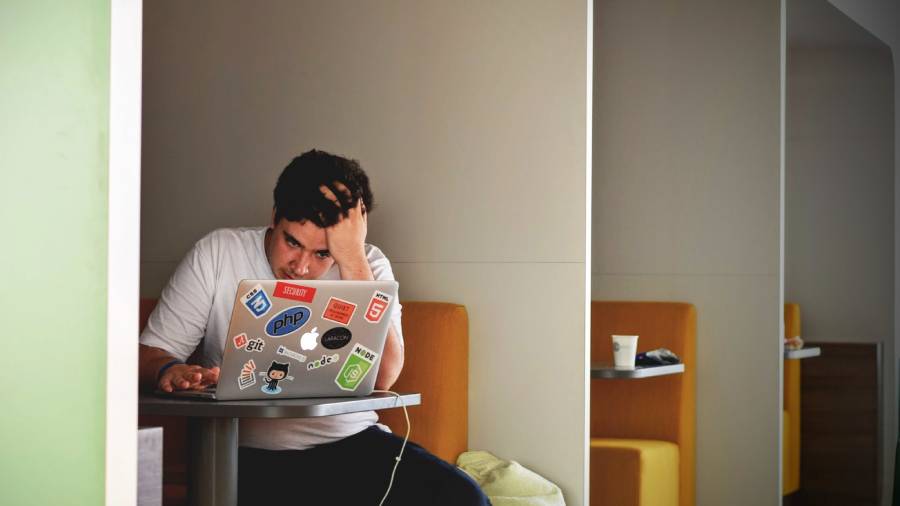
In light of the move to working from home, over three-quarters of employers (77 per cent) have observed presenteeism – employees working when unwell – amongst remote working staff over the past year.
As such, the CIPD has warned employers that the growing issue of presenteeism must be addressed as over two-fifths (43 per cent) have confessed they are currently not taking action in this area.
A similarly pressing issue, the CIPD found, was leaveism, a term used to describe working outside of contracted hours or using annual leave to work or when ill. Seven in 10 employers (70 per cent) observed this behaviour during the pandemic, showing signs that workers may be over-exerting themselves.
This is largely thought to have worsened the ‘always-on’ culture where many find it difficult to create set boundaries between work and life, potentially leading to burn-out.

A potential cause for presenteeism, the report states, is unmanageable workloads which three-fifths of respondents (59 per cent) confessed they were struggling with.
As such, the CIPD state that managers have the responsibility to assess individual and team workloads to ensure they are manageable. In addition, managers should commit to practicing healthy habits which staff will emulate such as not working during time off.
Over four in five employers (82 per cent) are concerned about the impact of COVID-19 on employee mental health. Due to this, organisations are planning to take an increased focus on mental health (84 per cent) as well as offering more support tailored to individuals’ needs and concerns (83 per cent).
During the pandemic, despite the rise in mental health concerns, the number of companies training managers to support workers with mental health issues has fallen from over half (51 per cent) to 43 per cent.
The research identifies main areas for improvement:
- Equipping line managers with the correct training, knowledge and skills to support people’s health effectively
- Taking a more strategic approach to enhance wellbeing, prevent ill health and support people when they become unwell
- Increasing investment in wellbeing – just a quarter (26 per cent) report their allocated budget for wellbeing benefits has increased as a consequence of the pandemic.
The Covid-19 pandemic has put a huge strain on employers and individuals. Employers should take a strategic and preventative approach to wellbeing in order to tackle work-related stress and unhealthy behaviour like presenteeism and leaveism and this must be role modelled by those in senior positions.
They should also recognise the important role that line managers play in supporting individuals with their health and wellbeing. Managers should be equipped with the appropriate training, support and guidance needed to do this effectively.
Our research shows many organisations have taken steps to improve their health and wellbeing support over the last year, particularly regarding mental health support. It’s important that employers don’t lose sight of the gains they have made in supporting people’s health and wellbeing as we move through the next stages of the pandemic and beyond. Increased support over the last year must not be viewed as a sticking plaster for the situation we are currently in. Instead, employers should view health and wellbeing as a business-critical issue and build on this support for the long-term.
*This research was obtained from the CIPD’s Health and Wellbeing at work 2021 report.

Monica Sharma is an English Literature graduate from the University of Warwick. As Editor for HRreview, her particular interests in HR include issues concerning diversity, employment law and wellbeing in the workplace. Alongside this, she has written for student publications in both England and Canada. Monica has also presented her academic work concerning the relationship between legal systems, sexual harassment and racism at a university conference at the University of Western Ontario, Canada.
- Monica Sharma

- Monica Sharma
- Monica Sharma
- Monica Sharma








