

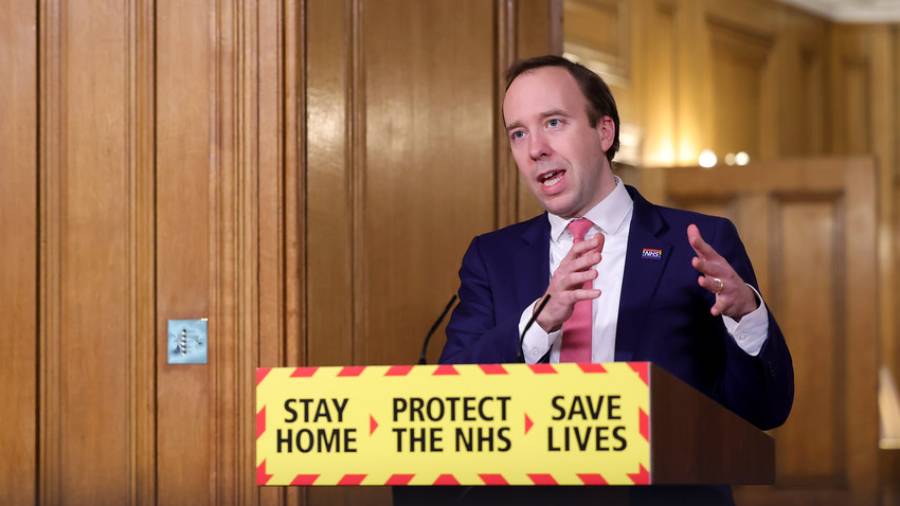
It has been reported by The Times that Health Secretary, Matt Hancock, is urging the Government to increase Statutory Sick Pay (SSP) in the UK.
According to a report by The Sunday Times, Matt Hancock has allegedly pushed for an increase to the amount of SSP a worker receives. This suggestion was said to have occurred during a meeting of the Government’s COVID-19 operations committee last week.
However, it has been suggested that this is being blocked by the Treasury which expressed concern over the extra costs employers would incur as a result.
As it stands, SSP in the UK, which is currently £95.85 a week, is one of the lowest recorded amounts of sick pay offered in Europe.

Previous research conducted by the TUC in September 2020 suggested that this sum was not financially viable for many workers to live off. The research showed that the average worker self-isolating for two weeks on SSP would lose over £800 across this period. In addition, almost half of workers surveyed (43 per cent) stated they would have to go into debt or not pay bills if they were on SSP for two weeks.
As such, there have been concerns about the number of ill workers who have been forced to go into the workplace due to the current level of SSP, leading to calls for reform.
Health and safety is thought to be Mr. Hancock’s motivation behind suggesting this rise. An increase in financial support for ill workers could allow them to self-isolate for the full duration, thus limiting the spread of the virus.
After the Chancellor’s Budget, the TUC outlined the type of reform it wished to see in the SSP payments.
It called on SSP to be raised to £330 per week in order to match the current real Living Wage. It further stated that the SSP needed to be extended in order to include the two million low-paid workers currently excluded from SSP.

Monica Sharma is an English Literature graduate from the University of Warwick. As Editor for HRreview, her particular interests in HR include issues concerning diversity, employment law and wellbeing in the workplace. Alongside this, she has written for student publications in both England and Canada. Monica has also presented her academic work concerning the relationship between legal systems, sexual harassment and racism at a university conference at the University of Western Ontario, Canada.
- Monica Sharma

- Monica Sharma
- Monica Sharma
- Monica Sharma









