

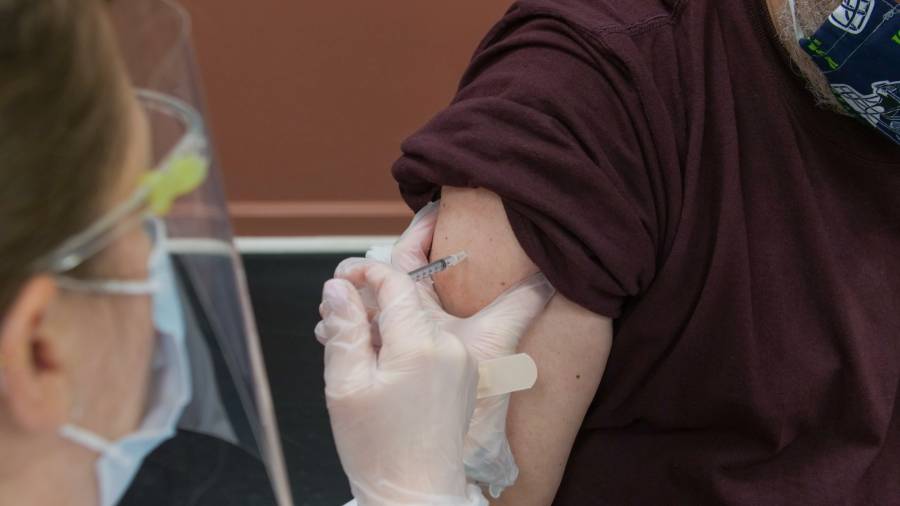
Around 1.45 million members of staff within the NHS are expected to be impacted by the imminent announcement that COVID-19 vaccinations will become mandatory for all frontline staff.
According to a report published by The Guardian, COVID-19 vaccinations are expected to become mandatory for all NHS frontline staff from April 2022.
This comes after the Government launched a consultation earlier this year to debate the issue, seeking views on whether COVID-19 vaccine requirements should be implemented for health and care settings.
COVID-19 vaccinations have already been made compulsory for care home workers, excluding those who are medically exempt, with this coming into effect from the 11th November.

With the new announcement on the horizon, it has been suggested that around 100,000 NHS workers have not yet received their first dose and could be set to lose their job.
Alan Price CEO of BrightHR, reflected on what this change could mean for HR teams:
The introduction of mandatory vaccines for frontline health and social care staff is likely going to cause huge HR headaches. Staff may be reluctant to get vaccines and choose to raise grievances against their employers.
Employers must be prepared to track and manage what vaccines employees have had and ensure they understand that correct process to follow, to reach fair redeployments and/or dismissals where necessary.
It’s likely there will be a heightened focus on redeployment opportunities to avoid widespread resignations and dismissals. As such, HR teams may want to pro-actively consider available vacancies they could consider as suitable alternatives for affected workers.
Chris Hopson, the chief executive of NHS Providers, argued that this move could exacerbate already existing staff shortages in the NHS:
[This announcement could lead to] the potential loss of those staff who don’t take the vaccine when the service is already under huge pressure and carrying 93,000 vacancies.
The Government must recognise the risk of losing unvaccinated frontline staff and support efforts to maximise voluntary take-up first.
However, while expressing the efficacy and safety of COVID-19 vaccines, a spokesperson for the Department of Health and Social Care added:
We have taken action to introduce vaccination requirements in care homes and we recently consulted on extending this further across health and other social care services. No final decisions have been made and we will set out our response in due course.

Monica Sharma is an English Literature graduate from the University of Warwick. As Editor for HRreview, her particular interests in HR include issues concerning diversity, employment law and wellbeing in the workplace. Alongside this, she has written for student publications in both England and Canada. Monica has also presented her academic work concerning the relationship between legal systems, sexual harassment and racism at a university conference at the University of Western Ontario, Canada.
- Monica Sharma

- Monica Sharma
- Monica Sharma
- Monica Sharma








