

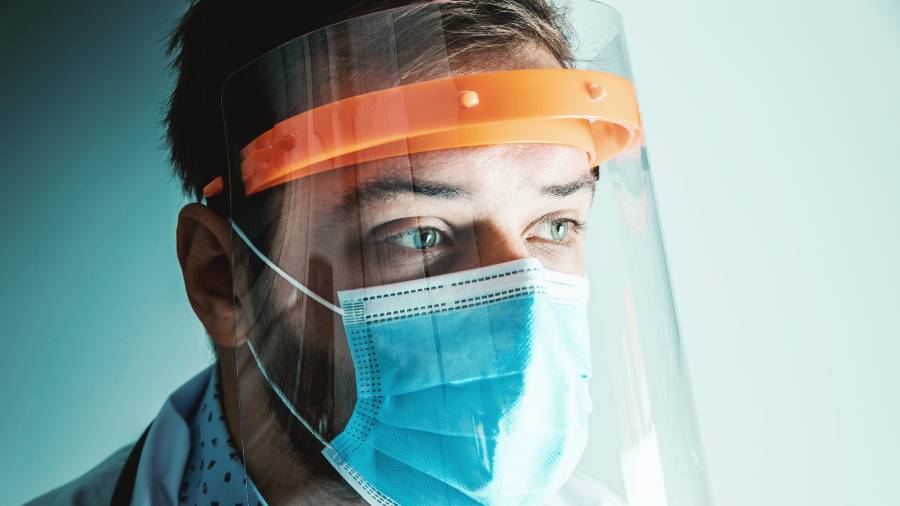
Of a survey of over 2,000 safety representatives, over four in five stated that employees had tested positive in the workplace.
According to a new report by the Trades Union Congress (TUC), there have been widespread safety risks regarding coronavirus in workplaces.
Over four in five (83 per cent) safety representatives revealed that staff had tested positive for COVID-19 in their workplace. In addition to this, almost three-fifths (57 per cent) said they had seen a “significant” number of cases, leading to concerns that COVID-19 safety protocols, as outlined by the Government, are not being followed.
This could be linked to the lack of risk assessments being carried out by employers. A quarter of safety representatives said they were not aware of a formal risk assessment being carried out in their workplace in the last two years, covering the period of the pandemic.

A further one in 10 (9 per cent) revealed that they did not have one whilst almost a fifth (17 per cent) were unsure whether a risk assessment had taken place.
Of the number who did have a risk assessment, almost a quarter (23 per cent) said that it was inadequate, putting staff at risk.
According to the CIPD, employers have a “statutory and common law duty of care for people’s health and safety at work” and should be doing everything possible to keep employees safe at work during this time.
For office workers, this could include increasing the frequency of surface cleaning, ensuring social distancing is followed, putting up screens and ensuring employees work within fixed teams, thereby limiting contact with a large number of workers.
However, a quarter of safety representative (25 per cent) stated their employer did not always enforce physical distancing between colleagues. Over a third (35 per cent) also outlined that adequate PPE was not provided for them.
Another primary concern for employers generally has been wellbeing. Almost two-thirds of safety representatives (65 per cent) said they are dealing with an increased number of mental health concerns since the pandemic began. Three-quarters (76 per cent) cited stress as a workplace hazard.
Frances O’Grady, TUC General Secretary, said:
Britain’s safety representatives are sounding the alarm. Too many workplaces are not Covid-secure. This is a big worry for people expecting to return to their workplace soon. And it should be a big priority for ministers too. We must have robust health and safety in place to reduce the risk of infections rising again when workplaces reopen.
Everyone has the right to be safe at work. The government must take safety representatives’ warnings seriously. Ministers must tell the Health and Safety Executive to crack down on bad bosses who risk workers’ safety. And they must provide funding to get more inspectors into workplaces to make sure employers follow the rules.
*The TUC’s report ‘Union Health and Safety Reps Survey‘ questioned 2,138 trade union health and safety representatives about concerns in their workplaces.

Monica Sharma is an English Literature graduate from the University of Warwick. As Editor for HRreview, her particular interests in HR include issues concerning diversity, employment law and wellbeing in the workplace. Alongside this, she has written for student publications in both England and Canada. Monica has also presented her academic work concerning the relationship between legal systems, sexual harassment and racism at a university conference at the University of Western Ontario, Canada.
- Monica Sharma

- Monica Sharma
- Monica Sharma
- Monica Sharma








