


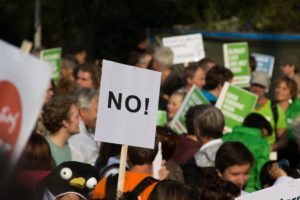
Millions of members of the TUC could be holding a 30 minute walk-out for a “solidarity climate stoppage” on the 20th September 2019.
The University and College Union (UCU) have backed the motion of a “solidarity climate stoppage” walk-out and are set to debate this at the next TUC meeting in September. Currently the TUC has over five million affiliate members.
This was initially championed by 16-year-old Swedish climate change activist, Greta Thunberg, through her global school strike initiative. In May, whilst writing an article for the Guardian, Ms Thunberg also called on adults to “step up alongside” the children as to “change everything, we need everyone”.

A spokesperson for the UCU said:
We are calling on all the TUC affiliate unions, student unions throughout our colleges and universities and politicians and community groups, to support the call for a 30-minute workday stoppage in solidarity with the global school student strike on the 20th September.
However, in order for this strike to be lawful, there are a series of procedures that must be followed.
Unions must give a week’s notice of a ballot and inform employers of the results as soon as possible. There must be a minimum turnout of 50 per cent of the workforce, as well as the majority of the workforce voting for a strike.
In addition, the employer must be given two weeks notice, or seven days if agreed by the union and the employer in question, before the first day of action.
As it stands, the TUC meeting is set to take place between the 8th and 11th September whilst the proposed walk-out is on the 20th, making it questionable whether these procedures can be met in time and hence, whether this walk-out will be lawful.
Kate Palmer, associate director of advisory at Peninsula, a HR and employment law consultancy firm, said:
Regardless of any flexible working arrangements you may have agreed with your employee, taking unauthorised time away from work, whether it be to attend the global climate change strike or for any other reason, is a serious matter and can be considered a dereliction of duties.
If you suspect that an employee has taken time away from work to attend the protest, your first action should be to conduct an investigation to see if there is real substance to your suspicions. You do not need actual evidence of their attendance but sufficient information from which you can build a reasonable belief.
If the results of the investigation lead you to believe there is a case to answer, you may proceed with some form of action against the employee. This will differ depending on the circumstances but it is likely that a warning, whether verbal or written, will be appropriate. No formal action should be taken before a fair disciplinary process has been followed which will involve inviting the employee to a disciplinary hearing, at which they have a right to be accompanied, to explain their actions.
More severe action may be appropriate if the employee becomes involved in an incident during the protest which you believe may bring your company into disrepute. Several factors would be involved in the decision making process here including the type of business you run and the role the employee performs for you.

Monica Sharma is an English Literature graduate from the University of Warwick. As Editor for HRreview, her particular interests in HR include issues concerning diversity, employment law and wellbeing in the workplace. Alongside this, she has written for student publications in both England and Canada. Monica has also presented her academic work concerning the relationship between legal systems, sexual harassment and racism at a university conference at the University of Western Ontario, Canada.
- Monica Sharma

- Monica Sharma
- Monica Sharma
- Monica Sharma








