


The UK is currently enjoying its highest level of employment, with 32 million people in work across the country. Not only this but rates of unemployment are at their lowest levels since 1975. But where are all the jobs coming from? Is your industry responsible?
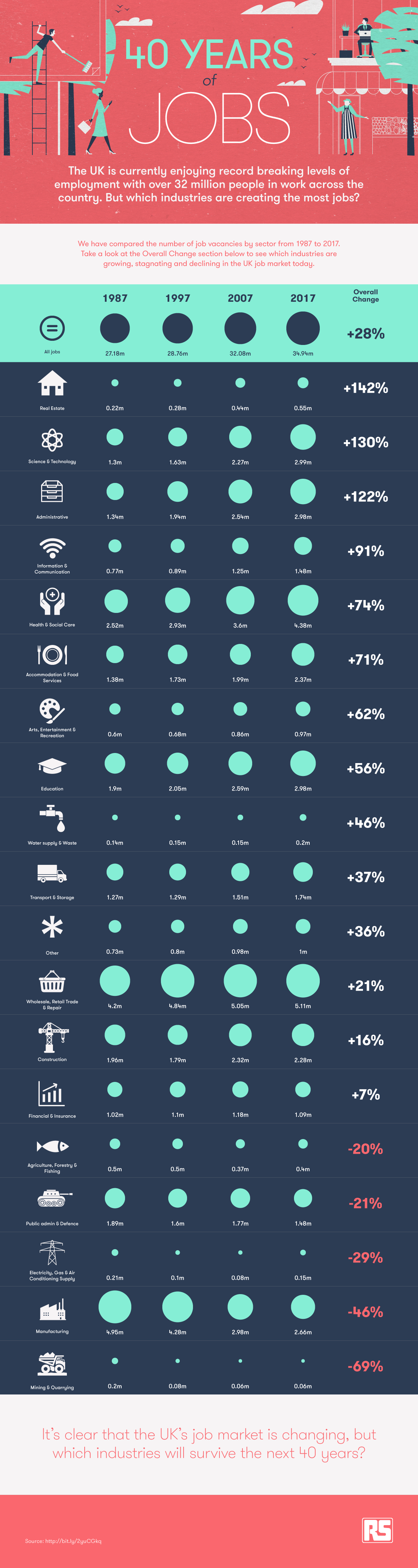
RS Components have analysed 40 years of ONS data to show which industries are creating the most jobs in today’s vibrant market, and there are clear winners and losers.
Real Estate takes the crown for the industry that has grown the most since 1987. Despite being a relatively small sector overall, it has achieved a whopping 142% increase! So when you’re thinking about the soaring prices of property and the constant demand for homes, it is hardly surprising that jobs in Real Estate are growing so rapidly.
Science and Technology takes second place in the highest job growth rankings, adding just over 1.6 million jobs to the UK market since 1987, a percentage increase of 130%. With the tech boom of the 90s and 00’s, this is an industry that is only going to get bigger, especially as the UK cements itself as a global leader in the sector. In addition, administrative roles and positions in Information & Communication have seen very healthy increases, with 2.3 million jobs added to the UK economy over the last 40 years.

Sitting at the bottom of the infographic are the industries where job vacancies have shrunk. Unsurprisingly Mining & Quarrying has seen the biggest percentage decrease in vacancies, with jobs falling 69% since 1987. Although still a major industry in the UK job market, Manufacturing is seconded biggest jobs loser, shedding almost 2.3 million positions over the last four decades, no doubt partly due to huge developments in automation.
It’s clear from the last four decades of job data that the UK is changing focus, slowly shifting from the industrial Britain of old to the services and tech Britain of the future. But which industries will survive the next forty years?

Paul Gray is an entrepreneur and digital publisher who creates online publications focused on solving problems, delivering news, and providing platforms for informed comment and debate. He is associated with HRZone and has built businesses in the HR and professional publishing sector. His work emphasizes creating industry-specific content platforms.
- Paul Gray

- Paul Gray
- Paul Gray
- Paul Gray








