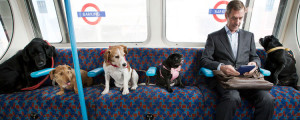
All dog owners know the joys of hanging out with a furry best friend. I’ve read the reports about how dogs can lower anxiety and blood pressure and increase levels of serotonin and dopamine (the happy chemicals in your brain). There’s nothing like cuddling on the sofa with a dog snoring on your lap at the end of a long day.
There is also a minor flip side like when the beagle in your life helps herself to a whole roast chicken was which a bit too close to the side of the kitchen counter, or who empties the bin on a regular basis just to check what snacks are inside, or who barks incessantly at the sparrows who dare to sit on her lawn.
There’s no disputing that dogs are man’s best friend (or in my case women’s best friend), but should we bring them with us to work?

I’m one of those people who looks on enviously at a Labrador owner, with the Lab sleeping peacefully on the floor of the pub, whilst my beagle does her best to pinch everyone’s crisps from the table. I couldn’t really imagine her in an office due to the undoubted carnage that she would wreak.
However, many people do love the company of dogs, and the reports don’t lie… people performing stressful tasks do better when there’s a dog around, and a report out of Virginia Commonwealth University finds that bringing your dog to the office may reduce your stress level and make work more satisfying for other employees too.
Therapy dogs exist for a reason: stroking a dog can make you happier, and more relaxed. If we carry this into the workplace, it’s a clear link to reducing stress. One of the offices I work in has an office dog, and it’s lovely to visit. The dog greets all visitors cheerfully and returns to her basket when instructed. She’s always there for a pat, or a cuddle, and people take time out of their working day to go and say hello. In fact, when people need a breather from work, they take it for a walk which is another key way to reduce stress at the office. Being forced to step away from the desk and take the dog for a walk encourages exercise and fresh air, which can clear the mind and give a new perspective on the work issues.
In fact, dogs in the office can lead to better relationships between people. A study by Marie-José Enders, who studies the relationship between animals and humans at the Open University found that if you have a dog you are perceived as friendlier, which has obvious positive connotations for team work and team dynamics.
There are three key benefits dogs bring to a workplace, according to Stephen Colarelli, one of the psychologists at Central Michigan University. He says,
First, dogs lower stress, heart rate and blood pressure, and make individuals who work alone feel less lonely. Second, people are perceived as more friendly and approachable when a dog is present in the office. Finally, it’s likely to increase cooperation and other positive behaviours among members of work groups.
Dogs are pack animals and like company so, naturally, having your dog with you all day can be hugely beneficial for the animal as well. My beagle sits by the door when she thinks I’m leaving to go to work with a deeply miserable face. She’d love to spend all day with me. It also removes the need, and expense, of ‘doggy day care’. However, she is way too active to be kept in an office all day, and she would hate the trudge of my commute. The breed, or temperament of the dog, is key: office dogs need to enjoy their day with their human team members.
Obviously, some people are not dog lovers and some people have allergies to dogs so any ‘dog in the office’ introduction has to be carried out carefully. Some companies have detailed questionnaires which look at the appropriateness of a particular dog to be a member of the office, but summarising this, some guidelines might be:
- Would the dog enjoy it? If it’s a very active dog, or used to a big garden, being sat in an office (albeit with walks) might send it loopy
- Is the dog friendly? A grumpy or nervous dog won’t be a great member of the team.
- Would people enjoy it? If someone has a fear of dogs, having pooch under the desk might not be the best idea.
- Is anyone allergic? If someone has allergies, it probably means that Fido should stay at home
However, providing dog and people are all happy, I would strongly recommend an office dog.
Interested in employee wellbeing? We recommend the Workplace Wellbeing and Stress Forum 2019.

Vicki Field has 20 years’ experience in senior HR positions. Starting her career with Vodafone on their inaugural HR graduate training programme, she progressed rapidly to a position supporting an IT division, and finished her time there by setting up the HR helpdesk for 11,000 employees. Vicki moved to Accenture in an inhouse HR role, before joining PruHealth as the 6th employee pre-launch of the new company. PruHealth has now rebranded to Vitality, and Vicki’s role as Head of People encompassed everything HR-related moving from a start-up to one of the largest insurers in the UK. Vicki also supported the launch of Vitality Life. Vicki had a team of 40 HR and Training professionals providing a holistic HR and training function to all employees. Vicki is now HRD of London Doctors Clinic, which offers private GP services to corporates and individuals through face to face and video services.
- Vicki Field

- Vicki Field

- Vicki Field