


With the UK’s productivity under close scrutiny, during the budget and as a result of ONS statistics, our “Always On Con” research from The Workforce Institute Europe at Kronos has revealed that British workers consistently underperform compared to their European counterparts.
There are many theories behind this – some suggest the availability of cheap labour in the UK mean it is easier to simply employ more people rather than focus on making people more productive, others suggest that the UK workforce is less innovative, or risk averse. One area that is rarely mentioned is the relationship between the UK workforce and technology, and its effect on work/life balance and lifestyle. The Workforce Institute Europe’s latest research revealed Brits spend less time working while at work, more work time on social media, work more often at home and sleep fewer hours than workers in France and Germany.
While it is true there is much that can be changed in our habits at work in order to buck this downward productivity trend, what workers do at home can be just as important. With the ability to work from anywhere comes the issue of the bleed between work and home life. The feeling that you can do more if you take work home with you, what we call the “Always On Con.” It is an area The Workforce Institute intends to discuss in more detail, especially how our somewhat skewed relationship with technology can be addressed to benefit workers both at home and at work.

The Always On Con
With the UK’s official productivity stats at an all-time low and Brexit looming, this is a pivotal time to analyse the habits of UK workers, and what can be done to reverse this downturn. By understanding that UK workers spend the least amount of time actually working whilst at work we have an important starting point. Less than half of UK workers work more than seven hours a day at their place of business, while two-thirds of their French and German counterparts work for more than seven hours of their working day.
To exacerbate this situation, it was also revealed that British workers are less able to set boundaries between their work and home life. They are the most likely to use work apps on their personal devices and they also work from home more often, compared to France and Germany. This can be beneficial if it is used to deliver a positive work/life balance and drive a more productive workforce – allowing a parent to leave early to pick up a child and work from home for example. The UK, however, is taking more work home and becoming less productive. Understanding the correlation, while allowing people to work flexibly and efficiently is the challenge.
HR departments have the power to take positive action to increase the productivity of their staff by analysing how effectively technology is being implemented within their organisation. Our research highlights this point. Businesses are responsible for ensuring the strategy they implement is bespoke and values the balance between work and play. The way employers implement technological solutions has a key role to play in solving the productivity puzzle. Workers must feel empowered by technology, rather than distracted or shackled to it. In other words, technology, when deployed correctly and thoughtfully, must help us do our jobs more effectively and efficiently – not get in the way.
But ultimately, when the boundaries between work and home life are blurred, it is common for employees to become tired, risking fatigue, becoming distracted and disengaged – which leads to lower productivity. The final result could be as serious as burnout, a condition that can result in people quitting their job or becoming less productive. So it is vital that HR staff ensure that, in addition to the most supportive and effective technology, the work/life balance of their workforce is not just respected, but encouraged. This is a vital step in nurturing a workforce that is engaged, productive and happy.
The Working Dead
Not only are employees not being engaged at work, and being less productive as a result, but workers are experiencing a poorer quality of life because of the core failures in maintaining their work/life balance.
For example, a stark discovery from our research was that half of British workers regularly get less than six hours sleep – two hours less than the National Institute of Health’s recommended amount. One in five of the UK workforce regularly gets as little as 4 hours every work-night. This compares to 17% in France and 18% in Germany.
Getting an adequate amount of rest is vital in maintaining not only a positive, productive attitude to work but also an overall healthy lifestyle. Worse still, compared to Europe, Britons are most likely to have got into an argument with family members and woken by receiving work emails at home.
Making Informed Decisions
These statistics demonstrate the breadth of issues that HR departments must begin to address to boost both their employee retention and wellbeing. Only then can we hope to impact the overall productivity of the UK workforce. Organisational culture is the best place to start to stop the “Always On Con” having a catastrophic impact on our output.
But we need to fully understand where we are before we can make a complete and extensive examination of the way we work. Then we can utilise the best technology more effectively at this time of uncertainty in the UK economy. The Workforce Institute Europe is fully committed to investigating the causes of the issues that have been highlighted by our research, using insight from the leading thinkers in this field to come up with workable solutions.

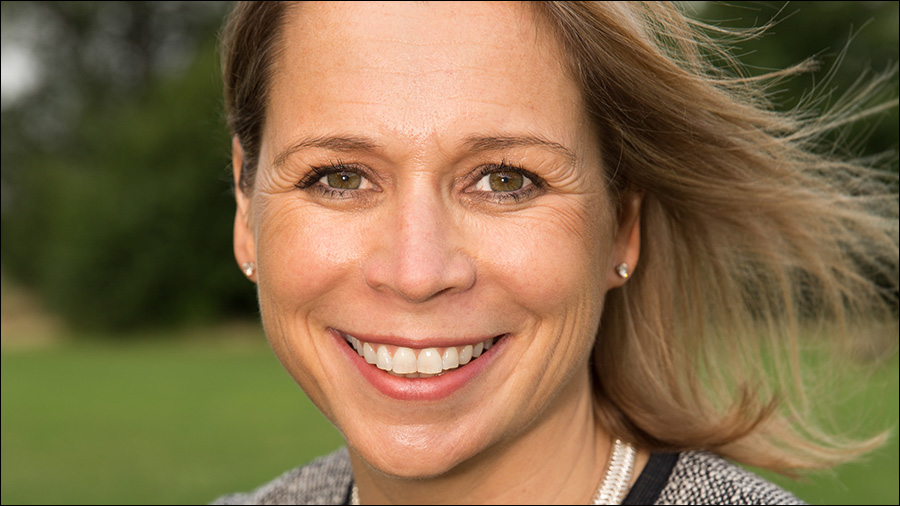
Claire Richardson is European director of The Workforce Institute at Kronos and senior director of EMEA professional services practice at Kronos, where she works with customers to define and deliver workforce optimisation programmes focusing on employee engagement to drive improved business performance. Richardson is multi-lingual, speaking Dutch, French and German, a product of her ex-pat upbringing, which she credits her understanding and awareness of culture and international working practices to. Her love of language led her into the contact centre industry, where she rose to the ranks of senior leadership at both Aspect Software and Verint Systems, defining workforce management solutions for EMEA customers both inside the contact centre, as well as the wider back office environment. Her passion for language and politics has driven her educational focus; she holds a Master’s degree in International Studies from University of Warwick and a Bachelor’s degree from University of Surrey. One of her favourite modules was War Studies as it looked not only at the history of the time, but also the strategies taken in both winning battles and the larger war. The consequences of decision making are fascinating and have helped her define her style of management and leadership in her own career.




