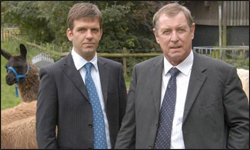
 You probably will have seen the recent press coverage on the TV show Midsomer Murders, that gently bucolic programme about bizarre and improbable homicide in a village situated somewhere between 1930 and 1990. In case you haven’t, the producer has been suspended after saying the drama “wouldn’t work” if there was a racial diversity in the show.
And that press coverage is part of a problem too. There is a danger of thinking of diversity issues in terms of one of the pre-ordained categories as defined by legislation. In doing that we stop the debate about what actually happened,
we stop examining the wider issues, we simply fall back on an acceptable simple short-hand. So a light entertainment show which portrays middle-England in a vaguely contemporary setting, and does not reflect a racial diversity, must be discriminatory.
I’d like to pose the three questions that we all need to think about. There are no answers here, just some topics we need to consider.
1.To many, a TV production is akin to an artistic creation and that can encompass timeframes and images. The look may be contemporary but the feeling the programme tries to evoke may be of a different era, rather like using modern dress and surroundings in producing a Shakespeare play. So are we in danger of using legislation to restrict the creation of material to that which solely reflects modern values and in that way limiting the freedom to express ourselves?

2.The action from all concerned was swift and decisive. This clearly reflects the TV company’s need to be seen to be confronting discrimination, but Midsomer Murders has been on our screens since 1997 running over 80 episodes through 13 series. It was only after the producer himself commented in an interview, “we are a cosmopolitan society in this country but if you watch Midsomer you wouldn’t think so,” that action was taken. So how come no one in that same cosmopolitan society noticed the lack of racial diversity until the producer himself picked the issue out, even after a study in 2006 found the programme to be “strikingly unpopular” with viewers from ethnic minorities?
3.Given the power of the media, what editorial controls should be in place to guard against programming that can unduly influence or reinforce discriminatory behaviour and should those controls be limited to only those people or characteristics as defined by an Act? What about prejudice against redheads? Obese people? Bald people? Sex workers? Peter Andre?
To me those are some of the wider issues that need to be debated, not reflecting on how efficiently an internal disciplinary system works.

Jock Chalmers, Pathway Manager, UKCAE
Jock Chalmers has a public sector background spanning some 30 years with over 10 years experience of setting up and managing non-departmental public bodies. Jock has also worked closely with outsourcing and property management and development sectors. Jock is passionate about inclusion and has developed the approach that bottom-up learning, together with management focus and leadership can deliver equality in the workplace.
Jock's expertise lies in understanding management processes, change management programmes and business process re-alignment.
As the Pathway Manager of UK Council for Access and Equality (“UKCAE”), Jock has led the team that has successfully formulated the UKCAE Pathway which helps any organisation embed inclusion into the workplace. The straightforward and practical approach of the UKCAE Pathway provides many benefits to the public, providers and politicians looking for useful and practical ways to support equality. It is because of these benefits that Jock is proud to be the Pathway Manager and will be delighted to hear from you about how UKCAE can help achieve demonstrable success in this important area.
- Jock Chalmers

- Jock Chalmers
- Jock Chalmers
- Jock Chalmers