

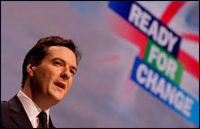
Chancellor George Osborne has labelled oposition within trade unions as “the forces of stagnation”, claimed they are a key factor in holding back the UK’s economic recovery and re-itereated the possibility of introducing laws to prevent unions from taking industrial action.
Rejecting calls for a change of course on spending cuts, the chancellor attacked union critics of the government’s reforms: “I regard these people as the forces of stagnation, when we are trying to get the British economy competitive again, moving forward again,” he said.
Speaking after a meeting of union leaders on Friday to discuss co-ordinated strike action over the government’s public spending cuts, George Osborne reiterated the possibility of a change to the legislation governing industrial action: “We are prepared to consider changes to the law around strikes – as a last resort – but I hope we never get there, because I hope we can have a mature, grown-up conversation,” the chancellor told the BBC at the weekend.

“I completely understand that trade unions want to represent the interests of their members, but the interests of their members is that jobs are created and prosperity returns to our country.”
Friday’s TUC meeting was called “to consider the appropriate industrial response to the volatile cocktail of issues that face union members across the public sector – the pay freeze, job cuts and attacks on pensions,” according to TUC general secretary Brendan Barber.
Although individual union strike action around specific disputes remained likely, Barber said “no-one is talking about a general strike”.
Changes to public-sector pensions continue to be a particular sticking point with unions, who agreed to hold monthly meetings to monitor the issue.
Barber added that the government had agreed to central talks on the future of public-sector pensions, adding: “These will be difficult negotiations as public service workers will not allow their pensions to be hammered. We hope that the talks can make progress, but we cannot rule out industrial action taking place on this issue.”
Friday’s meeting also agreed to a public demonstration in London on Saturday 26 March – three days after the chancellor’s budget – which the TUC hopes will draw up to one million protestors.
“Polls show that public opinion is shifting, and people understand just how unfair and damaging these cuts will prove to public services, jobs and the wider economy,” said Barber.
“The demonstration on 26 March will be a huge event at which the British people will come together to show their opposition to the government’s chosen course.”




