
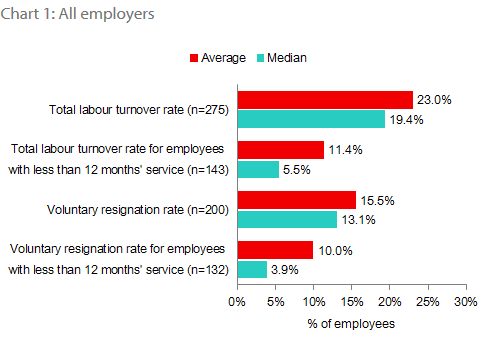
One in seven (15.5%) employees resigned from the job in 2016, according to the latest data from XpertHR. Labour turnover statistics from 288 organisations show that the resignation rate has increased steadily since 2012, when it stood at 10.6%.
HR has the fourth highest voluntary resignation levels out of the groups measured, with rates up for the second consecutive year, standing at 8.2% – up from 7.4% in 2016 and 6.3% in 2015.
The other occupational groups with high resignation rates were distribution at 12.4%, publishing and events at 12.3% and the voluntary sector at 8.8%.
Using an alternative measure that tracks voluntary turnover at the midpoint or median, resignations have increased from 8.9% to 13.1% over the same period.

Total labour turnover (which covers all types of departures, including voluntary resignations, redundancies, dismissals and retirements) stands at an average 23% and a median of 19.4%, a modest increase from 2015 – when the average was 21.5% and the median 18.5%.
In HR the labour turnover is the third highest at 12%, with only publishing and events at 17% and distribution at 13.5% having higher levels.
Staff turnover among employees with less than 12 months’ service
For the first time, XpertHR has also recorded turnover rates among employees with less than 12 months’ service. Monitoring resignation rates and total turnover among this group is important due to the high costs and implications of recruiting and onboarding.
The data shows that one in 10 (10%) new starters resigned before completing a year’s service – with total turnover for all reasons at 11.4%.
Companies in the services sector had the highest rate of attrition among new starters. On average, 11.6% new employees left voluntarily in their first year, with total labour turnover at 13.1%.
XpertHR senior HR practice editor Noelle Murphy, said:
“Monitoring staff turnover is important for all organisations so that they can respond quickly when levels reach a point that is damaging to the business. Our data on turnover rates among those with less than 12 months’ service shows just how important it is for HR to look carefully at its recruitment and selection strategy – and its onboarding process. Ensuring new starters receive ongoing support and attention, and have the opportunity to raise any concerns as soon as possible, can help to avoid staff churn among this group. Losing an average of one in 10 employees before completing one year of service is not only costly in terms of resources, but also for employee engagement among those already in post.”

Paul Gray is an entrepreneur and digital publisher who creates online publications focused on solving problems, delivering news, and providing platforms for informed comment and debate. He is associated with HRZone and has built businesses in the HR and professional publishing sector. His work emphasizes creating industry-specific content platforms.
- Paul Gray

- Paul Gray
- Paul Gray
- Paul Gray