Brexit whitepaper blunder says UK employees are entitled to ’14 weeks holiday allowance’

-

Theresa May released the Brexit whitepaper last week, which basically reiterates her views voiced in her most recent Brexit speech.

An embarrassing error has been identified in the Government’s Brexit whitepaper released just last week by the Prime Minister, driving suspicion as to the care taken when drawing up the document.

Included on page 32, a chart in the paper comparing British and EU standards for holiday leave and maternity leave claims UK workers are entitled to 14 weeks paid holiday a year – ten further weeks than stipulated under EU law.

The error appears to be due to a mislabelled key on the chart, which is supposed to reassure readers that workers rights are not under threat from Brexit.
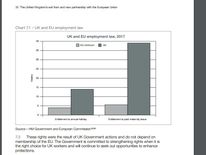
A graph contained in the White Paper shows Brits will get 14 weeks holiday after Brexit
The graph included in the whitepaper.

The text accompanying the inaccurate holiday graph says:

HRreview Logo

Get our essential weekday HR news and updates.

This field is for validation purposes and should be left unchanged.
Keep up with the latest in HR...
This field is hidden when viewing the form
Optin_date
This field is hidden when viewing the form


“These rights were the result of UK Government actions and do not depend on membership of the EU.

“The Government is committed to strengthening rights when it is the right choice for UK workers and will continue to seek out opportunities to enhance protections.


Rebecca joined the HRreview editorial team in January 2016. After graduating from the University of Sheffield Hallam in 2013 with a BA in English Literature, Rebecca has spent five years working in print and online journalism in Manchester and London. In the past she has been part of the editorial teams at Sleeper and Dezeen and has founded her own arts collective.

Latest news

Sustainable business starts with people, not HR policies

Why long-term success depends on supporting employees, not just meeting ESG targets, with practical steps for leaders to build healthier organisations.

Hiring steadies but Gulf crisis threatens recovery in UK jobs market

UK hiring shows signs of stabilising, but rising global uncertainty linked to the Gulf crisis is weighing on employer confidence and delaying recovery.

Women ‘face career setback’ risk with flexible working

Female staff using remote or reduced-hour arrangements more likely to move into lower-status roles, raising concerns about bias in career progression.

Jo Kansagra: Make work benefits work for Gen Z

Gen Z employees are entering the workforce at full steam, and yet many workplace benefits schemes are firmly stuck in the past.
- Advertisement -

Union access plans risk straining workplace relations, CIPD warns

Proposed rules on workplace access raise concerns about employer readiness and operational strain.

Petra Wilton on managers struggling with new workplace laws

“Managers are not being given the tools they need to fully understand how the rules of the workplace are changing.”

Must read

Robert Leeming: Atmosphere and analytics are the future of innovation in HR

Innovation in HR is crucial as an innovative HR department will help to produce an innovative company. Recent research, for example, has found that employers are missing out on a host of innovative ideas by not listening to their staff.

Immunising the business against Swine Flu sickies

A swine flu epidemic could cost the UK economy £50 billion, mostly in lost revenue and sick pay, according to a recent survey by the Ernst & Young ITEM Club. Kate Redshaw from Burges Salmon LLP explains how best to deal with this epidemic.
- Advertisement -

You might also likeRELATED
Recommended to you