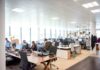
Research released today by interior landscaping and scenting firm Ambius has found that UK office workers spend an alarmingly limited amount of time outdoors each day, putting their health and wellbeing at risk.
The study of 1,000 UK office workers found that almost 40% spend a maximum of just 15 minutes outside, excluding their commute to work, and an additional 22% spend a maximum of 30 minutes outside. This is even less than prisoners, who require ‘at least one hour of suitable exercise in the open air daily’, according to UN guidelines[1].
On average, the British workers surveyed spend more time per a day at their desk or workstation (6.8 hours) than they do in bed (6.4 hours), relaxing at home (3.5 hours) or outdoors (37 mins). Despite spending more time at our desks than in bed, 80% said they regard a comfortable bed as very important, while only 53% placed the same level of importance on having a comfortable workstation.
The NHS suggests that excessive sitting can impact the body’s metabolism, affecting how we regulate sugar, blood pressure and breakdown fat[2]. While previous studies have shown that adding an element of nature or greenery to the workplace, can create a positive sense of wellbeing among employees and improve concentration, creativity and productivity.

With office workers spending so much time at their desks, employers would be wise to explore ways to create a workplace that facilitates better health and wellbeing. A lack of fresh air (57%), insufficient natural light (49%), and an absence of indoor plants (36%) were the biggest source of frustration for employees. Introducing indoor plants (49%), nicer artwork (50%), and a more interesting colour scheme (54%), topped the list of employees’ requests to improve their workplace.
The study also explored the levels of personalisation in the workplace. Brits are often very proud of the interiors of their homes, however almost 60% of workers do not personalise their desk to make it more inspiring or comforting. One in five (21%) said their workplace has a policy preventing personalisation, and yet half of all respondents said they feel both more productive, and less stressed, when given the opportunity to personalise their workspace.
Kenneth Freeman, Head of Innovation at Ambius said,
“Human beings have an inherent need to connect with nature and green space. With workers spending so much time indoors, office managers need to be more aware of the impact the workplace has on wellbeing. Bringing elements of nature in to the workplace or enabling them to personalise their workstations has positive effects on performance, including increases in productivity, creativity and a greater sense of wellbeing.
“It is worrying how little time people are spending outside during the working day. Whether this is on purpose or not, we should all make a conscious effort to ensure we are finding the time in our day to reconnect with nature in some way – even a ten-minute walk outside at lunchtime can be restorative. As well as the natural benefits of getting some fresh air, feeling close to the natural world can generally make us feel happier, healthier and more productive during the day.”
[1]https://www.unodc.org/pdf/criminal_justice/UN_Standard_Minimum_Rules_for_the_Treatment_of_Prisoners.pdf
[2] https://www.nhs.uk/Livewell/fitness/Pages/sitting-and-sedentary-behaviour-are-bad-for-your-health.aspx

Rebecca joined the HRreview editorial team in January 2016. After graduating from the University of Sheffield Hallam in 2013 with a BA in English Literature, Rebecca has spent five years working in print and online journalism in Manchester and London. In the past she has been part of the editorial teams at Sleeper and Dezeen and has founded her own arts collective.
- Rebecca Clarke

- Rebecca Clarke
- Rebecca Clarke

- Rebecca Clarke