
Listen Here
About this Episode
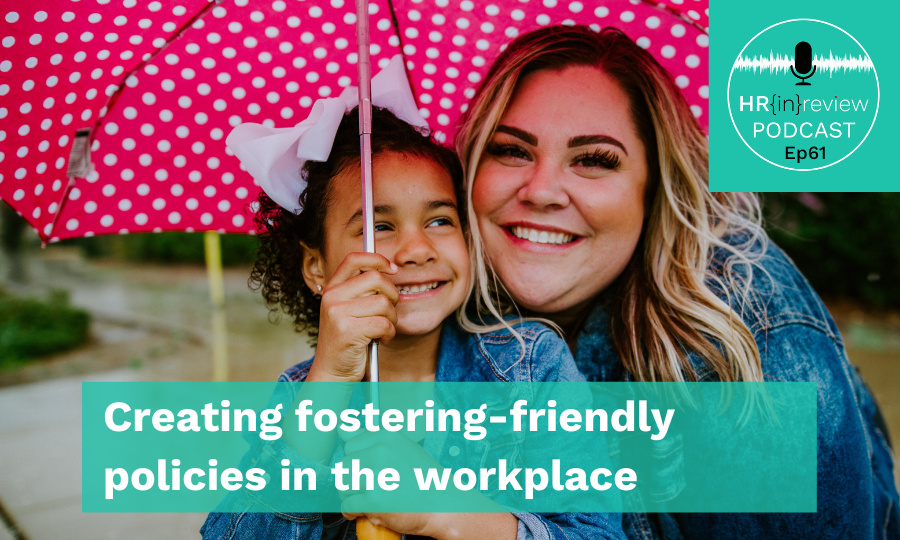
In this episode of the HR in Review Podcast, host Amelia Brand is joined by Rachael Tate, HR Director for National Fostering Group. They dive into the crucial topic of developing fostering-friendly policies in the workplace!
This episode not only sheds light on the possibilities of combining fostering and employment but also explores the significant impact that fostering-friendly HR policies can have on both employees and organisations.
 |
Get our essential weekday HR news and updates.
|

Kate speaks from her experience working for National Fostering Group, which is the UK’s largest fostering organisation. They specialise in helping children and young people find fostering families and support foster carers to help children in safe and caring environments while they are with us.
Guest: Rachael Tate
Rachael Tate (FCIPD, LLb) is the Human Resources Director for National Fostering Group, the UK’s largest fostering organisation which focuses on changing the lives of children in foster care. Prior to working for National Fostering Group, Rachael mainly worked for global and national organisations, having gained experience through a range of strategic people projects, restructures, business transformation, growth phases and employee engagement. Rachael is passionate about the ‘People Profession’ and enjoys making a positive difference to people’s working lives, creating space where colleagues feel valued and supported.
Questions for Rachael include:
- Do you think it’s possible to foster children and work at the same time?
- What should an employer do to help an employee who wants to foster a child?
- Foster parents don’t have the same statutory rights as legal guardians or birth parents do. Could you expand on the impact this could have on an employee who is a foster parent?
- What are some examples of well-known organisations that have implemented HR policies specifically designed to support foster parents?
- In terms of talent recruitment and retention, how do you think fostering-friendly HR policies can help organisations attract and retain skilled employees who are considering foster parenting?
Want to get the HR in Review podcast straight in your podcast app?
Click here to join the HR in Review podcast
Join the (Free) Premium Podcast Here!
You can join our premium podcast channel for free right here.
No Adverts | Early Content | Bonus Content
Podcast Host and Guests for this Edition
Host: Amelia Brand
Amelia Brand is the Editor for HRreview. With a master’s degree in Legal and Political Theory, her particular interests within HR include employment law, DE&I, and wellbeing within the workplace. Prior to working with HRreview, Amelia was Sub-Editor of a magazine, and Editor of the Environmental Justice Project at University College London, writing and overseeing articles for UCL’s weekly newsletter. Her previous academic work has focused on philosophy, politics, and law, with a special focus on how artificial intelligence will feature in the future.
Guest: Rachael Tate, Human Resources Director at National Fostering Group
Rachael Tate (FCIPD, LLb) is the Human Resources Director for National Fostering Group, the UK’s largest fostering organisation which focuses on changing the lives of children in foster care.
Check Out Our Other Episodes Here
Listen to more episodes of HR in Review


Chernelle Vaughan is a Marketing Manager at HRreview, an HR news, opinion, and advice publication. She is an author and content creator who contributes articles and hosts podcasts covering contemporary workplace topics including employee experience, remote working, generational workplace dynamics, and organizational culture. She holds education from the University of Westminster and is based in Merton, England.
- Chernelle Vaughan

- Chernelle Vaughan
- Chernelle Vaughan

- Chernelle Vaughan