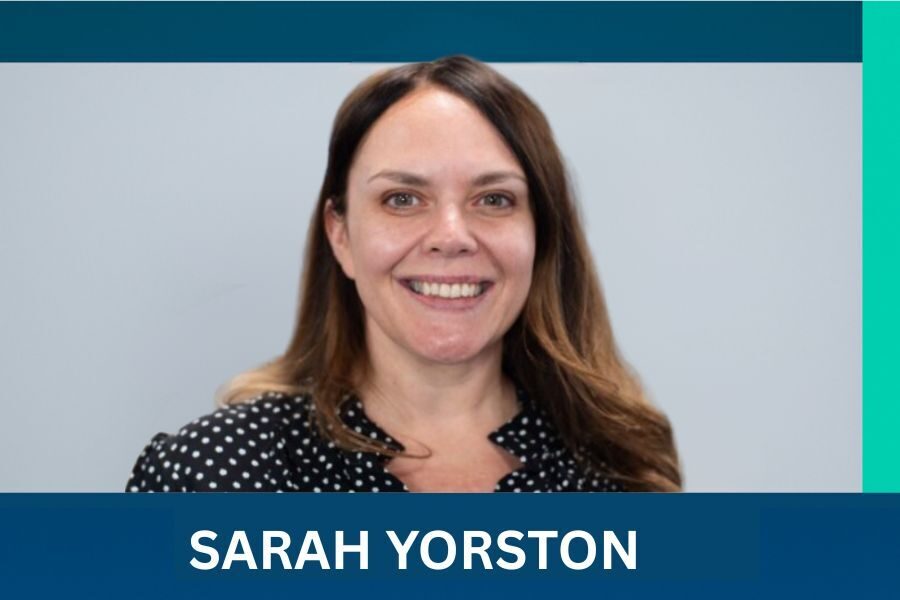

When Sarah Yorston joined Everflow in 2021 as people and culture director, the company was already growing fast. Now celebrating its tenth anniversary, the utilities disruptor has expanded from its water retail roots into a multi-service provider offering waste and telecoms, with an ever-growing workforce to match. Based in Newcastle and working across Everflow’s Peterlee headquarters and wider sites, Sarah, 40, leads the people strategy with a clear purpose: to create jobs people love and build the culture needed to scale a modern, values-led business.
With a career spanning senior HR roles in gaming, tech and market intelligence, Sarah has long championed flexible, inclusive and employee-centric workplaces. At Everflow, that’s meant spearheading initiatives like blind hiring, flexible working policies and a five-year EDIB strategy. Her work is shaped by a belief that strong cultures drive commercial results, and that HR’s role is becoming more strategic as businesses navigate a changing world of work.
In this HR Profile, Sarah shares how Everflow is tackling the UK’s reskilling challenge, building a hybrid culture that connects people wherever they are, and supporting careers with purpose at every level. She reflects on the pressures facing today’s workforce, how HR can help people adapt to uncertainty and why culture must be championed from the top if it’s to truly thrive.
With reskilling now overtaking wellbeing as the top HR concern for UK employers, how is Everflow addressing the need for upskilling and reskilling to close skill gaps and retain talent?
Everflow is celebrating its 10th birthday this year and in that time it has expanded from a water retailer to a multi-service provider. It’s a very different business to the one I joined even just three years ago. As we’ve entered new markets and launched new services, making sure we have the right skills within the business has been a significant part of that journey.
 |
Get our essential weekday HR news and updates.
|

Some of those skills come from new hires, but it’s also been the training team’s job to identify where the skills gaps are and design training programmes that will support the scalability of the business for future growth. They also deliver training on new products and services for our employees and broker network.
We haven’t just expanded service offerings, though. Our customer and employee base has also soared, and that requires a business to have a different set of skills within its talent pool than, for example, a younger start-up business. We are therefore also ensuring we develop leadership skills as the business grows.
Given the increasing scrutiny and criticism of corporate diversity, equity and inclusion (DEI) initiatives from various political perspectives, how is Everflow ensuring that its DEI efforts are both meaningful and effective?
We know that Diversity, Equity, Inclusion and Belonging (EDIB) isn’t just about ticking boxes or having the right policies in place. It’s about building a culture where everyone feels valued, respected and comfortable sharing their ideas.
We see EDIB as key to creating a workplace that truly reflects our values and the diverse world we live in. It helps us to:
- Spark innovation by welcoming a wide range of perspectives and experiences.
- Attract and keep great people by being an employer where everyone feels included and has a fair chance to grow.
- Boost collaboration by creating an environment where everyone feels they can contribute and be heard.
To make sure our efforts really make a difference, we’ve set ourselves some clear, measurable goals to work towards by 2030. These include things like growing the diversity of our leadership team and becoming a recognised Disability Confident employer. We’ve got a five-year EDIB strategy and a clear roadmap to help us stay on track to make meaningful and effective change.
The Employment Rights Bill aims to enhance worker protections, including amendments related to unfair dismissal and redundancy procedures. How are you preparing to comply with these forthcoming changes, and what impact do you anticipate on your HR policies?
It’s really important that we keep the business up to date with any relevant changes — not just by updating policies behind the scenes but also by making sure everyone across Everflow, from employees to managers, understands what these changes mean and feels confident engaging with them in their day-to-day work.
But more than that, we need to stay true to our values by aiming to treat everyone fairly, respectfully, and with care, regardless of how long they’ve been with us or what specific workplace protections they might have.
Over the next five years, businesses will increasingly recognise the strategic value of HR. We’re going to see more HR leaders getting seats at the top table.
With the rise of hybrid work models, what strategies have you employed to maintain employee engagement and cohesion across both in-person and remote teams?
We recognise that hybrid working is no longer seen as an employee perk but it is now the norm for many industries. And while some businesses may be pushing for a return to the office, we’re sticking with our hybrid model because it works for us.
That said, we know how important it is to keep building strong connections in a hybrid world. We want everyone to feel part of the Everflow culture, whether they’re working from home or in the office.
We’ve put a lot of thought into how we stay connected, and making sure we have the right tech in place is just the start. We also create plenty of opportunities for people to interact, from weekly catch-ups and monthly all-company huddles to bringing everyone together in person twice a year for social events and our big annual conference.
We’ve also invested time and energy into creating office spaces we’re proud of, spaces that our people want to work in. We host regular in-office events, offer dedicated workspaces and don’t place limits on travel between our sites. It’s all about making our offices places where people want to work and collaborate from.
How do you approach the challenge of aligning individual career aspirations with organisational goals, especially in a rapidly changing work environment?
Integral to aligning personal aspirations with organisational goals is creating a values-driven culture. Practices such as involving employees in shaping corporate purpose and social impact fosters a sense of ownership and alignment with the organisation’s values.
This connection to the business’ purpose can help employees feel more committed to their work. For example, at the end of last year we launched our 2030 vision and in this, instead of just focusing on commercial goals, we developed statements around what we wanted to be known for. These statements have then been fed into individual goal setting so that the impact our colleagues want to be making ties in with the business’ vision.
We also want to empower our team members to make brave career choices. If someone within the business wants to change direction or switch to a different team, we want to support them on that journey if we can. So we’ve forged routes within the business for that mobility to happen and investing in our people’s careers is really important to us. How we can also create opportunities to talent outside of the business who are looking to take a leap of faith and change path is also something we’re looking to improve.
We’re also going to be introducing career pathways which will support employees to better understand the steps they need to take to get to where they want to be. This can help employees plan their progression more effectively.
Given the increasing reliance on AI in recruitment, how do you ensure fairness and transparency in your hiring processes to mitigate potential biases?
In 2024, Everflow introduced “blind hiring”, a recruitment approach designed to minimise bias by concealing identifiable information such as names, genders, ages and educational backgrounds during the selection process. This practice aims to promote diversity and ensure that hiring decisions are based solely on candidates’ skills and qualifications.
How do you integrate diversity and inclusion into its HR practices, and what measures are in place to ensure these values are upheld throughout the organisation?
We have a dedicated five-year strategy for EDIB, with clear, measurable goals we aim to achieve by 2030. As part of this strategy, we’re currently focusing on EDIB training for all employees, establishing an EDIB advisory group and supporting employee-led EDIB initiatives.
To ensure we stay on track and embed these values throughout the business, we conduct an annual EDIB survey that gathers our employees’ perspectives on belonging, inclusion, fairness and their lived experiences at Everflow.
With mental health remaining a pressing issue in UK workplaces, what initiatives have you implemented to support employee wellbeing and resilience?
I’m a big believer in building improvements into our systems and ways of working to support wellbeing and resilience. That’s why we’ve put initiatives in place like hybrid working, the option to buy and sell holidays, flexible core working hours and supporting flexible working requests. These measures give our employees more freedom to manage their own wellbeing and strike a healthier work-life balance.
On top of that, we offer a range of in-house support services to look after our teams’ mental and emotional wellbeing. This includes trained mental health first aiders, access to free face-to-face counselling sessions and a variety of wellbeing initiatives throughout the year, designed to bring people together, start conversations and create a culture where it’s okay to talk and ask for help when needed.
How do you address the evolving expectations of employees regarding benefits and compensation, particularly in light of the cost-of-living crisis?
We’re still a relatively young business. As we continue to grow, it’s given us a great opportunity to make sure our compensation and benefits packages grow and mature with us. Over the past few years, we’ve made a number of improvements to ensure what we offer really works for our people.
On the compensation side, we’ve introduced a clear and transparent framework, including structured salary banding linked to external benchmarking. This helps us stay competitive in the market and ensures fairness across the business.
Regarding benefits, we review them regularly based on feedback gathered through engagement and benefits surveys, as well as competitor analysis. We want our benefits package to reflect what our people truly value, stay competitive and align with our culture.
One of our most popular and successful benefits is our peer-to-peer recognition scheme, which celebrates the amazing contributions of our team and reinforces our culture of appreciation. And our electric car scheme is a great example of how we’re aligning our benefits with our environmental and social goals.
The UK workforce is now yearning for a greater sense of purpose and greater expectations are being placed on employers.
What measures are in place at Everflow to support continuous learning and professional development among employees, ensuring they remain adaptable in a changing work landscape?
We make sure our employees are at the heart of our learning strategy by asking a simple but important question: What support do they need to become the best version of themselves, both in their current role and the one they’re aiming for next?
Our learning and development strategy is built around this, focusing on giving people the tools, knowledge and confidence they need to grow. We provide technical training tailored to the specific requirements of each role and the wider business, supported by a dedicated internal team. We’re also in the process of building a comprehensive knowledge base, designed to give employees access to the information they need, exactly when they need it to support their independent learning, too.
To help everyone stay on track, we have clear KPIs and development goals, so employees can understand how they’re performing and where to focus their growth. On top of that, we are finalising competency frameworks which will outline the behavioural skills and capabilities needed to succeed now and progress in the future.
What’s one area of HR you think still isn’t getting the attention it deserves, and why should more organisations be focusing on it now?
This topic does receive a fair amount of attention, but I’m not sure it always gets the focus it truly deserves and that’s the importance of a positive working culture in business, and its strong connection to commercial success.
As Peter Drucker famously said, “culture eats strategy for breakfast”. You can have the most detailed and well-thought-out business plan but without engaged and motivated employees it’s unlikely to succeed.
Businesses that prioritise a positive working culture, especially when it’s championed by the top, are better placed to adapt to change, overcome challenges, and thrive in competitive markets.
And finally, how do you see HR evolving over the next five years?
This shift has already begun, but over the next five years, businesses will increasingly recognise the strategic value of HR. We’re going to see more HR leaders getting seats at the top table.
The world of work is fundamentally changing and this is making the role of HR more crucial than ever. AI is not only transforming HR functions, but also the nature of work and what we do at Everflow.
The UK workforce is now yearning for a greater sense of purpose and greater expectations are being placed on employers for improved flexibility, trust and transparency, and all this is happening in a world that feels more uncertain than ever.
Strong HR leaders will be essential to help organisations navigate these changes and play a key role in making sure people are supported, developed and ready to meet the challenges ahead.


William Furney is a Managing Editor at Black and White Trading Ltd based in Kingston upon Hull, UK. He is a prolific author and contributor at Workplace Wellbeing Professional, with over 127 published posts covering HR, employee engagement, and workplace wellbeing topics. His writing focuses on contemporary employment issues including pension schemes, employee health, financial struggles affecting workers, and broader workplace trends.
- William Furney

- William Furney

- William Furney

- William Furney