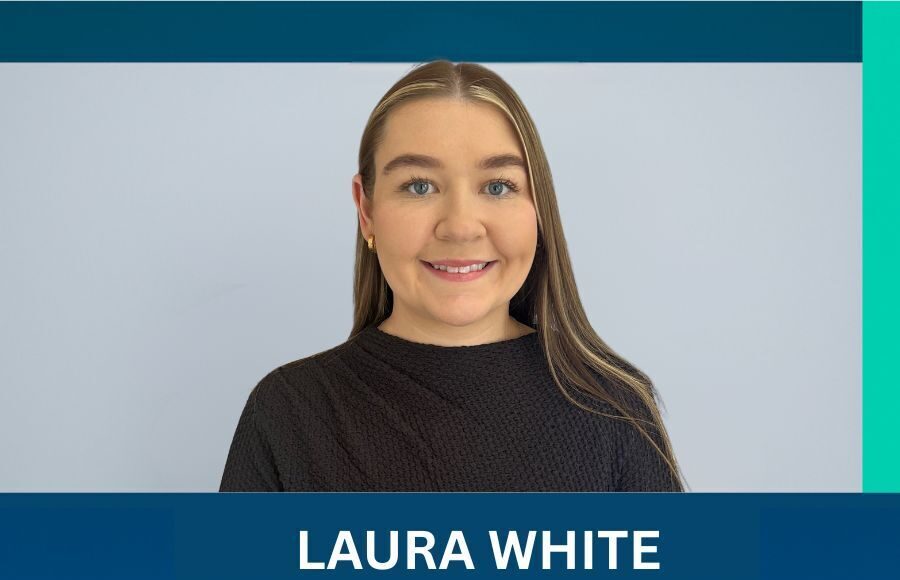

As senior HR manager at Irwin M&E, a fast-growing mechanical and electrical contractor in Northern Ireland, Laura White is helping shape a people strategy that’s hands-on, future-focused and rooted in trust. Now 30, and part of the company’s senior leadership, she’s led work across apprenticeships, leadership development and wellbeing, all while navigating the sector’s move towards renewables and smarter ways of working.
Since joining in 2021, White has helped put structure around culture, embedding practical policies and programmes that support a growing, diverse team across multiple sites. With a background in employment law and psychology, she’s known for combining legal rigour with genuine empathy, whether handling complex employee issues or building a strong pipeline of future leaders from within.
In a sector that’s traditionally been slow to change, she’s focused on doing HR differently. From rethinking recruitment to boosting mental health support, she talks in this HR Profile about what’s working, what still needs fixing and why keeping things simple and human is what really makes the difference.
Your award-winning Apprenticeship programme is credited with delivering emerging engineers. How do you evaluate its ROI in terms of retention and company culture?
For us at Irwin M&E, the return on our apprenticeship programme goes way beyond just the numbers, though we do track those too. We’ve got around 50 apprentices at any one time, across Levels 2 to 5, and a good chunk of them come through our long-standing partnership with local colleges SRC, SERC and Belfast Met. We don’t just see apprenticeships as a way to fill roles; we see them as a way to grow future leaders who already get how we work, what we value and where we’re going as a business.
 |
Get our essential weekday HR news and updates.
|

In terms of retention, we’re sitting at about 92%, which speaks volumes. A lot of our apprentices stick around and many have moved into more senior roles. We’ve got former apprentices now working as managers and senior managers, and even some who are part of our director team. That kind of career progression doesn’t happen by accident. It’s the result of proper planning, mentoring and making sure apprentices know from day one that they’ve got a long-term future here.
From a culture point of view, the apprenticeship scheme has had a big impact. We’ve got a strong buddy and mentoring system in place which helps build those early relationships and makes the company feel more connected. We rotate apprentices every six months across different departments, so they’re not stuck in one area and that’s been really popular. It helps them understand the business as a whole and gives us a chance to talent spot people with the potential to lead down the line. We also run things like innovation forums and internal careers days just for apprentices. It gives them a platform to speak up, share ideas and feel like they’re shaping the business too.
Then there’s the softer stuff. Apprentices bring fresh energy and often challenge the way things are done, which keeps us sharp. They get involved in everything from sustainability forums to mental health initiatives and team days out. It’s good for morale, and honestly, it keeps our culture grounded. Everyone remembers what it’s like to be starting out and there’s a real sense of people wanting to support each other.
The construction sector faces acute skills shortages. How are you innovating recruitment to stay ahead, especially with the rise of renewables and electric vehicles (EV) infrastructure?
It’s no secret the construction industry’s facing a real challenge when it comes to skills, and it’s not just about filling gaps. It’s also about making sure we’ve got people with the right skills for where the industry’s headed, especially with the growth of renewables, EV infrastructure and more tech-heavy systems.
At Irwin M&E, we’ve had to take a proactive approach to all of this. One of the biggest things for us has been doubling down on our apprenticeship pipeline. We’ve been building that talent pool from the ground up, working really closely with partners like Southern Regional College to make sure what’s being taught matches the skills we need, including new areas like PV, solar, air source heat pumps and EV installs. We’re not just waiting for qualified people to come through the door; we’re building them ourselves with a long-term view in mind.
A big step forward for us recently has been the launch of our new Energy and Renewables department. With demand growing in areas like solar, EV charging and green tech, we knew we had to create space within the business to really focus on that. It’s not just about bringing in people who already have those skills, though that’s important to. The new departments opened up fresh opportunities for apprentices and existing staff to move into that area and it’s something we’re going to keep expanding as more tender for more green projects.
Beyond apprenticeships, we’ve been working on upskilling existing staff through internal training, [professional development] and courses linked to new technologies. Some of this is through the Skill Up programme, some of it’s in-house and some of it’s just been about giving people the time and space to learn something new that’s going to keep us ahead of the curve.
On the recruitment side, we’ve recently brought in a talent acquisition specialist to focus specifically on how we attract the right people, especially in high-demand areas like renewables and trades. Having someone in that role means we can be much more targeted and strategic, whether that’s building relationships with colleges and training bodies, tapping into new candidate pools or reviewing how we market ourselves to potential hires. It’s made a real difference already in how we’re approaching hard-to-fill roles.
We’ve also introduced aptitude testing and are starting to look more at potential rather than just experience. Someone might not have all the technical skills today, but if they’ve got the mindset and the drive, we’re willing to invest in training them.
And then there’s the bigger picture. We’ve focused a lot on creating a culture that people actually want to be part of. It sounds simple, but if you want to attract and keep good people, especially younger ones they’ve got to feel valued, supported and like they’ve got a future here.
The skills shortage is real, but we’re not sitting back and waiting for someone else to fix it. We’re building the future workforce ourselves and shaping the kind of company people want to stay and grow with especially as the shift toward sustainability and new tech keeps speeding up.
It sounds simple, but if you want to attract and keep good people, especially younger ones they’ve got to feel valued, supported and like they’ve got a future here.
With evolving UK employment rights, how do you ensure compliance while maintaining flexibility in construction project schedules?
That’s a big one, especially in construction where no two days are the same and timelines can shift pretty quickly. At Irwin M&E, I have found that the key is staying on top of the legal side but also keeping our processes human and being adaptable. It’s not just about ticking boxes but also about doing things properly and fairly while still being able to adapt when the job demands it.
The team and I have put a lot of work into making sure our HR policies are solid and up to date. I’ve got a strong background in employment law, and I’ve studied it in depth, so I take that side of things seriously. To keep sharp, I regularly attend Chartered Institute of Personnel and Development seminars, Legal Island sessions, various webinars and industry events. These not only help me stay up to date with the latest legislative changes and best practices but also give me valuable opportunities to network and exchange insights with other professionals. It’s this continuous learning and connection that keep me ahead and prepared.
We regularly review our contracts, terms and conditions and working practices to make sure they reflect the latest legislation, whether that’s around holiday pay, working time regs or trying to stay ahead of the potential changes that are coming in NI. I try not overcomplicating it; the goal is to keep things clear and workable for both the business and the employees on the ground.
Also flexibility is a massive thing, but it doesn’t mean bending the rules. It’s about mutual respect. We’ve worked hard to build a culture where people know their rights are looked after, but they also feel part of a team that pulls together when needed. And because of that trust, we can be flexible in both directions, we’ll support people when they need time off or adjustments too which helps with retention and morale.
We’ve also made sure our managers are confident having those conversations. It can’t just sit with HR, as supervisors and managers need to know how to apply the rules in real life, whether that’s handling employee queries or juggling multiple sites.
So, yeah, staying compliant isn’t optional, but we’ve shown that you can do it in a way that’s flexible, practical and still gets the job done. It’s about knowing the rules but also knowing your people.
Staying legally sound is non-negotiable, but we’ve shown you can still stay agile and hit your targets without putting people or the business at risk.
You’ve been recognised for excellence in leadership development. What specific manager-training initiatives have had the greatest impact?
One of the biggest shifts for us has been our EDGE Leadership Programme, in collaboration with Wilson Sloan – it stands for Educate, Develop, Grow and Excel. We rolled it out with our senior managers and directors first and the impact was instant. You could see the confidence growing and, more importantly, the consistency in how we lead teams. Leadership isn’t just about being good at your job; it’s how you support others, how you listen and really how you manage through change. So EDGE has done an amazing job in giving us that shared language and structure.
We also carried out tiered leadership training, which just means we don’t expect every manager to need the same thing. Whether someone’s just stepping into leadership or has been managing for years, we tailor it. And we’re big on feedback, 360 reviews, regular one-to-one and innovation days — it all feeds into the training we offer. What’s made the biggest difference, honestly, is just making leadership feel human, not just a checkbox or title. We all have peer support groups also which means its nice to bounce ideas of others who may be in the same situation.
Given your background in psychology and employment law, how do you balance empathy and legal compliance in handling employee relations?
It’s something I think about a lot, and over time I’ve learned that empathy and compliance don’t have to sit at opposite ends of the spectrum. They can work hand in hand if you approach things the right way. My background in employment law gives me that structure and clarity meaning I know what’s required and how to protect both the employee and the business. But my training in psychology helps me look beyond the policies and really consider the individual. There’s always a reason behind behaviour and if you don’t take the time to understand that you’re only ever managing the surface-level issue.
When something comes up, I try to strip it right back. I always listen first not just to respond but to understand. I want the person in front of me to feel like they’ve been heard and that they matter even if I can’t fully change the outcome. That kind of respect goes a long way especially when emotions are running high. I’ve found people are more open to solutions when they feel like they’ve had a voice in the process.
I always try to keep consistency at the heart of it. Empathy doesn’t mean bending rules for one person and not another; it’s about applying the rules fairly but doing it with humanity. You can be legally correct but still leave someone feeling dismissed or demoralised. That’s the bit I try to avoid, because how people feel walking out of those conversations really shapes their trust in myself and Irwin M&E long-term.
I’d say our biggest learning is this: people don’t need fancy solutions; they need to feel seen, supported and like they’re working for a company that actually cares.
Construction work can be physically and mentally taxing. What wellbeing and resilience strategies have you found most effective?
We’ve spent quite a bit of time working on this because we know the toll construction can take, both physically and mentally. We have teams working long hours, often in tough conditions and under a lot of pressure to deliver. It’s not just about safety on site, it’s about looking after the whole person.
Some of the most effective things we’ve done have been surprisingly simple. Introducing 12 new mental health first aiders has been a massive step forward. Having several staff trained on site who your team knows and trusts gives people a safe route to talk when they’re struggling. It’s removed a lot of the stigma and helped us respond more quickly when someone needs support.
We also run wellbeing check-ins and team days that take people away from the day-to-day, even if just for a short time. It breaks the routine and reminds people they’re valued. But it’s not just about events or gestures it’s about listening and getting to know our staff.
Our engagement survey, “You talk, we listen”, has been powerful. It gives us data, yes, but more importantly, it highlights real pressure points like workload issues, poor communication or even feelings of isolation.
We are far from perfect and it’s still a work in progress, but I’d say our biggest learning is this: people don’t need fancy solutions; they need to feel seen, supported and like they’re working for a company that actually cares. That’s what keeps resilience strong over time.
How do you ensure a psychologically safe workplace when teams operate onsite and under high-pressure delivery deadlines?
It’s definitely a challenge when you’re working with tight deadlines, but psychological safety isn’t about removing pressure. I like to think it’s more about creating an environment where people can speak up without fear. That’s something we’ve really worked hard on at Irwin M&E.
We’ve invested a lot into our leadership training, like through our EDGE programme to make sure our managers aren’t just technically skilled, but approachable and emotionally aware. It sets the tone from the top. If managers are open, consistent and clear then their teams are much more likely to raise issues early on, before they snowball.
We’ve also built practical forums where people can contribute honestly, like our apprentice innovation groups and engineering brainstorming days. These aren’t just tick-box sessions, as we actually act on the feedback we get and when people see that they feel safer speaking up again next time.
We keep reminding ourselves that psychological safety is ongoing; it’s not something you tick off. You’ve got to earn people’s trust by consistently showing that it’s OK to challenge ideas, admit mistakes or ask for help even when the pressure’s on.
In a traditionally male-dominated sector, what steps are you taking to make Irwin M&E more inclusive and reflective of community demographics?
This is something I care deeply about, and we’ve made it a real focus over the last couple of years. We know construction has been historically male-dominated, but we also know it doesn’t have to stay that way. In just the past 12 months, we’ve promoted over 10 women into key roles, including myself and those are in technical and leadership positions, not just support roles.
We’ve done a full review of our recruitment practices, right down to the language we use in job ads, to make sure we’re not unintentionally putting people off. We’ve also looked closely at the policies that support inclusion in practice, not just in theory. That’s included things like enhanced parental leave, flexible working arrangements and access to wellbeing resources.
Another big piece is making sure all employees, not just underrepresented groups, feel like they can have a voice. That’s where our forums, surveys and social events come in. It’s about building a culture where everyone belongs and where feedback doesn’t just stay in a suggestion box. We know we’re not there yet, but we’re moving in the right direction and we’re committed to keeping it a priority.
Demand for hybrid and remote roles is growing, though less typical in construction. How are you experimenting with flexible working to attract talent across locations?
It’s true; construction doesn’t always lend itself to remote working, especially on-site roles. But that doesn’t mean we’ve ignored the shift. Flexibility means different things to different people, so we’ve looked at how we can offer it in ways that make sense for our teams.
For office-based roles, we’ve brought in hybrid options, and we’re open to things like job-sharing and flexible hours. It’s all about what works for the role and the individual, if we can make it work, we will.
We’ve also started giving apprentices the chance to experience both site and office work. It helps people see that there’s more than one route in construction and it opens up opportunities for those who may not see themselves in a traditional trade’s role.
At the end of the day, it’s about recognising that flexibility is part of what attracts and keeps good people. We’re not trying to replicate tech-sector models, but we are trying to build something that works for real people doing real jobs and that’s what makes the difference.
Especially in industries like mine, where the work is hard and fast-paced, we’ve got to keep championing wellbeing, equality and inclusion.
What HR data or metrics do you track to make strategic decisions about staffing and performance in a project-based environment?
We’re pretty data-driven now, and it’s made a big difference in how we plan and adapt. Our live KPI dashboard tracks key areas like time to hire, turnover, absence, disciplinary rates and engagement scores, but what we focus on most is why the numbers are shifting.
So if we see an increase in absence in a certain team, we don’t just log it; we dig in. Is it burnout? Leadership style? That analysis helps us respond in a way that actually solves the problem, rather than just managing the symptoms.
We also have a training matrix that links into individual development plans. It shows us where the skills gaps are and helps us build tailored training that fits both the employee’s goals and the company’s future needs. For project-based work, timing and resource planning are everything. Having this kind of data gives us the confidence to plan ahead without overloading teams or leaving critical gaps.
The company is scaling rapidly. How do you ensure new hires align with established culture and values?
It’s been a big focus as we grow because culture can unravel quickly if you’re not intentional about it. We’ve made sure that our four core values — loyalty, safety, innovation and success — aren’t just posters on the wall. They’re built into our hiring, our onboarding, our training and our performance reviews. We were actually just awarded our Investors in People Silver accreditation, in July, to back this up.
We’ve updated our recruitment process to go beyond experience. We’re looking for mindset and how they align with how we work and treat each other. That cultural fit is just as important as technical skills.
Once someone joins, we don’t leave them to figure it out. Our onboarding process includes regular check-ins, career chats and intros to different areas of the business. They get a sense of the culture early on, not just by being told about it, but by seeing it in action. And with so many of our managers having come through the ranks, that consistency is built in.
And finally, how do you see HR evolving over the next five years?
HR’s already moved a long way from being purely transactional, and I think we’ll keep seeing that shift. We’re now embedded in business strategy, not just supporting it and over the next five years, that’ll only grow.
People analytics will play a massive role. We’ll be expected to use data not just to report on what’s happened but to forecast what’s coming, whether that’s skills shortages, engagement drops or retention risks.
At the same time, I think the heart of HR will stay the same, as it’s still about people. And especially in industries like mine, where the work is hard and fast-paced, we’ve got to keep championing wellbeing, equality and inclusion. Tech and AI will help us do more, but it’s the human side — the trust-building, the listening and the day-to-day support — that’ll keep us relevant and valuable.


William Furney is a Managing Editor at Black and White Trading Ltd based in Kingston upon Hull, UK. He is a prolific author and contributor at Workplace Wellbeing Professional, with over 127 published posts covering HR, employee engagement, and workplace wellbeing topics. His writing focuses on contemporary employment issues including pension schemes, employee health, financial struggles affecting workers, and broader workplace trends.
- William Furney

- William Furney

- William Furney

- William Furney