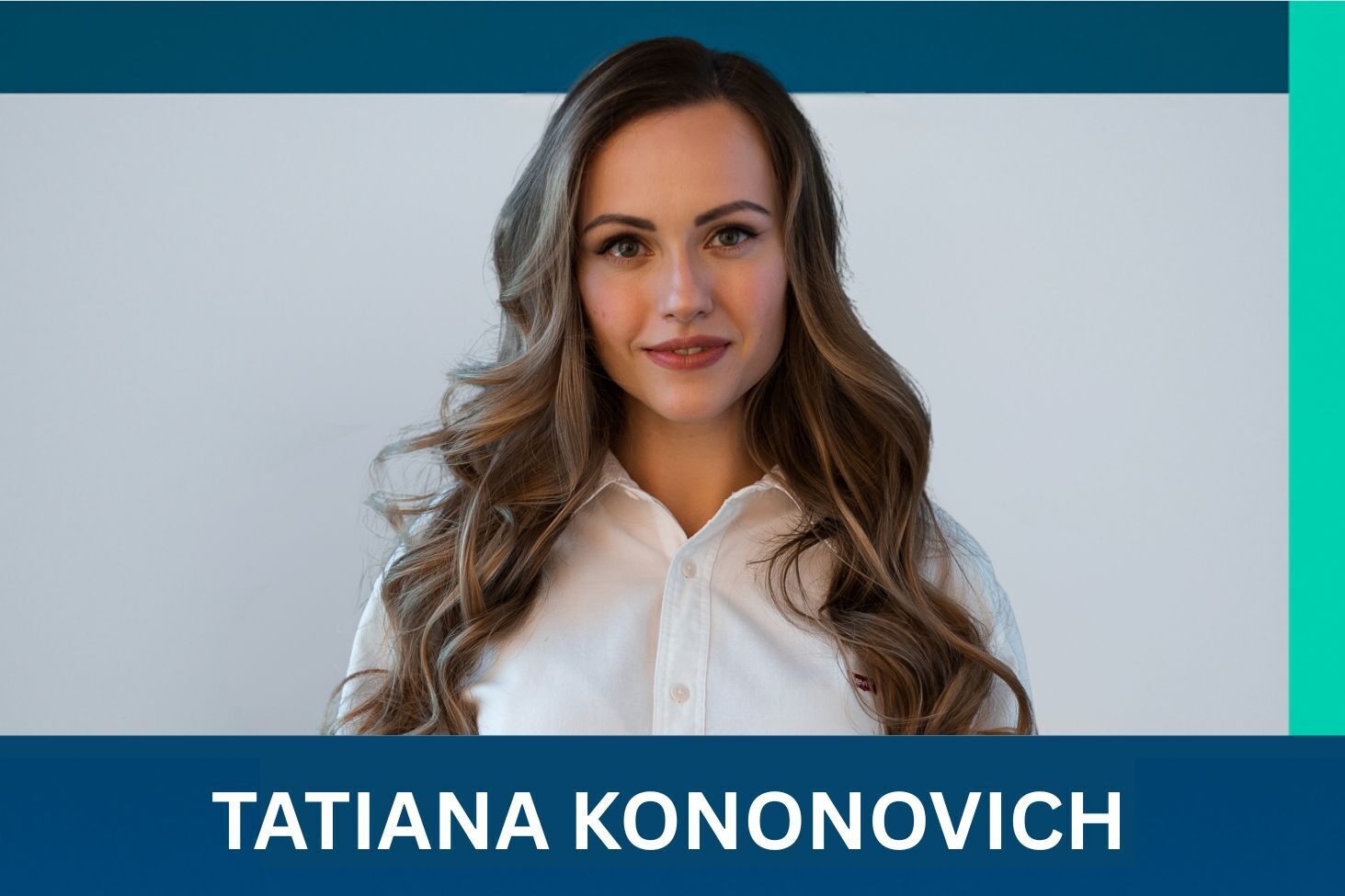

When Tatiana Kononovich joined forex trading platform INFINOX as general manager and chief of staff, she brought more than a decade of experience across operations, strategy and people leadership in financial services. Based in London and working across the fintech’s global network, Tatiana is helping to steer the company through expansion in Latin America and Asia while shaping a culture designed to support growth and resilience.
Her background includes leading transformation projects in both listed and privately held firms, often during periods of high growth or shareholder change. That experience has made her a strong advocate for inclusive leadership, believing that effective teams thrive on clarity, collaboration and psychological safety. At INFINOX, she works closely with the board and senior leaders to ensure culture and compliance are balanced with commercial ambition.
Now 32 and a mother of one, Tatiana is using her platform to champion women in finance and support those returning to the workforce. She sees mentorship, sponsorship and role modelling as critical to making real progress, and argues that resilience in organisations must be collective rather than individual. In this HR Profile, she shares her approach to building high-performing teams, scaling culture across borders and keeping people at the centre of digital and organisational change.
Your background spans operations, strategy and people leadership across global fintech. How has this cross-functional view shaped your approach to building inclusive and high-performing teams?
It’s shaped everything, to be honest. When you’ve sat at the table with finance, HR, tech, legal and sales and been accountable to all of them, you learn pretty quickly how important cross-functionality is. I’ve always believed that inclusivity doesn’t start with HR policies; it starts with understanding how different minds work and how to design systems where those minds can actually collaborate.
 |
Get our essential weekday HR news and updates.
|

In high-performing teams, inclusion often looks like clarity – around roles, purpose, expectations and support. The best teams I’ve worked with felt psychologically safe but also very honest with each other. Having that broader operational view has helped me avoid silos and think about the “people impact” of every business decision, and not just in theory but in the day-to-day realities that shape whether people stay, thrive or check out.
You’ve spoken about the difference between managing and leading. How do you nurture leadership potential in others, especially in fast-growth or high-pressure environments?
You can spot future leaders by how they behave when things go wrong, not just when things are going well. In fast-growth companies, there’s always chaos somewhere, so I look for people who can stay grounded, stay curious and don’t need a manual to keep moving.
I try to give those people space to lead small, then grow from there. I’m big on visibility and access, bringing them into decision-making rooms, encouraging them to speak up and ask questions and giving feedback in real time. Leadership isn’t about perfection; it’s about being accountable, listening well and learning fast – so I try to create environments where that’s the norm, not the exception.
In financial services, operational excellence is often prioritised over culture. What have you learned about balancing structure and human connection?
You can’t scale well without both. I’ve worked in places where everything was systems-first and people were an afterthought and, sure, they hit targets, but the turnover was brutal and no one stuck around to build anything lasting.
What I’ve learned is that structure and culture aren’t competing forces; they should support each other. The most effective processes are the ones that help people do their jobs better, not box them in. Human connection at work doesn’t have to mean team drinks and HR slogans; it means people feeling seen, heard and supported by their leaders. I always ask: What does this process do for the people using it? If the answer’s unclear, it probably needs rethinking.
I’ve learned the power of small wins, of stabilising what you can, showing progress in bite-sized ways and reminding people that change doesn’t always mean chaos.
As someone driving expansion into LATAM and Asia, what cultural or regulatory considerations do you believe HR leaders often underestimate when scaling internationally?
One big thing is rhythm, how different cultures approach pace, hierarchy and decision-making. What looks like “slowness” in one market might actually be deep relationship-building in another. HR leaders sometimes try to cut-and-paste their HQ playbook without taking time to listen locally, and it backfires.
Regulation’s another area where nuance matters. You need advisors who live and breathe the market, not just to tick the boxes, but to understand how people feel about regulation in practice. Is it trusted? Resented? Evolving? Those things influence how people work, what they value and how they engage with your brand.
You’re an advocate for women in finance and support women returning to the workforce. What practical steps can businesses take beyond just launching returner schemes?
A returner programme’s a great start, but it can’t be where support ends. First off, businesses need to listen to all employees, including women about what they actually need, whether it’s flexible hours, skills refreshers, or just confidence-building space.
Mentorship is key, but so is sponsorship. Everyone needs people in the room who actively champion their progress. Managers should be trained to see potential, not just CV gaps. And let’s not underestimate the power of role modelling either, when women see other women leading, thriving, juggling, it sends a message that they belong. That shift has to be lived day to day and not just announced in an email.
Fintech is often at the cutting edge of digital change. How do you ensure that people, not just platforms, stay central to transformation efforts?
Every tech decision we make starts with one question: who’s this for, and how will it help them? If it’s not improving something for the team or the client, it’s probably not worth doing.
I also believe in giving people room to shape change, not just react to it. That means involving teams early by asking for input, testing ideas, building in feedback loops. Transformation feels a lot less scary when people understand why it’s happening and feel like they’ve had a say. It’s not about slowing things down; it’s about making sure the tools are actually fit for purpose.
What role does mentorship play in your leadership style, and how can mentoring be made more impactful for underrepresented groups?
Mentorship’s been huge in my own career and I try to pay that forward. I see it less as formal check-ins and more as steady presence. It’s someone to talk to when you hit a wall, or need a sanity check, or just want to feel seen.
For underrepresented groups, mentoring needs to be active, not passive. It’s not enough to just offer it either. You need mentors who understand context, ask good questions and open doors when they can. I also think mentoring works best when there’s trust and that only comes if organisations back it with time, tools and proper matching, not just lip service.
Gen Z helps us raise our game: they ask smart questions and challenge lazy thinking.
Many firms talk about building “resilience” in teams. What does that mean to you in practice, and how can it be developed without leading to burnout?
First of all, resilience isn’t about “toughing it out”. That’s an outdated concept. Resilience is about feeling supported enough to bounce back when things get messy. You build it by creating safety: clear communication, fair workloads, access to help and a culture where people can say “I’m struggling” without fear.
We talk about resilience a lot at INFINOX, but we pair that with rest, boundaries and team check-ins. People don’t burn out because they’re weak; they burn out because the system doesn’t support recovery. Resilience needs to be collective, not individual. That’s how it becomes sustainable.
You’ve rebuilt operations during a time of shareholder change and leadership transition. What people-related lessons did you take from that experience?
That clarity is everything. During transition periods, people want to know three things: what’s happening, how it affects them, and where they can go for answers. If those things aren’t clear, uncertainty fills the gap.
I learned to over-communicate, even when I didn’t have all the answers yet. I also learned the power of small wins, of stabilising what you can, showing progress in bite-sized ways and reminding people that change doesn’t always mean chaos. Trust takes time, but consistency builds it faster than any big speech ever could.
As AI continues to influence hiring, onboarding and service delivery, how do you avoid losing the human touch while pursuing efficiency?
We try to use AI as an enhancer, not a replacer. If it saves time on admin, great; that means our team can spend more time actually talking to people. But we’re careful about where and how it’s used.
In hiring, for example, we’ll use AI to help with screening but decisions are made by humans who understand context. Same with onboarding, tech can speed things up, but people still need real connection, real conversation and a sense that someone’s invested in their success.
The fintech sector often attracts young, ambitious talent. How do you meet the expectations of Gen Z employees without diluting organisational discipline or standards?
Gen Z wants clarity, fairness and purpose, and honestly, those things help everyone, not just them. I’ve found that they respond really well to transparency, whether that be about how things work or what’s expected or why we do what we do.
That doesn’t mean dropping standards either; it means explaining them better. If anything, Gen Z helps us raise our game: they ask smart questions and challenge lazy thinking. The key is to listen without pandering and guide without controlling.
HR isn’t a support act anymore; it’s a driver of growth, change and resilience.
What’s your view on hybrid working within financial services, and are companies still approaching it with the right level of intention?
Some are, some aren’t. The best hybrid models I’ve seen are intentional, not accidental. They’re built around outcomes, not appearances. That means understanding which work actually benefits from being in-person and which doesn’t and designing rhythms that support both.
We’ve found that hybrid works really well when there’s trust and structure. The danger is letting it drift into “everyone do what you want” or “we’re back in four days a week just because”. Neither of those really works long-term. It needs to be thoughtful, with clear communication and flexibility that respects both people and performance.
And finally, how do you see HR evolving over the next five years?
I think HR will keep moving closer to the centre of business strategy. The old model of HR as a reactive function is done: people want leaders who understand culture, performance, compliance and wellbeing in equal measure.
Data’s going to play a bigger role, but so will empathy. The firms that thrive will be the ones who invest in their people with the same energy they invest in their product. HR isn’t a support act anymore; it’s a driver of growth, change and resilience. That’s a good thing.


William Furney is a Managing Editor at Black and White Trading Ltd based in Kingston upon Hull, UK. He is a prolific author and contributor at Workplace Wellbeing Professional, with over 127 published posts covering HR, employee engagement, and workplace wellbeing topics. His writing focuses on contemporary employment issues including pension schemes, employee health, financial struggles affecting workers, and broader workplace trends.
- William Furney

- William Furney

- William Furney

- William Furney