Infographic: Workforce planning

-

Workforce planning often fails because of poor execution, a new guide from the Institute of Employment Studies (IES) shows.

The guide encourages HR professionals to keep the process as simple and focused as possible, relying on quality over quantity when it comes to gathering data.

Peter Reilly, author of the guide, said:

“HR should be close enough to the business to know the principal challenges in matching workforce supply to work demand. It should then be able to identify the means by which gaps are closed or surpluses dealt with.”

Get our essential weekday HR news and updates.

This field is for validation purposes and should be left unchanged.
Keep up with the latest in HR...
This field is hidden when viewing the form
Optin_date
This field is hidden when viewing the form


“We wrote the guide because so often HR complains that its workforce planning is ineffective and business leaders complain that HR processes are too cumbersome. Both groups have unrealistic expectations that workforce planning will solve all their resourcing problems, ignoring the benefits of identifying and thinking through the workforce challenges.”

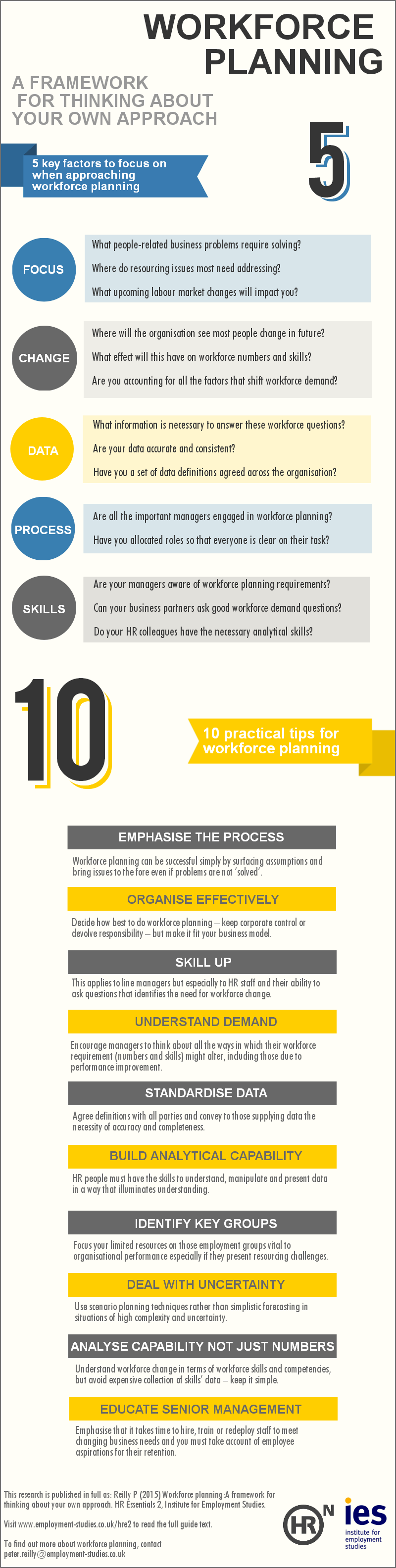
The following infographic draws on 45 years of research to deliver the ten top tips for HR practitioners to improve the process of workforce planning:
Workforce planning

Steff joined the HRreview editorial team in November 2014. A former event coordinator and manager, Steff has spent several years working in online journalism. She is a graduate of Middlessex University with a BA in Television Production and will complete a Master's degree in Journalism from the University of Westminster in the summer of 2015.

Latest news

Superdry co-founder’s victim warns workplace power can silence abuse victims

A survivor's account raises questions about speaking-up cultures and accountability in organisations.

UK’s always-on work culture ‘driving employee burnout’

Nearly half of UK workers say they end most working days mentally exhausted as rising workplace pressure leaves employees and managers struggling to switch off.

Andrew Murray on why no two days look alike

A people development leader shares how travel, training and a passion for helping others shape a working day with little room for routine.

Lucy Standing: Older workers are back in the centre of the hiring debate – ready to lead the response?

For HR leaders, the argument is simple: the people being filtered out of your hiring process are not past their best.
- Advertisement -

One in 10 women quit work after pregnancy loss, report finds

Research suggests inconsistent workplace support following pregnancy loss and maternity leave is contributing to resignations and poorer mental wellbeing.

Fear of becoming obsolete grips workers as AI reshapes careers

More than two in five workers worry their skills could become outdated as AI reshapes hiring demands and increases pressure to keep learning.

Must read

Alex Voakes: Busting the myths behind the four-day working week

The four-day working week has picked up in popularity in recent years, with 48% of jobseekers now wanting it as a benefit.

James Bywater: How to create a globally-consistent assessment process

Multinational employers recognise the benefits of standardising core operations and processes across their different countries. IT, finance and marketing were the first to cross national borders. Now, it’s HR’s turn, as global organisations are looking to achieve savings and increase efficiency by implementing more consistent HR processes around the world, including recruitment and assessment.
- Advertisement -

You might also likeRELATED
Recommended to you