
Andrew Murray has spent two decades helping people develop their skills, confidence and career prospects across the hospitality and student accommodation sectors. As head of people development at Homes for Students, the UK’s largest independent student accommodation provider, he leads learning and development initiatives across the business and its sister brands, VervLife and Orla.
At 45, Murray’s role spans everything from training delivery and leadership development to equity, diversity and inclusion, wellbeing and talent programmes. Much of his time is spent travelling across the UK, working directly with colleagues, facilitating workshops and helping shape the future of learning in an industry that is constantly evolving.
Based in Liverpool, Murray describes himself as someone who thrives on variety rather than routine. A keen runner with a hospitality background, he prefers to tackle creative projects later in the day and often finds himself working from hotels while preparing for the next training session. With no two weeks looking alike, his days are driven by people, ideas and a determination to help others reach their potential.
I’m usually up around 6am, depending on the time of year. I’m a morning runner, so most days start with me getting straight out for a run. It’s my way of resetting and mentally preparing for the day. That early quiet time really helps me clear my head and set the tone.
I’m not a big breakfast person, so I tend to keep it simple — usually a quick protein shake or a slice of toast before heading out the door.
 |
Get our essential weekday HR news and updates.
|

Getting ready for work is quick and easy for me: shower, dressed and out the door. My morning run sets the tone for the day and wakes me up. If I’m in the office I drive in, which takes me around 40 minutes. I love Smooth FM or listening to a local podcast like Leanne and Dave’s Daily Dose. We have a hybrid working model, but I tend to go in around three days a week. I love being around people and find it difficult to work on my own.
No two weeks are the same for me, though. A huge part of my role is training others, which often means travelling across the UK, anywhere from Scotland down to London. So I suppose I have no set routine in that sense.
The first thing I do is glance over my diary to get a clear picture of the day ahead, particularly any travel commitments for the upcoming week. I’ll then check in with the team and run through emails to flag anything urgent. Once I’ve got a sense of priorities, I’ll pull together my to-do list so I’m clear on what needs focus and when.

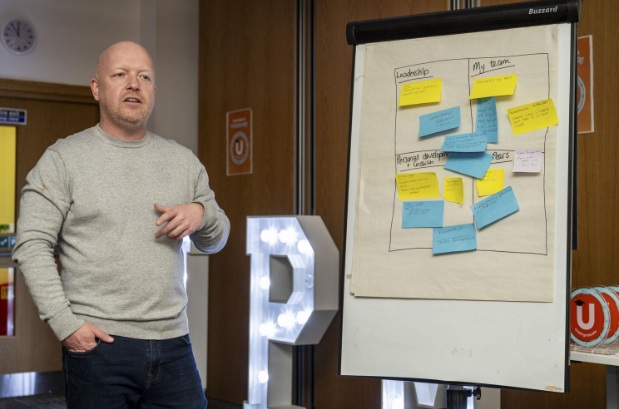
I can be in a DEI meeting with partners, looking at personal development plans with our YOUniversity cohorts or having a meeting with an apprentice provider. I could be in a collaboration meeting with our ops team or with our central services colleagues or I could be delivering a Discovery Insights session in our training room or one of our properties.
If I’m in the office, I try to get out for a short walk at lunchtime. But if I’m training, I’ll have lunch with delegates, as a way of gathering feedback. I’ll usually just eat what I can grab, but try to keep it as healthy as possible.
How we approach learning and development will be the big innovation in HR in the next five years. We’re already seeing a shift from Millennials and Gen Z to Gen Alpha and that is starting to shape workplace expectations. This is a generation that’s grown up fully immersed in technology, so traditional training models just won’t land in the same way. Gamification will continue to grow, and development will need to feel more personalised. I also think L&D professionals will need to evolve with the times. Rather than specialising in one narrow area, we’ll need to be more adaptable and generalist in our skillsets.
To succeed in HR, you need to understand the needs of the new customer base. It’s not a one-size-fits-all approach. Be adaptable to your surroundings. Understand the wider market, not just your sector.
I work better in the afternoons, so I’ll keep big projects for then — writing and reviewing content or building individual programmes, for example. We launched YOUniversity, our new internal progression programme, last year, so a lot of my afternoons recently have been spent creating the content for that, reviewing it, seeing what landed well or what could be improved. The first two hours of the day I need to be in my own head, so I struggle to get this kind of work done first thing. I’m from a hospitality background, so I have more of an evening/afternoon buzz.
I don’t like routine. I like that my role can let me be as inventive as possible. I like to take each day as it comes and take a fresh approach to it.
My pet peeve about HR is external L&D professionals trying to tap into what we do as a business without understanding what we are about. And cold calling on LinkedIn and email – it’s the worst! If you’re going to try and work with us or sell us something, then at least do your research.
I don’t do schedules and sometimes that’s to my own detriment. I sometimes say yes to far too many things. If I get an idea, I have to make sure I brain dump it even if I don’t do anything with it, no matter what time of the day. I find myself away in hotels a lot, so it’s sometimes nice to sit in a hotel restaurant with a laptop and clear down what’s been going on that day. I think sometimes people think that side of the job is glamourous, but it can mean long hours and a lot of alone time.
My days aren’t agenda-driven and can vary hugely, from being out all day conducting interviews to sitting in hotels in the evening preparing for the next training session. It can easily turn into a 12-hour day where I’m constantly “on” and delivering. The role itself is broad, spanning e-learning; people development; equity, diversity and inclusion; stakeholder engagement; wellbeing; and neurodiversity. We’re actively shaping what learning and development looks like for the future and ensuring it fits strategically within the wider DEI function and broader business priorities.
I’m not a huge cooker and I don’t do a weekly shop either. If I’m meeting friends, I’ll go out for dinner — maybe to a pub that does a decent burger or a nice independent restaurant in Liverpool if it’s a celebration or long-awaited catch up. I like to support independent restaurants.
Running and going to the gym are what I do to escape work mode. I try and run at least three times a week and the gym twice a week, if I can get around to it.
I’m making an effort at the moment to stay away from my phone an hour before bed. To be honest, I have no set bedtime. I go to bed when I’m tired. I struggle with sleep and it all depends on what’s been going on that day. Some nights I can be out cold as soon as my head hits the pillow and some nights I struggle because I can’t switch off – whether that’s from work or family life related. I’m trialling CBD oil at the moment to help with that.


William Furney is a Managing Editor at Black and White Trading Ltd based in Kingston upon Hull, UK. He is a prolific author and contributor at Workplace Wellbeing Professional, with over 127 published posts covering HR, employee engagement, and workplace wellbeing topics. His writing focuses on contemporary employment issues including pension schemes, employee health, financial struggles affecting workers, and broader workplace trends.
- William Furney

- William Furney

- William Furney

- William Furney