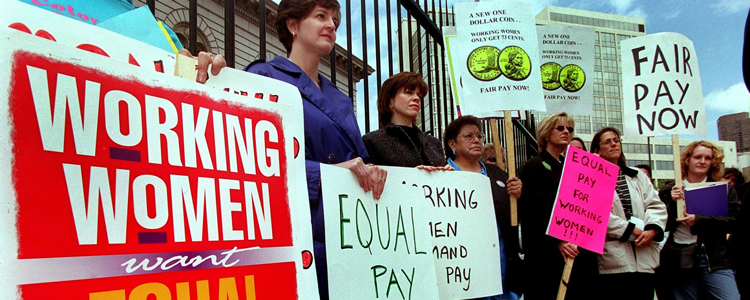
Research by the charity Young Women’s Trust found one in five male bosses agreed sexist behaviour still exists in their organisation. One in 10 men said men were better suited to management jobs than women – compared to three per cent of women.
The organisation, which helps young women on low or no pay, said its survey also found that these sexist attitudes appear to be translating into decisions that were holding women back.
Two in five of those surveyed said it was more difficult for women to progress in their organisation than men. The study was based on a sample of over 800 managers.
 |
Get our essential weekday HR news and updates.
|

The report said the figures showed little change on last year’s results, despite moves to improve women’s equality such as gender pay gap reporting.
Joe Levenson, Young Women’s Trust campaigns director, said,
Far too many women are still having to battle sexism to progress at work. In some cases, sexist attitudes shut women out of the workplace altogether.
Many employers say they are aware of this, yet too few are doing anything to end it. From patronising remarks to sexual harassment and gender discrimination, sexist cultures only serve to hold women back. This perpetuates gender pay gaps and disadvantages employers by limiting their organisations’ talent pools.
Unsurprisingly, women managers are more aware of it than men – no doubt because they too experience discrimination. Employers must root out sexism in their organisations and give women an equal chance to succeed. It can be particularly tough in male-dominated workplaces, where employers should help to bring more women in and change the culture through training days, mentoring and even targets.
The study comes after a report by the charity found more than one million young women in Britain say they have been paid less than male colleagues for the equivalent work. The survey, which came out last autumn, found one in five reported having been paid less than male colleagues for either the same or similar work.
The organisation drew attention to the fact some employers do this knowingly despite it actually being illegal. The study found one in 10 HR decision-makers in organisations which have over 250 staff are aware of women in their organisation earning less than men for jobs which are of the same level.
Sheila Flavell, COO at FDM Group comments,
It is disheartening to see the amount of workplaces which still foster sexist behaviour, effectively locking capable and skilled female workers out of job roles and promotions. The assumption that men are better suited to management positions is an old-fashioned concept that must be eradicated from organisations.
Moving forward, all companies and business leaders need to acknowledge this problem still exists, even if they are not consciously aware it is occurring, before introducing strict measures to cut the problem out. Commitment and full dedication towards effectively tackling this problem and promoting the importance of diversity will go a long way to improving the gender disparity in the workplace, ensuring sexism is diminished.
Interested in eliminating workplace bias? We recommend the Unconscious Bias in the Workplace training day.


Aphrodite is a creative writer and editor specialising in publishing and communications. She is passionate about undertaking projects in diverse sectors. She has written and edited copy for media as varied as social enterprise, art, fashion and education. She is at her most happy owning a project from its very conception, focusing on the client and project research in the first instance, and working closely with CEOs and Directors throughout the consultation process. Much of her work has focused on rebranding; messaging and tone of voice is one of her expertise, as is a distinctively unique writing style in my most of her creative projects. Her work is always driven by the versatility of language to galvanise image and to change perception, as it is by inspiring and being inspired by the wondrous diversity of people with whom paths she crosses cross!
Aphrodite has had a variety of high profile industry clients as a freelancer, and previously worked for a number of years as an Editor and Journalist for Prospects.ac.uk.
Aphrodite is also a professional painter.
- Aphrodite Papadatou

- Aphrodite Papadatou

- Aphrodite Papadatou

- Aphrodite Papadatou