


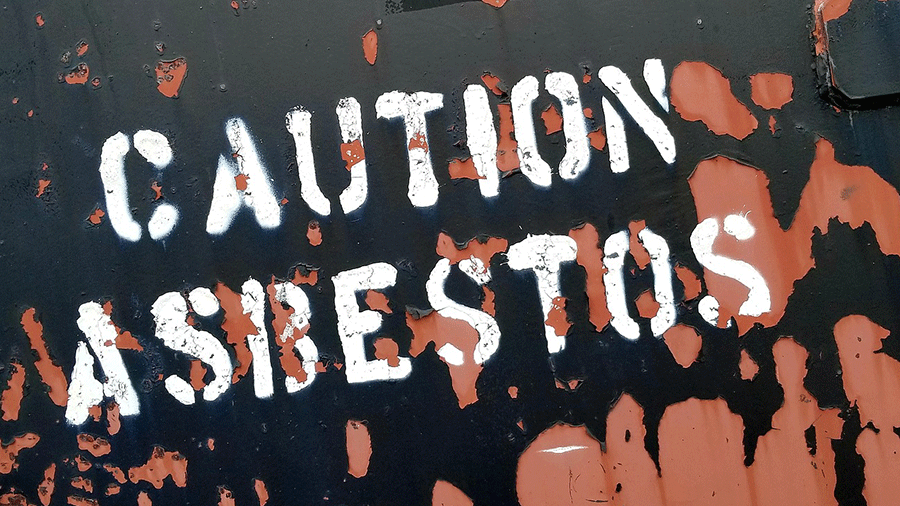


Deaths by industrial disease have increased by nearly half since 1995 with the UK’s death toll from asbestos being at ‘crisis level’.
There were 2,079 deaths by industrial disease recorded by coroners in England and Wales in 2018, a 44 per cent rise compared to the 1,878 in 1995. With Thompsons Solicitors, a law firm who specialises in injuries and mistreatment stating that the most well-known types of industrial diseases related to asbestos.
The Health and Safety Executive (HSE) in July 2019 released information stating there were 2,523 deaths in 2017 from mesothelioma, cancer mainly caused by the breathing in of asbestos.
 |
Get our essential weekday HR news and updates.
|

The HSE predicted that these numbers will remain at these levels for the rest of this decade before starting to decline.
Asbestos-related cancers can be diagnosed as many as 50-years after exposure to it.
In response to this news, JMP Solicitors have given five ways to tell if you are at risk of asbestos poisoning at work.
Nature of occupation
Some professions have a higher chance of being exposed to asbestos than others. Workers in construction, shipyards and factories have a high possibility of asbestos contact. Also jobs with no permanent place of work like electricians, firefighters and auto mechanics could find themselves at risk as they work in different environments.
Age of the building
The peak period for asbestos installations were before 1970, asbestos was fully banned in 1999. If you have worked in a building before 1970 you may be at risk.
Working with asbestos-containing materials
If materials containing asbestos are chipped or damaged it may release fine dust containing the substance, so it is imperative you are made aware of this before handling such materials and take showers before returning home.
Inadequate protection by employers
Employers have a duty of care for their employees against harmful substances. It is pivotal employees have been provided safety equipment as well as instruction, information and training.
Working near contaminated job sites
If you are to be working near a live asbestos site you need to be warned by your employer. Asbestos remains in the air for hours, putting anyone nearby in danger of inhaling it. Workers need to be aware of their working environment.
Neil McKinley, personal injury solicitor at JMP Solicitors said:
According to the World Health Organisation (WHO) no amount of asbestos exposure is safe and even the smallest amount can prove detrimental to health.
Asbestos is defined as a group of minerals made of microscopic fibres which can be dangerous when dealt with inappropriately. Workplace risk assessments need to be completed to avoid employees having contact with toxic asbestos fibers, as inhaling asbestos dust can cause a number of severe lung conditions, which in extreme cases, can further develop into cancer.


Darius is the editor of HRreview. He has previously worked as a finance reporter for the Daily Express. He studied his journalism masters at Press Association Training and graduated from the University of York with a degree in History.
- Darius McQuaid

- Darius McQuaid

- Darius McQuaid

- Darius McQuaid



