


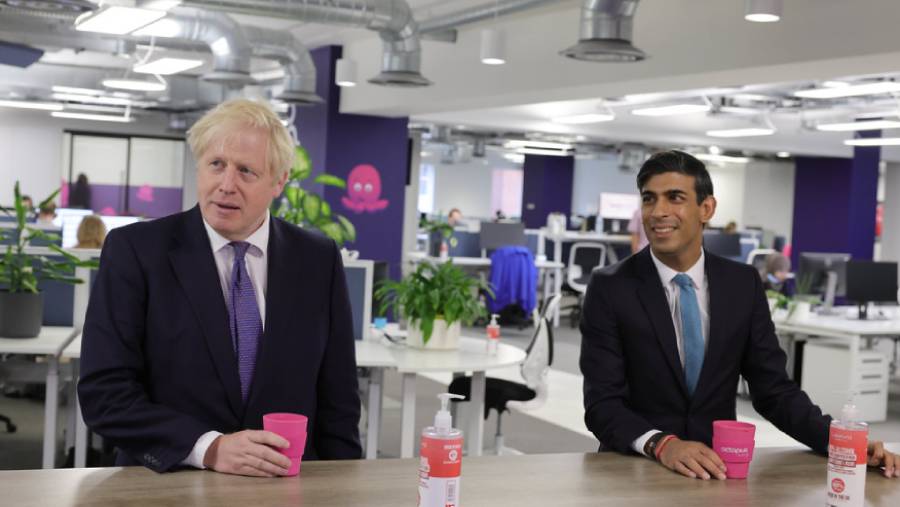

On the 17th December 2020, Chancellor Rishi Sunak announced that the Coronavirus Job Retention Scheme (CJRS) – informally known as the furlough scheme – was to be extended until the end of April 2021.
The Chancellor of the Exchequer, Rishi Sunak, has announced that the furlough scheme is now being extended until the end of April, a month after the scheme was officially planned to end.
In November, Mr. Sunak said that this scheme would be extended until the end of March 2021 and would be reviewed in January to “decide whether economic circumstances are improving enough to ask employers to contribute more”.
However, the decision has been made to further extend the scheme, a move which the Chancellor stated would provide “certainty for millions of jobs and businesses”.
 |
Get our essential weekday HR news and updates.
|

The Chancellor also clarified that the Government would continue to pay 80 per cent of wages until the end of April. Additionally, the COVID-19 business loan schemes is also being extended until the end of March.
On his decision, Mr. Sunak further stated:
Our package of support for businesses and workers continues to be one of the most generous and effective in the world – helping our economy to recover and protecting livelihoods across the country.
We know the premium businesses place on certainty, so it is right that we enable them to plan ahead regardless of the path the virus takes, which is why we’re providing certainty and clarity by extending this support.
However, Annelise Dodds, the shadow Chancellor, stated that this move was “irresponsible” and demonstrated his “last-minute decision making” as Ms. Dodds stated that this left organisations with less than 24 hours before they have to issue redundancy notices.
Kate Palmer, HR Advice and Consultancy Director at Peninsula, said:
In light of today’s tiers announcement in England, coupled with the news that Wales is going into, essentially, another lockdown from 28 December, yet another extension of the furlough scheme is good news for businesses. Now expected to run until the end of April, businesses will still be able to claim 80% of furloughed staff wages until this date. Furthermore, until we are told otherwise by the government, it looks like rules surrounding its use remain the same; employers can use the scheme for the first time if eligible.
While this is no doubt a bit of positive news in light of all the doom and gloom we seem to have seen of late; it also does suggest that the government expects coronavirus disruption to continue for some time. To this end, employers must consider how the furlough scheme can help them, and seek guidance on how to correctly use it if necessary.
Simon Lyle, UK managing director of outplacement firm Randstad RiseSmart, outlines steps that the Government and HR must take over the coming months:
The coronavirus is hitting jobs, the unemployment rate is surging, and the labour market is in turmoil.
While people are already falling out of work in large numbers, there are still about 2.5 million people on furlough. At least with the furlough scheme winding down in April, we aren’t going to walk off a cliff edge in March. But we still have a problem.
When furlough does end, employers will have to evaluate if they can afford employees back on their payroll. Inevitably many will decide that they can’t. To allow for a proper consultation period, companies will have to inform people by mid-March at the latest – that will be focusing the minds of CEOs and HR departments up and down the country. Unfortunately, other furloughed workers – a substantial proportion of them – are employed by zombie companies that don’t have real jobs for them to return to.
The good news is that job vacancies have recovered from the very low numbers seen earlier in the year – and we still hope to see a seasonal bounce in the number of jobs being advertised in the New Year. That will mean people being made redundant now have more chance of finding work given the right support from compassionate employers.
With this in mind, the government needs to make a success of the Restart Scheme and use AI based technology to speed up the job search process. Intensive support tailored to people’s circumstances is exactly what we’d recommend a compassionate employer give an employee who had been laid-off, but they must use the most innovative approaches to get the results people desperately need.


Monica Sharma is an English Literature graduate from the University of Warwick. As Editor for HRreview, her particular interests in HR include issues concerning diversity, employment law and wellbeing in the workplace. Alongside this, she has written for student publications in both England and Canada. Monica has also presented her academic work concerning the relationship between legal systems, sexual harassment and racism at a university conference at the University of Western Ontario, Canada.
- Monica Sharma

- Monica Sharma

- Monica Sharma

- Monica Sharma



