


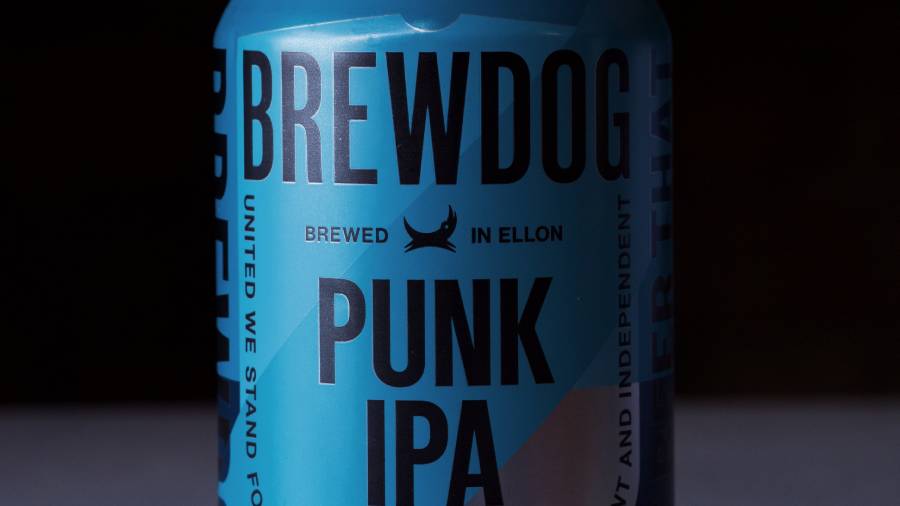

Ex-employees of the beer firm BrewDog have penned an open letter, sharing their negative experiences at the company and the alleged atmosphere of fear created.
In this collective letter, former employees of the firm have put forward allegations of the negative company culture at the business and how this has impacted their mental health.
Claiming that staff are left “burnt out, afraid and miserable”, the signatories wrote that the residual feeling at the company has persistently been fear.
In specific, the letter raised doubts about the benefits that the company claims to give to staff, including ‘Pawternity’ – granting staff a week’s paid leave when adopting a new puppy or rescue dog.
 |
Get our essential weekday HR news and updates.
|

However, the employees stated that “many staff are simply never permitted to take [this time off]” and accused the firm of using the empty gesture to garner positive publicity.
In all areas of the business, the open letter stated that staff felt “there were at best hurdles, and at worst genuine safety concerns” and cited the “toxic attitudes” towards junior staff becoming normalised and integrated within the company culture.
Burnout was also a key issue mentioned in the open letter, with employees citing “fast-paced” meant “unmanageable”, and “challenging” meant “damaging”. It further wrote that senior leaders were permitted to “treat other staff however they liked without repercussions – making them feel belittled and/or pressured into working beyond their capacity, and often eventually feeling forced out of the business”.
The open letter was signed by over 60 members of staff including many who did not feel comfortable sharing their names for fear of repercussion.
James Watt, Chief Executive of BrewDog and mentioned directly in the letter, responded to these claims on Twitter, stating:
At BrewDog we are focussed on building the best business we can, which is why the open letter we saw on Twitter was so upsetting, but so important. Our focus now is not on contradicting or contesting the details of that letter, but to listen, learn and act.
As a fast-growing business, we have always tried to do the best by our team – we do have thousands of employees with positive stories to tell as a result. But the tweet we saw last night proves on many occasions, we haven’t got it right. We are committed to doing better, not just as a reaction to this, but always; and we are going to reach out to our entire team past and present to learn more. But, most of all, right now, we are sorry.
Commenting on the case, Kate Palmer, HR Advice Director at Peninsula, said:
Despite best efforts, an organisation will never be perfect in every way so should be prepared to take on feedback to make employee experience better. No-one knows an employee’s experience better than the employee themselves so their opinion can be invaluable in being able to recruit, and retain, future staff.


Monica Sharma is an English Literature graduate from the University of Warwick. As Editor for HRreview, her particular interests in HR include issues concerning diversity, employment law and wellbeing in the workplace. Alongside this, she has written for student publications in both England and Canada. Monica has also presented her academic work concerning the relationship between legal systems, sexual harassment and racism at a university conference at the University of Western Ontario, Canada.
- Monica Sharma

- Monica Sharma

- Monica Sharma

- Monica Sharma



