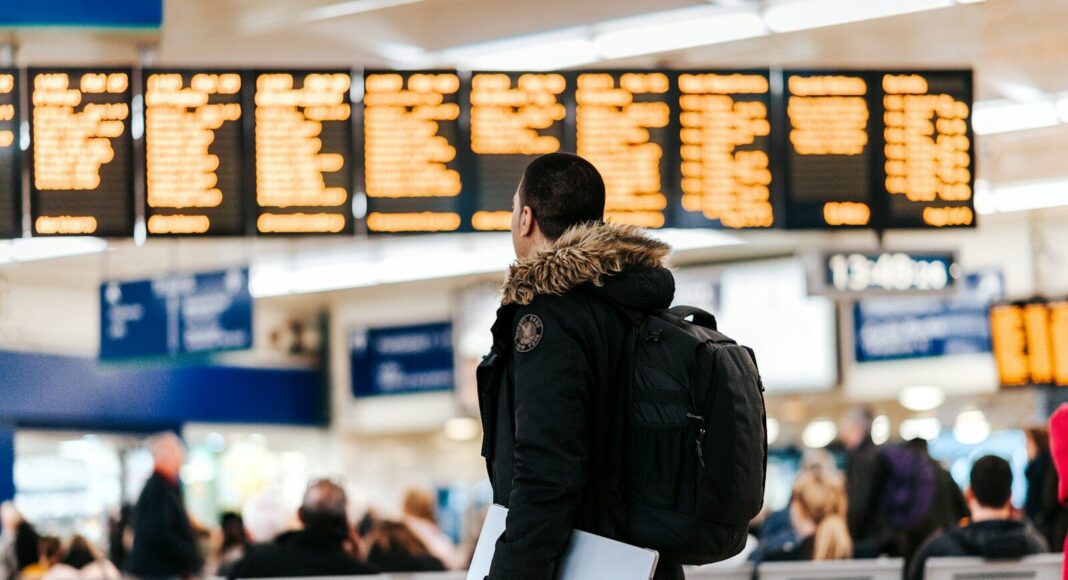

Employers are facing mounting pressure to protect travelling staff as geopolitical instability, rising transport costs and growing safety concerns disrupt corporate travel across Europe.
Nearly half of corporate travel professionals said geopolitical tensions were now their biggest concern in 2026, overtaking cost cutting for the first time in years. They reported concerns around border instability, cancelled routes, rising fuel costs and rapidly changing government policies as organisations struggle to manage increasingly unpredictable travel conditions.
Research released ahead of a Business Travel Show Europe conference in London next month surveyed 192 travel and procurement professionals across Europe and suggested international instability is now reshaping corporate travel strategy.
Geopolitical instability becomes major business concern
Almost 47 percent of respondents identified geopolitical tensions as the biggest challenge facing travel programmes this year. The concerns come as airlines across Europe continue to face disruption linked to conflict in the Middle East and soaring fuel prices, leading to cancellations, rerouting and higher fares.
 |
Get our essential weekday HR news and updates.
|

Louis Magliaro, executive vice president of The BTN Group, which organises the travel fair, said global instability had become an everyday operational challenge for employers managing travelling staff. “This data aligns with wider industry sentiment that global instability is no longer a background risk but a daily operational variable.”
He said the conflict in the Middle East had intensified pressure on travel teams across Europe. “The conflict in the Middle East alone has triggered emergency repatriations, widespread fare inflation, cancellations, rerouting, travel bans and heightened traveller anxiety. It’s a daily changing minefield that’s keeping travel managers on their toes.”
Rising costs place further strain on employers
The survey also revealed growing concern over rising travel expenses and shrinking budgets.
More than a third of respondents cited increasing air fares, hotel prices and ground transport costs among their biggest pressures, while almost a quarter said balancing travel demand with tighter budgets had become increasingly difficult.
One in five respondents also identified growing duty of care responsibilities and travel risk volatility as major concerns for 2026. The data suggests that employers are increasingly being forced to balance employee safety expectations with financial pressure and operational demands.
Technology changes ‘create confusion’
Travel professionals also reported uncertainty around evolving technology systems and artificial intelligence tools within the corporate travel sector. Concerns included fragmented airline booking systems, inconsistent distribution standards and difficulty integrating newer travel technologies into existing platforms.
Magliaro said many organisations were struggling to adapt to rapid changes across the industry. “The message from travel buyers here is very clear: while AI and modern distribution promise transformation, many organisations are struggling to navigate fragmented content, inconsistent standards and legacy tech systems that don’t integrate.”
The survey also revealed an unexpected lack of concern around cybersecurity and cross-border data privacy risks, with no respondents selecting either issue among their top challenges despite growing digital threats facing businesses globally.
Employee safety becoming strategic priority
The research suggests that duty of care is becoming increasingly central to corporate travel planning as organisations respond to growing uncertainty and traveller anxiety. Emergency response planning, employee wellbeing and real time risk monitoring are becoming more important as travel disruption becomes harder to predict.
Magliaro said businesses were being forced to rethink how they managed travel programmes amid rising instability. “The data from our annual buyer report makes one thing clear: 2026 is a pivotal year for corporate travel.
“External volatility is reshaping strategy, cost inflation is redefining budgets and traveller expectations are rising fast, making it tricky for travel programmes to adapt to demand.”


William Furney is a Managing Editor at Black and White Trading Ltd based in Kingston upon Hull, UK. He is a prolific author and contributor at Workplace Wellbeing Professional, with over 127 published posts covering HR, employee engagement, and workplace wellbeing topics. His writing focuses on contemporary employment issues including pension schemes, employee health, financial struggles affecting workers, and broader workplace trends.
- William Furney

- William Furney

- William Furney

- William Furney