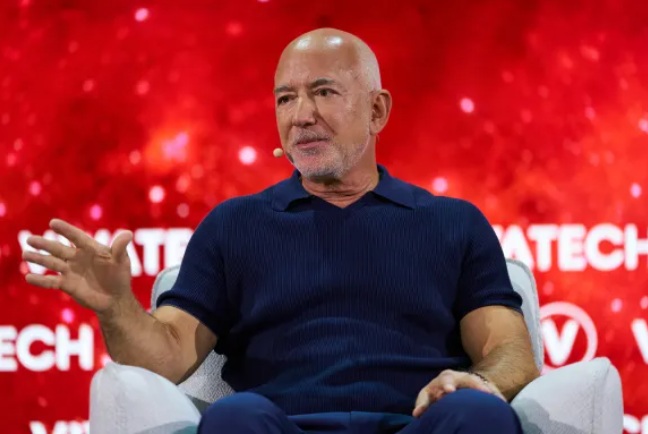

Predictions that artificial intelligence will trigger widespread job losses are facing increasing scrutiny, with Amazon founder Jeff Bezos becoming the latest technology leader to argue that AI will create more work for humans rather than replace them.
Speaking at a conference in Paris, Bezos rejected concerns that advances in AI could make large numbers of workers redundant. Instead, he said the technology would increase demand for labour and eventually contribute to workforce shortages.
“I know there’s a lot of concern that many people have, including many smart people, that AI is going to make humans redundant and so on,” Bezos said at the VivaTech conference in the French capital on Wednesday.
“I totally disagree with this point of view. And I think, in fact, AI is going to create a labour shortage.”
 |
Get our essential weekday HR news and updates.
|

Tech leaders divided over AI’s impact
Bezos’ comments come amid an increasingly active debate over how AI will affect employment, particularly as businesses continue to adopt generative AI tools across a growing range of roles.
Earlier this month, OpenAI chief executive Sam Altman said he was “delighted to be wrong” about fears of an AI-driven jobs apocalypse after labour market disruption had so far proved less severe than many had expected.
Others remain more cautious. Former prime minister Rishi Sunak, who now advises Microsoft and AI company Anthropic, recently warned that AI was already affecting opportunities for younger workers entering the labour market.
The differing views reflect growing uncertainty about whether AI will primarily automate existing jobs or create new opportunities that offset those losses.
‘Labour shortages’ rather than job losses
Bezos argued that the biggest constraint on economic growth is not a lack of ideas or ambition but a shortage of resources and labour that technology can help address.
His comments were made while discussing Prometheus, a new artificial intelligence venture focused on accelerating manufacturing processes, an area where automation is already playing a growing role.
The billionaire entrepreneur suggested AI would remove barriers that currently limit productivity and innovation, enabling businesses to expand and creating demand for additional workers.
The argument echoes previous debates surrounding technological change, where concerns about automation replacing jobs have often been followed by the creation of new occupations and industries.
Concerns remain over workforce disruption
Not everyone shares Bezos’ optimism.
The Trades Union Congress (TUC), the body representing UK trade unions, has warned that AI could repeat some of the negative consequences associated with deindustrialisation if productivity gains are not shared more widely with workers.
The organisation has argued that jobs could be degraded or displaced if employers focus solely on cost savings rather than using AI to improve work and support employees.
At the same time, many economists and labour market experts continue to monitor the impact of AI on graduate recruitment, administrative work and entry-level professional roles, which are often considered among the most exposed to automation.
While evidence of large-scale job losses has yet to emerge, the debate has increasingly shifted towards how organisations redesign roles and develop new skills rather than whether AI adoption will affect work at all.
The challenge for employers, observers say, may lie less in managing mass redundancies and more in helping employees adapt as technology changes how work is carried out across organisations.


William Furney is a Managing Editor at Black and White Trading Ltd based in Kingston upon Hull, UK. He is a prolific author and contributor at Workplace Wellbeing Professional, with over 127 published posts covering HR, employee engagement, and workplace wellbeing topics. His writing focuses on contemporary employment issues including pension schemes, employee health, financial struggles affecting workers, and broader workplace trends.
- William Furney

- William Furney

- William Furney

- William Furney