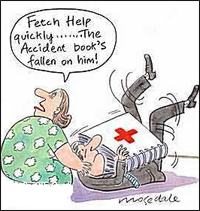
The survey, by business support services provider ELAS, researched the views of 1,000 managers in small firms throughout the UK. In particular it revealed an astounding 88 per cent admitted to having broken at least one health and safety regulation in the past week. Of these, three quarters said they had knowingly broken the rules.
Examples of those regulations that were breached include:
- 51 per cent admitted heavy lifting without following the correct procedures
- 49 per cent used electrical equipment that hadn’t been safety tested
- 44 per cent left a slip, trip or fall obstacle on the workplace floor
- 26 per cent risked falling from height by balancing on the edge of a table or chair to change a lightbulb or reach a high shelf.
These stats should act as a wake up call to managers, reminding businesses that health and safety should always be at the forefront of their minds and employees should not be encouraged to ignore health and safety requirements.
 |
Get our essential weekday HR news and updates.
|

Recent reports suggest that upcoming reforms to UK health and safety regulations will reduce red tape for small businesses. The Health and Safety Executive (HSE) has even reported that a reduction in red tape will cut the number of inspections by a third, but with small businesses already regularly breaching health and safety regulations, what does this mean for the safety of employees?
As I discussed in my recent blog, whilst it is a welcome move to reduce unnecessary regulation, a certain amount is still essential to ensure the safety and wellbeing of businesses, their customers and their employees. This survey only emphasises the importance of effective health and safety practises, which are key to lowering accident and death rates.
However, the possibility of making the process simpler means it is likely that small businesses will find it easier to follow the correct health and safety procedures. If the rules are simpler to interpret and implement they will be less of a burden to businesses, and less excuse for those who knowingly break the rules.


Richard Evens, Commercial Training Director, St John Ambulance
Richard is Commercial Marketing Director at St John Ambulance, the nation's leading first aid organisation and market leader in workplace first aid training. Responsible for training programmes and educational standards, Richard has been involved in consultation with the HSE since the early development of new guidance for the content and structure of workplace first aid training. He has liaised widely with the HSE and other stakeholders to apply the collective expertise in first aid to the new guidance, becoming a board member of the First Aid at Work Council which was created during this process.
Before joining the charity sector 10 years ago in a retail development role for Oxfam, Richard worked in marketing and logistical roles with Shell and Total Oil. He lives in north west London spending time with his family, trying to keep up with two energetic young children.
- Richard Evens

- Richard Evens

- Richard Evens

- Richard Evens