


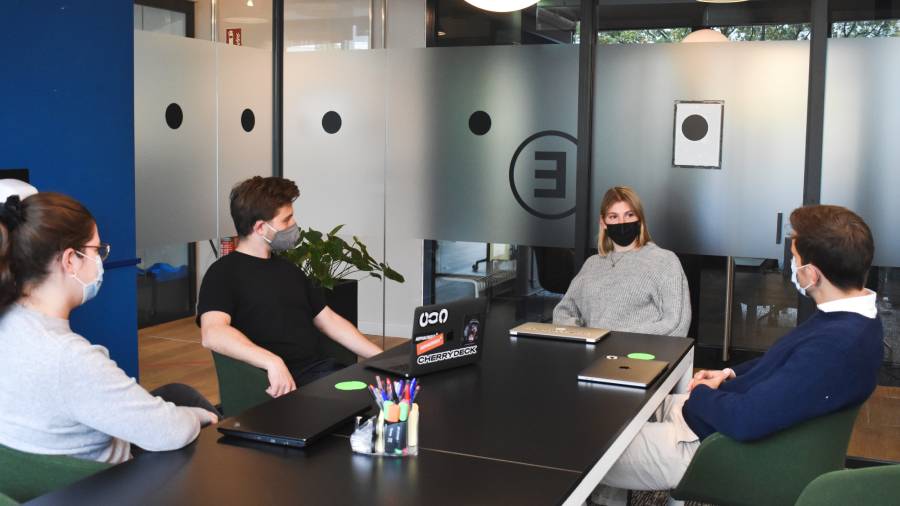

According to a new survey conducted by BCW, workplace power dynamics have shifted in favour of employees.
A new report finds that over half of all employees now feel more empowered to influence change in their workplace compared to a year ago, including with their employer’s business strategy (54 per cent), company culture (55 per cent) and their work experience (59 per cent).
This feeling of empowerment was shown to be most pronounced among Generation Z and Millennial staff members.
Overall, despite the widespread difficulties caused by COVID-19, close to two-thirds of employees report feeling more productive (62 per cent), more connected to their colleagues (62 per cent) and more valued by their employer (60 per cent).
 |
Get our essential weekday HR news and updates.
|

Employees’ experience at work has also showed an improvement with three in five now saying they have seen an increase in leadership listening to employee feedback (59 per cent).
A similar number also reported improvements to their work experience, work culture and work-life balance over the same period.
However, the research did find that flexibility is a key priority for the global workforce moving forward.
Flexible hours or a hybrid work environment (67 per cent) are the top changes employees are looking for from their organisations, with other top-ranked demands of employers including meaningful work, feeling supported by managers and team members, workplace benefits and effective leadership.
This comes at a time when many, notably younger employees, are indicating that they will likely leave their employer within the next year amid the Great Resignation, with over a fifth of Gen Z (21 per cent) reporting this.
However, the main difference between those who will stay and those who are intending to leave is employers that show a commitment to fostering culture, employee value and the ability for employees to have their voices heard, the study highlights.
James Morley, Head of Transformation, BCW, stated:
The results show that the increased flexibility and effort made by organisations to connect and engage with employees throughout the pandemic has paid dividends.
Employees are feeling more valued, more empowered, and more vocal about their expectations in the workplace.
As leaders prepare for the ‘next normal’ – including moves to implement return to office policies – they need to be mindful of these expectations and needs.
Employees increasingly want their voices heard, and failure to adequately address that will likely lead to high rates of attrition – particularly among younger generations.
This was echoed by Christine Trodella, Director, Workplace from Facebook, who stated:
For businesses, this means ongoing investment in the employee experience and continued focus on empathy and authenticity.
Employee expectations will continue to increase whether workers are desk-based or on the frontline and businesses will need to make sure they’re turning these expectations around culture, collaboration and connectivity into reality.
*The International Workforce Insights Study was conducted in partnership with market research firm, Mercury Analytics, LLC. This online survey included employees of large companies (1,000+ employees) from across six countries including the UK. A total of 7,018 respondents were surveyed between August 24 and September 7, 2021.


Monica Sharma is an English Literature graduate from the University of Warwick. As Editor for HRreview, her particular interests in HR include issues concerning diversity, employment law and wellbeing in the workplace. Alongside this, she has written for student publications in both England and Canada. Monica has also presented her academic work concerning the relationship between legal systems, sexual harassment and racism at a university conference at the University of Western Ontario, Canada.
- Monica Sharma

- Monica Sharma

- Monica Sharma

- Monica Sharma



