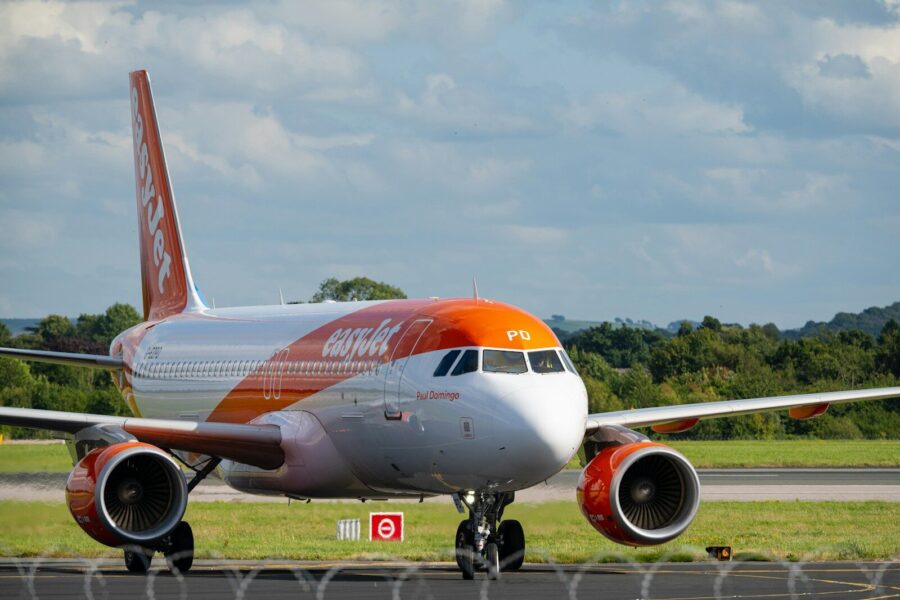

An employment tribunal has ruled that low-cost airline easyJet was justified in sacking a cabin manager who repeatedly made sexual comments to colleagues and passengers, rejecting his claim that the remarks were harmless workplace banter.
Ross Barr, who had worked at the airline for eight years, lost his appeal after being dismissed for gross misconduct following a series of complaints about his behaviour during flights. It included referring to female crew members as “lovely ladies”, commenting on their bodies and using the public address system to deliver what the tribunal described as “comedy routines” rather than safety announcements.
The tribunal in Edinburgh heard that Barr, 48, had been given a final warning in August 2022 following a disciplinary hearing related to previous allegations of sexual harassment. Despite this, further complaints were lodged in 2023 and 2024. He was dismissed in September last year and later appealed, claiming discrimination and unfair treatment.
Crude comments and failed warnings
One of the most serious incidents heard by the tribunal involved Barr walking behind a female colleague in the aisle during a flight and saying loudly, “I’m not doing anything. I’m just staring at your ass,” in front of passengers, including children. On another occasion, he brushed past a co-worker and said, “Oh I have just brushed past your boobs”.
 |
Get our essential weekday HR news and updates.
|

Other complaints included repeated references to female colleagues as “lovely ladies” over the tannoy, calling passengers “darling”, “young man” and “young lady”, and making sexually suggestive jokes. One example involved an in-flight safety demonstration, during which he said, “Having a problem trying to stuff it in? Bet you’ve never had that problem.”
A colleague told the tribunal that Barr had said during a shift, “All I said was that her tits would get bigger if she got pregnant, and guess what, they did.” Another reported that “the entire shift pretty much he was talking about sex or making jokes about it.”
Barr claimed his comments were intended as “flirty banter” and said he had been discriminated against for being heterosexual, alleging that he had been told he “cannot make the same comments as a gay colleague.” However, the tribunal found no evidence to support this claim.
Judge: Training ignored, trust broken
Employment Judge Muriel Robison concluded that Barr’s dismissal was a proportionate response to a clear pattern of inappropriate behaviour. “As the cabin manager, you are in a position of trust and I feel there has been a breakdown in trust in relation to these situations,” she said. “You should conduct yourself in a manner that ensures your crew feel safe onboard the aircraft.”
The tribunal also highlighted that Barr had completed mandatory training on diversity, inclusion and equality in March 2024, but his conduct showed “a failure to uphold the values and principles outlined in this training”.
In a significant finding for HR and workplace policy, the tribunal said that even if a male employee believed their comments were self-deprecating or humorous, it does not exempt them from breaching workplace standards or engaging in sexual harassment. The judgment concluded that language perceived as harmless by the speaker may still create an intimidating or hostile environment for others, particularly in a safety-critical and customer-facing role.
Conduct policies under scrutiny
The tribunal concluded that easyJet had acted reasonably in dismissing Barr for gross misconduct and emphasised that repeated incidents, despite previous warnings and training, undermined the airline’s confidence in his ability to manage a team and uphold professional conduct.
“This is not the first time you have been in this situation with regard to your conduct and comments made to female crew members,” Robison said.
Barr argued that the vast majority of passengers enjoyed his style and that there was bias against him from a previous disciplinary case. But the tribunal dismissed these claims and upheld the fairness of the process followed by the employer.
The case serves as a warning to employers and employees that informal or so-called humorous language in the workplace may still amount to misconduct if it causes offence or undermines professional standards.
Legal observers say the ruling reinforces the importance of clear expectations around behaviour, especially in customer-facing roles, and the need to follow up on training with appropriate oversight and enforcement.
Employment law professionals also point to the tribunal’s findings as a reminder that previous disciplinary action must be taken seriously. Organisations are advised to ensure documentation, training and HR processes are robust, particularly in environments where informal culture may blur professional boundaries.
With workplace conduct under increasing scrutiny, experts say employers should act swiftly and fairly when allegations arise, and ensure that inclusion policies are consistently applied.


William Furney is a Managing Editor at Black and White Trading Ltd based in Kingston upon Hull, UK. He is a prolific author and contributor at Workplace Wellbeing Professional, with over 127 published posts covering HR, employee engagement, and workplace wellbeing topics. His writing focuses on contemporary employment issues including pension schemes, employee health, financial struggles affecting workers, and broader workplace trends.
- William Furney

- William Furney
- William Furney

- William Furney