


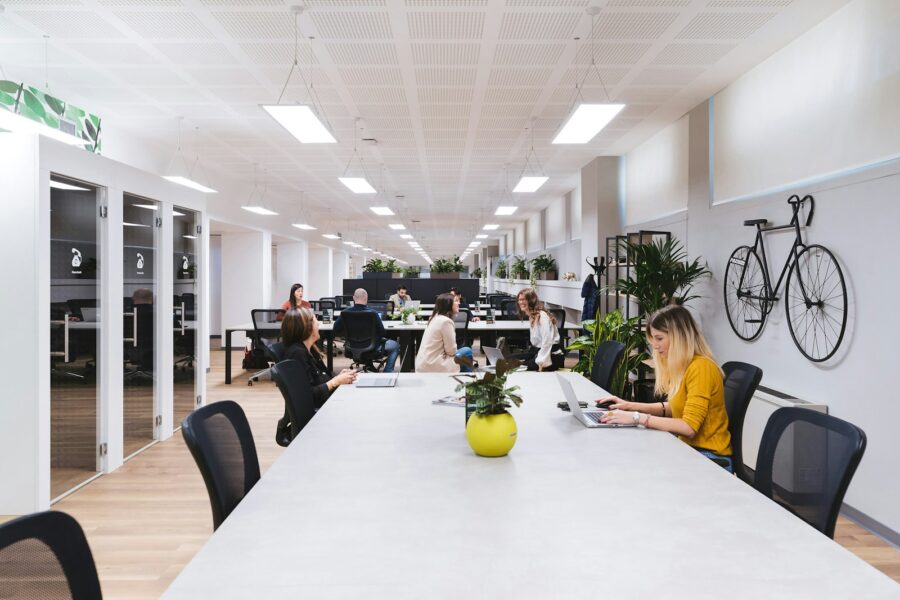

UK office workers value in-person collaboration when it adds clear benefits, but do not want employers to enforce additional office days beyond current hybrid arrangements.
New research from LinkedIn found that 79 percent of UK office workers believe it is fair for their employer to require in-person meeting attendance if it provides value. Employees recognise the benefits of in-person interactions, with 45 percent citing stronger relationship-building, 43 percent noting greater engagement in meetings, and 36 percent highlighting faster decision-making.
While some meetings, such as internal catch-ups (54%) and weekly status calls (58%), are preferred remotely, employees favour in-person attendance for planning meetings (57%), creative brainstorms (62%), and review meetings (62%). Despite this, half of workers do not want more mandated office days.
The Business Impact of Face-to-Face Meetings
In-person meetings influence business decisions, with 73 percent of professionals feeling more confident signing off on deals in person. Employees cited benefits such as handling complex or sensitive issues more effectively (49%), establishing trust (44%), and reading non-verbal cues (43%).
 |
Get our essential weekday HR news and updates.
|

Face-to-face interactions also extend to external relationships. Fifty-nine percent of professionals say they would spend more with a supplier they have met in person, reinforcing the business case for meaningful in-person engagement.
As hybrid work evolves, UK business leaders are adapting policies to balance flexibility with productivity. LinkedIn’s Work Change Report found that 39 percent of UK C-suite leaders are redesigning hybrid work models in 2025, aiming to foster engagement while maintaining autonomy.
Making Office Days Worth It
However, 34 percent of C-suite leaders are concerned that increasing in-office requirements could drive talent toward more flexible employers. In response, 41 percent of leaders plan to offer more flexible in-office hours, recognising that structured in-person time can enhance collaboration, creativity, and decision-making.
Janine Chamberlin, Head of LinkedIn UK, said: “With businesses navigating a tough economic climate, getting the balance right has never been more important.”
She added that the future of work isn’t about forcing people back into the office – but about making sure that when they come in, it is worth the time and effort.
“The companies that get this right – those that create spaces for meaningful collaboration, idea-sharing, and relationship-building – will be the ones that keep their best talent engaged,” she said. “That starts with listening to employees and making in-person moments truly valuable.”


Alessandra Pacelli is a journalist and author contributing to HRreview, where she covers topics including labour market trends, employment costs, and workplace issues.
- Alessandra Pacelli

- Alessandra Pacelli

- Alessandra Pacelli

- Alessandra Pacelli



