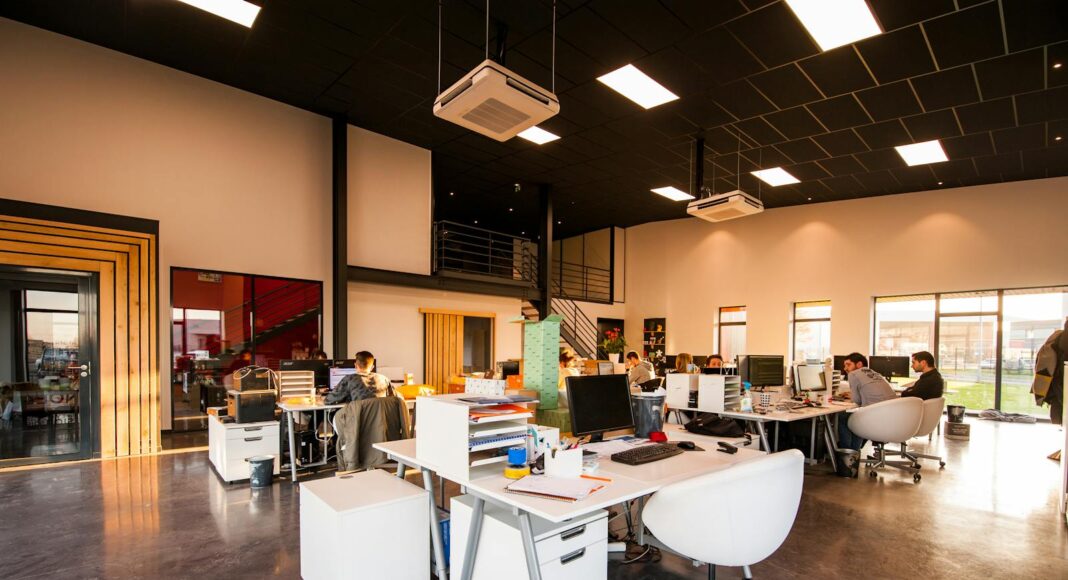

Office distractions and poor working conditions are costing UK businesses more than 330 million working hours a year, with millions of employees losing time each week because of noise, air quality and outdated technology.
As more organisations increase office attendance requirements, new research suggests that environmental factors inside the workplace are having a direct impact on productivity, stress and retention. A large majority of workers reported losing time to office distractions, adding up to the equivalent of around 170,000 years of full time work annually.
The data, released by technology company Logitech and workplace solutions provider Insight, indicated that more than seven in ten UK employees were losing time because of what the report described as a poor productivity climate.
Productivity losses mount as office attendance rises
Surveying 2,000 hybrid and full time office workers, the research found that a quarter lost one hour of work each week due to issues such as excessive noise, bad lighting, poor air quality and outdated technology. Based on workforce estimates, that equated to more than 330 million hours a year.
 |
Get our essential weekday HR news and updates.
|

Noise emerged as one of the most persistent challenges. As two to three days in the office becomes more common, employees reported struggling to readjust to shared environments. A large majority admitted that a loud office affected their stress levels. Loud talking was cited as the most common distraction, followed by loud typing.
Speaking about the impact of unmanaged noise, Elaine Laird, head of people and culture at Logitech, said everyday office sounds could become disruptive. “While colleague chatter, the hum of a coffee machine and keyboard tapping are all the hallmarks of a buzzy office environment, when unmanaged, noise can seriously disturb productivity,” she said.
“Boosting productivity is an age-old challenge, yet the importance of crafting the ideal environment for productivity is often overlooked. Success starts with tailoring to the unique needs of individuals, teams, and offices.
“As a global company, we understand this imperative, and we work strategically to provide the right tools and spaces for focused solo work, dynamic hybrid collaboration, and every mode in between.”
Temperature and ventilation were also identified as concerns. More than three quarters of respondents believed that their productivity had been affected by a stuffy meeting room. Nearly two thirds admitted they had nearly fallen asleep in an unventilated space, and one in ten said they actually had.
Strained environments affecting morale and behaviour
Environmental pressures were not only affecting output but also workplace relationships. More than two thirds of workers said they had experienced an office disagreement due to a loud colleague, while around half reported moving seats or even going home because of excessive chatter.
Air quality was also linked to tension between colleagues, with a significant proportion of employees saying it had caused clashes at work.
Many employees were taking matters into their own hands. More than three quarters said they had brought personal items into the office to improve their immediate surroundings. Almost a third brought earplugs or noise cancelling headphones, while a quarter carried their own room spray.
David Houseman, head of Workplace Experience at Logitech, argued that organisations need to adapt office design to modern expectations.
“The modern office must reflect the evolving needs of the people it hosts and the work that goes on inside it. Only then will businesses reap the benefits. Strategic thought and investment in the right tools, layout, furnishings and amenities is vital to boosting the ideal productivity climate and in turn engagement and collaboration,” he said.
Environment increasingly shaping retention decisions
The office environment is also influencing career decisions. More than a quarter of workers said they would decline a job offer or leave their current role because of poor air quality. Unsatisfactory office temperature and poor lighting were also cited as reasons that could push employees away.
Despite these concerns, more than a quarter of UK businesses had not introduced any form of biohacking techniques in the workplace, defined in the research as data driven and science backed methods to optimise physical conditions such as sound, lighting and air quality.
Workers said they would like to see practical improvements, including ventilation devices that pump fresh air into offices, increased natural light and soundproof booths.
The research was conducted by research firm Vitreous World on behalf of Logitech and Insight among a nationally representative sample of 2,000 UK office workers aged 18 and over.


William Furney is a Managing Editor at Black and White Trading Ltd based in Kingston upon Hull, UK. He is a prolific author and contributor at Workplace Wellbeing Professional, with over 127 published posts covering HR, employee engagement, and workplace wellbeing topics. His writing focuses on contemporary employment issues including pension schemes, employee health, financial struggles affecting workers, and broader workplace trends.
- William Furney

- William Furney

- William Furney

- William Furney