<

!Google ads have two elements of code. This is the 'header' code. There will be another short tag of code that is placed whereever you want the ads to appear. These tags are generated in the Google DFP ad manager. Go to Ad Units = Tags. If you update the code, you need to replace both elements.> <! Prime Home Page Banner (usually shows to right of logo) It's managed in the Extra Theme Options section*> <! 728x90_1_home_hrreview - This can be turned off if needed - it shows at the top of the content, but under the header menu. It's managed in the Extra Theme Options section * > <! 728x90_2_home_hrreview - shows in the main homepage content section. Might be 1st or 2nd ad depending if the one above is turned off. Managed from the home page layout* > <! 728x90_3_home_hrreview - shows in the main homepage content section. Might be 2nd or 3rd ad depending if the one above is turned off. Managed from the home page layout* > <! Footer - 970x250_large_footerboard_hrreview. It's managed in the Extra Theme Options section* > <! MPU1 - It's managed in the Widgets-sidebar section* > <! MPU2 - It's managed in the Widgets-sidebar section* > <! MPU - It's managed in the Widgets-sidebar section3* > <! MPU4 - It's managed in the Widgets-sidebar section* > <! Sidebar_large_1 - It's managed in the Widgets-sidebar section* > <! Sidebar_large_2 - It's managed in the Widgets-sidebar section* > <! Sidebar_large_3 - It's managed in the Widgets-sidebar section* > <! Sidebar_large_4 - It's managed in the Widgets-sidebar section* > <! Sidebar_large_5 are not currently being used - It's managed in the Widgets-sidebar section* > <! Bombora simple version of script - not inlcuding Google Analytics code* >

COVID-19 will stop the trend of hot desking

-

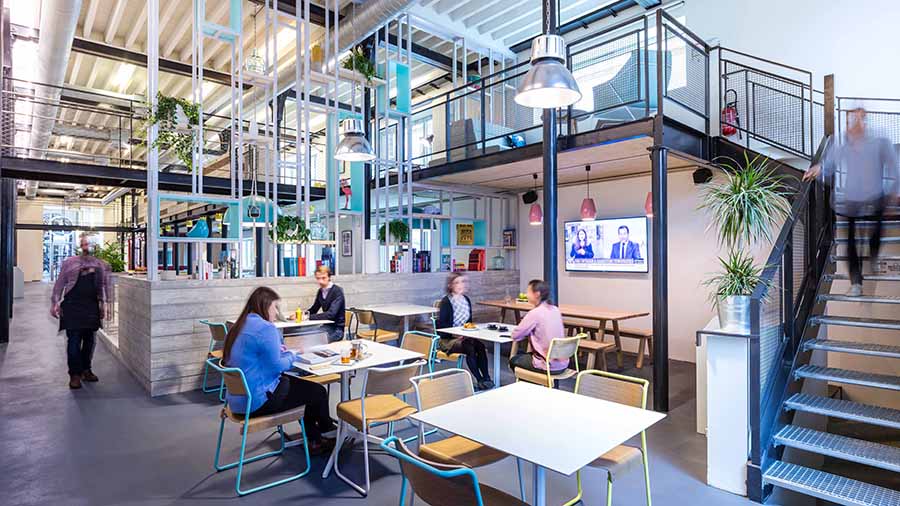
One aspect that is believed to change following the outbreak of COVID-19, is offices no longer allowing hot desking.

This comes from the British Council for Offices (BCO) paper titled ‘Thoughts on office design and operation after COVID-19’ states that “desk sharing is likely to become very unpopular” unless companies adopt the policy of frequently cleaning desks.

The paper believes that offices will feature adaptations following the pandemic, they are:

  • The introduction of screens to protect receptionists from potential virus carrying visitors
  • The replacement of gendered communal toilets with pod-based ‘superloos’ that feature touchless doors, taps and soap dispensers
  • An increase in bike storage, with workers likely to ditch public transport’s commuter crowds in favour of cycling
  • Limits on the number of people that can occupy a space, use a meeting room or share a lift at any one time
  • An end to communal cutlery, coffee pots and water bottles
  • The adoption of ventilation and humidification systems which create environments that make transmission tough for viruses


Neil Pennell, chair of the BCO Technical Affairs Committee said:

COVID-19 has had a significant impact on how we work. While we do not know when we will all be back in the workplace, it’s important to start planning ahead.  Adaptations can ensure that the risk of virus transmission is reduced and can accommodate our new reality, enabling us all to gain the real benefits that come from working in an office while ensuring we are safe.

Richard Kauntze, chief executive of the BCO said:

Working from home has provided an effective temporary measure for business, but it is not an effective long-term solution for how we work. We are social beings and we work best together, in an office. When we’re together, we share ideas, draw inspiration from each other and form valuable, long-term relationships. COVID-19 will alter the future of work, however the office will remain at the heart of this future.

Darius is the editor of HRreview. He has previously worked as a finance reporter for the Daily Express. He studied his journalism masters at Press Association Training and graduated from the University of York with a degree in History.

Latest news

Turning Workforce Data into Real Insight: A practical session for HR leaders

HR teams are being asked to deliver greater impact with fewer resources. This practical session is designed to help you move beyond instinct and start using workforce data to make faster, smarter decisions that drive real business results.

Bethany Cann of Specsavers

A working day balancing early talent strategy, university partnerships and family life at the international opticians retailer.

Workplace silence leaving staff afraid to raise mistakes

Almost half of UK workers feel unable to raise concerns or mistakes at work, with new research warning that workplace silence is damaging productivity.

Managers’ biggest fears? ‘Confrontation and redundancies’

Survey of UK managers reveals fear of confrontation and redundancies, with many lacking training to handle difficult workplace situations.
- Advertisement -

Mike Bond: Redefining talent – and prioritising the creative mindset

Not too long ago, the most prized CVs boasted MBAs, consulting pedigrees and an impressive record of traditional experience. Now, things are different.

UK loses ground in global remote work rankings

Connectivity gaps across the UK risk weakening the country’s appeal to remote workers and internationally mobile talent.

Must read

Emma Keens: Inclusive Language within Job Adverts

"Companies ranking higher for gender, racial and ethnic diversity make more money than their less diverse peers."

Lars Hyland: Overcoming the lack of HR alignment between learning, employee engagement and performance management

"To survive and thrive in an undeniably challenging world, we must better align our learning and HR functions to achieve sustained high performance in the workplace."
- Advertisement -

You might also likeRELATED
Recommended to you

Exit mobile version



