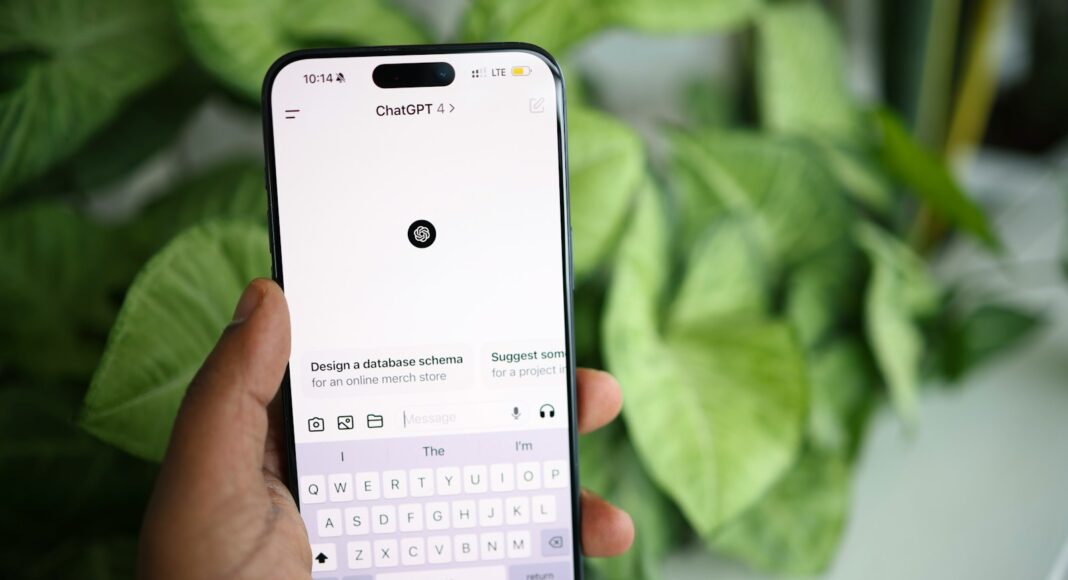

Generative artificial intelligence has become a preferred working companion for many employees, with reduced colleague interaction and concerns about slipping soft skills. Now, new global research shows that while artificial intelligence boosts clarity and confidence in communication, it may also damage workplace relationships and everyday etiquette.
A study by The Adaptavist Group, a software and digital transformation company, found that 32 percent of workers speak to colleagues less since using generative AI. More than one in four employees said they would rather engage in small talk with a chatbot than a human.
Respondents said tools such as ChatGPT support faster drafting, clearer writing and more confident communication. Concerns are rising about over-reliance and the erosion of basic workplace skills.
Fewer conversations and growing dependence
Artificial intelligence has become embedded in daily routines. Nearly half of business leaders responsible for implementing AI consult it on legal or policy matters, and 41 percent draw on it for HR issues, the study found. Among workers, 26 percent preferred casual conversation with AI, and a third said interaction with others had reduced.
 |
Get our essential weekday HR news and updates.
|

Men reported a greater decline in conversation than women, with 36 percent saying they speak less to colleagues compared with 28 percent of women. Younger employees aged 25 to 44 were far more likely to choose AI for small talk than those over 55.
Dependence on AI tools is also emerging. More than one third of workers believed they were “addicted” to using generative AI at work.
Politeness tested as writing improves
The report found that 26 percent of employees admitted to being less polite since they started using AI. Among those responsible for introducing AI in their organisations, it rose to 39 percent.
Yet many felt communication quality had improved. The study found that:
- 49 percent said they speak more succinctly
- 55 percent believed colleagues communicate more clearly
- 65 percent said writing had improved
A growing divide between leaders and employees also appeared. Previous research by The Adaptavist Group found leaders have greater access to AI tools and training. In the latest findings, 45 percent believed AI is creating internal gaps. More leaders than employees preferred small talk with AI which may reduce informal knowledge sharing and hinder workplace trust.
Skills: growing or fading
Views on how AI affects human capability were mixed. While 29 percent of workers worried their skills were declining due to reliance on AI support, 68 percent believed they were developing new ones. The report found that:
- 62 percent said writing improved
- 47 percent credited AI with enhancing critical thinking
- 41 percent reported better design skills
- 38 percent said coding abilities improved
Soft skills including empathy, confidence and conversation were considered the most at risk if workplace interaction continues to fall.
Culture influences success
The study also looked at how workplace culture shapes outcomes. Organisations that encourage responsible use see better results across capability, satisfaction and collaboration. The findings included:
- 89 percent of workers in supportive environments reported growing skills compared with 59 percent where use was only tolerated
- Job satisfaction rose significantly for 54 percent where AI was encouraged compared with 8 percent where it was discouraged
- Better collaboration was reported by 68 percent in encouraging cultures compared with 23 percent elsewhere
- 73 percent of organisations that promote use were able to prove return on investment compared with 36 percent that discouraged it
Neal Riley, AI innovation lead at The Adaptavist Group, said communication and connection were changing in the workplace. “As GenAI continues to embed itself in society, we’re seeing a shift in how work gets done and how people connect and communicate,” he said. “Evidently, AI can make us more efficient and articulate, but it also risks eroding some soft skills and driving a wedge between human interaction.
“Finding the right balance with AI so that you see all the benefits, and reduce the drawbacks, is all about cultivating the right environment. Evidently when organisations have the right culture in place, they see stronger performance, clearer communication, and measurable business returns.”
Riley added that the “key to achieving a culture where AI use remains healthy and work-conducive is one which encourages responsible AI experimentation, and has a framework for measuring success”.
Sharing interests and ideas
Cyberpsychology specialist Carolyn Freeman said employees required regular opportunities to build trust and form the basis of effective teamwork. “Engaging in, and relying on, higher levels of synthetic AI relationships that meet specific psychological or emotional needs can displace efforts to satisfy those needs through connections with real people,” she said. “Employees need regular opportunities, whether in person or virtually, to discover shared interests, exchange ideas, build trust and form the foundations of effective collaborative teams.
She said AI tools like ChatGPT “offer an always-on presence that feels available, non-judgemental and emotionally safe, meeting users in their moment-to-moment need states, enabling low-stakes ‘small talk’ without social risk.
“Interactions with AI can feel more private, contained and forgiving, giving employees space to vent frustrations, explore ideas or rehearse difficult conversations without fear of damaging performance reviews or workplace reputations.”
She said that because people are inherently social, we “seek out belonging and acceptance from others. Chatbots can become an attractive, non-judgemental stand-in for those who feel socially anxious, lack close confidants, or find it difficult to trust people. Because the interaction is consistently positive, affirming and supportive, use can edge towards the ‘addictive’, paradoxically deepening loneliness and weakening the drive to connect with other humans”.
What employers can watch for
The research — involving 4,000 knowledge workers and 900 business leaders across the UK, United States, Canada and Germany — suggests leaders should ensure AI remains a supplement to social interaction rather than a replacement.
Equal access to training, active collaboration, and preserving everyday conversation were identified as important steps to protect culture while benefiting from increased productivity.
Three years after generative AI first became widely available, its influence continues to extend beyond tasks and tools. The challenge for organisations is to protect the human side of work as technology becomes a bigger presence in the working day.


William Furney is a Managing Editor at Black and White Trading Ltd based in Kingston upon Hull, UK. He is a prolific author and contributor at Workplace Wellbeing Professional, with over 127 published posts covering HR, employee engagement, and workplace wellbeing topics. His writing focuses on contemporary employment issues including pension schemes, employee health, financial struggles affecting workers, and broader workplace trends.
- William Furney

- William Furney

- William Furney

- William Furney