


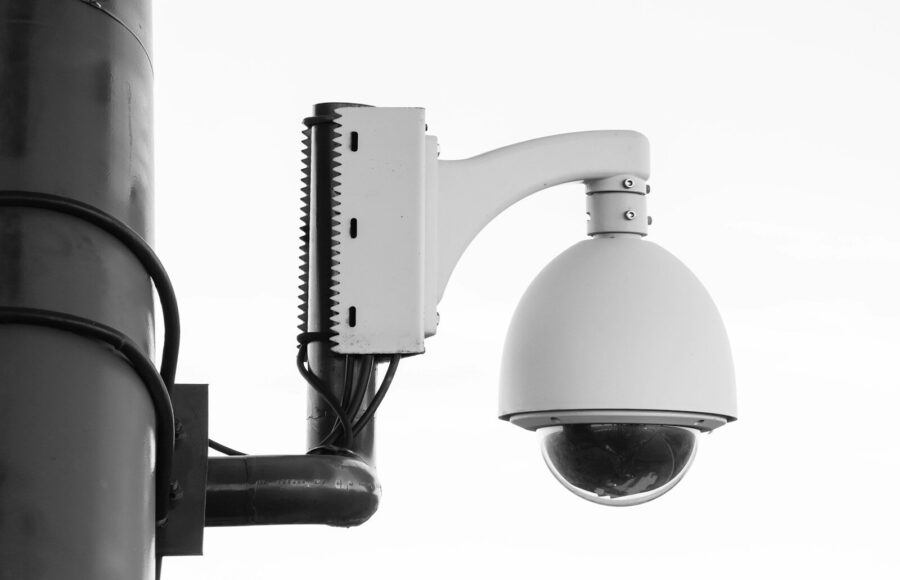

Employers are expanding the use of biometric entry systems, camera networks and digital access tools in offices, raising fresh questions for HR about privacy, consent and staff relations.
Driven by security concerns, hybrid working patterns and regulatory pressures, it’s prompting HR leaders to review how new technologies are introduced and governed. Legal experts and workplace observers warn that poorly handled surveillance rollouts risk undermining employee trust and breaching data protection legislation.
HSBC is among the latest high-profile employers to adopt enhanced monitoring. According to internal materials presented in May and reported by Reuters news agency, the bank plans to install more than 1,700 cameras and significantly increase biometric access at its new London headquarters. The new system, part of a global security strategy, will also require many staff to use either full-hand recognition or mobile phone-based entry at offices in the UK and United States.
The bank’s existing digital access policy, introduced in 2022, has met with resistance. By the end of 2024, most UK employees had not enrolled, according to internal documents obtained by the Reuters. Despite this, HSBC has informed senior staff they will be expected to attend the office at least four days per week from October.
 |
Get our essential weekday HR news and updates.
|

“The safety and security of our people is at the forefront of everything HSBC does,” an HSBC spokesperson said. “We regularly risk-assess every building and dependant on the identified risk and vulnerabilities, we continue to invest in the latest cutting-edge technology to safeguard our colleagues, customers and visitors in line with industry standards.”
Surveillance becoming part of HR infrastructure
Biometric access systems, high-definition cameras and real-time location monitoring are becoming standard infrastructure across many workplaces. In sectors such as finance, logistics, healthcare and manufacturing, it’s often justified on safety or compliance grounds.
But the adoption of these devices and tools brings HR directly into contact with legal, cultural and operational issues. Workplace surveillance must be necessary and proportionate under UK data protection legislation. Employers are expected to carry out data protection impact assessments, inform employees clearly and explain how personal data will be collected, stored and used.
The Information Commissioner’s Office has warned that biometric data, in particular, should not be used unless other less-intrusive options have been properly considered.
Staff trust and organisational culture
Beyond legal compliance, experts say HR teams must consider the impact of surveillance on trust and culture. Systems introduced without consultation or clear communication risk being perceived as disciplinary or punitive, even when intended for safety or access control.
They recommend that HR teams work closely with IT and facilities departments to ensure monitoring technologies are introduced transparently and with staff engagement. In unionised workplaces, formal consultation is usually required. In non-union environments, internal communication plans and employee forums can help address concerns before they escalate.
Monitoring and hybrid working
As more organisations refine their hybrid working policies, surveillance tools are also being used to measure attendance and office occupancy. Access logs and entry data are increasingly analysed to check whether employees are complying with return-to-office requirements.
While such data can inform space planning and resource allocation, HR professionals are advised to avoid using it as a proxy for performance management. Observers warn that overreliance on monitoring can erode trust and shift attention away from outcomes.
What HR needs to do
As surveillance technologies become part of everyday workplace management, HR teams are expected to provide clear frameworks that balance security with employee rights. Practical steps include:
- Ensuring all monitoring is justified and backed by formal risk assessment
- Communicating clearly with staff about what is being monitored and why
- Providing privacy notices and document data retention policies
- Consulting with staff or representatives before major changes
- Training managers to answer questions and support employee concerns


William Furney is a Managing Editor at Black and White Trading Ltd based in Kingston upon Hull, UK. He is a prolific author and contributor at Workplace Wellbeing Professional, with over 127 published posts covering HR, employee engagement, and workplace wellbeing topics. His writing focuses on contemporary employment issues including pension schemes, employee health, financial struggles affecting workers, and broader workplace trends.
- William Furney

- William Furney

- William Furney

- William Furney



