


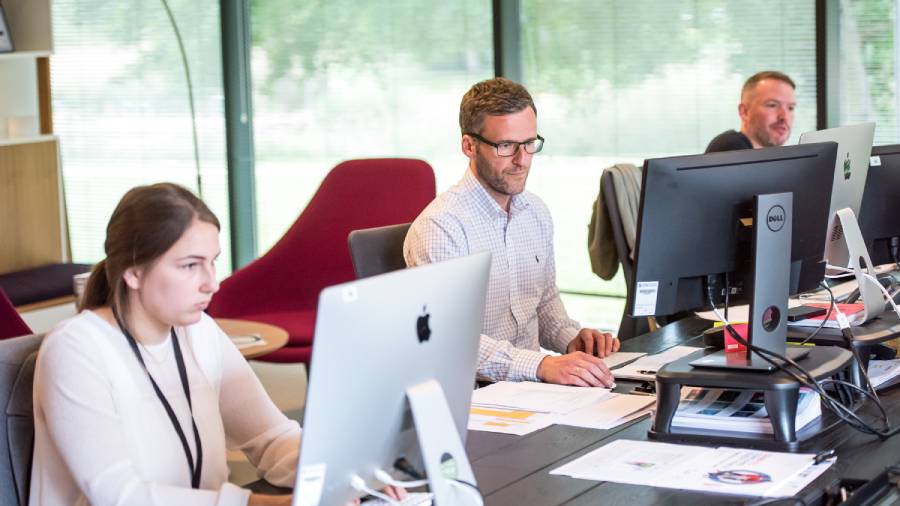

This analysis comes as the majority of COVID-19 restrictions have been removed in England from today (19th July).
From today (Monday 19th July), most legal COVID-19 restrictions have been lifted in England.
In line with the 4th and final stage of the Government’s roadmap, this includes the removal of social distancing and lifting the order to work from home where possible.
However, lawyers from Royds Withy King have warned this has put employers in a difficult position.
 |
Get our essential weekday HR news and updates.
|

Employers will now be expected to make their own decisions concerning how and when to bring staff back into the office and how to manage employees who have different views about safety, mask-wearing and remote working.
Kate Benefer, a Partner in the Employment Law team at Royds Withy King, discussed the potential problems which could arise:
The Government has passed onto employers the responsibility for deciding what measures are necessary to ensure a safe workplace. Whilst the easing of restrictions will be welcomed by businesses, it will inevitably create further confusion and potential points of conflict in the workplace.
Employees and employers may, for example, have different perspectives of risk and what is safe, and that will be difficult to manage. Businesses have an obligation to carry out a risk assessment, but this is difficult when there are still many unknowns with COVID.
Ms. Benefer also explained that the risk of discrimination claims could also spike if employers do not handle the return to the office mindfully:
Employers need to be particularly careful with employees who indicate they are not comfortable with a return to the workplace.
There could be health concerns that mean an employee is particularly vulnerable in relation to COVID, or mental health issues, such as anxiety, which may have been caused or exacerbated by the pandemic. Employers who refuse the right to continue to work from home may find themselves facing discrimination claims.
As such, Ms. Benefer encouraged employers to carry out the following tasks as they map out their HR strategy for the coming months:
- Carrying out a workplace assessment looking at what measures can be adopted to minimise the risk of COVID infections.
- Asking why you need to bring employees back into the workplace so that you can explain and ‘sell’ the idea to staff as well as being prepared to respond to flexible working requests.
- Communicating plans with staff as early as possible, addressing any concerns and try and bring them on board.
- Adopting a common-sense approach to face coverings and flexible working.
- Considering individual circumstances and make adjustments to accommodate employees who may have health concerns.
This, Kate stated, could avoid creating a two-tier workforce which could “lead to resentment and allegations over favourable treatment, particularly if promotions or allocations of work are perceived to be unfair”.


Monica Sharma is an English Literature graduate from the University of Warwick. As Editor for HRreview, her particular interests in HR include issues concerning diversity, employment law and wellbeing in the workplace. Alongside this, she has written for student publications in both England and Canada. Monica has also presented her academic work concerning the relationship between legal systems, sexual harassment and racism at a university conference at the University of Western Ontario, Canada.
- Monica Sharma

- Monica Sharma

- Monica Sharma

- Monica Sharma



