
<

!Google ads have two elements of code. This is the 'header' code. There will be another short tag of code that is placed whereever you want the ads to appear. These tags are generated in the Google DFP ad manager. Go to Ad Units = Tags. If you update the code, you need to replace both elements.> <! Prime Home Page Banner (usually shows to right of logo) It's managed in the Extra Theme Options section*> <! 728x90_1_home_hrreview - This can be turned off if needed - it shows at the top of the content, but under the header menu. It's managed in the Extra Theme Options section * > <! 728x90_2_home_hrreview - shows in the main homepage content section. Might be 1st or 2nd ad depending if the one above is turned off. Managed from the home page layout* > <! 728x90_3_home_hrreview - shows in the main homepage content section. Might be 2nd or 3rd ad depending if the one above is turned off. Managed from the home page layout* > <! Footer - 970x250_large_footerboard_hrreview. It's managed in the Extra Theme Options section* > <! MPU1 - It's managed in the Widgets-sidebar section* > <! MPU2 - It's managed in the Widgets-sidebar section* > <! MPU - It's managed in the Widgets-sidebar section3* > <! MPU4 - It's managed in the Widgets-sidebar section* > <! Sidebar_large_1 - It's managed in the Widgets-sidebar section* > <! Sidebar_large_2 - It's managed in the Widgets-sidebar section* > <! Sidebar_large_3 - It's managed in the Widgets-sidebar section* > <! Sidebar_large_4 - It's managed in the Widgets-sidebar section* > <! Sidebar_large_5 are not currently being used - It's managed in the Widgets-sidebar section* > <! Bombora simple version of script - not inlcuding Google Analytics code* >

Small firms call for a reduction in NIC to help boost recruitment

-

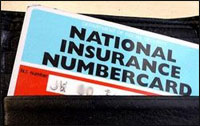
Small firms would be more inclined to take on new staff if the Government reduced National Insurance Contributions (NICs), suggests the Federation of Small Businesses (FSB).

The FSB’s ‘Voice of Small Business’ survey, with more than 1,700 respondents, found that insufficient work and uncertainty over contracts (37%), the state of the economy (33%), cash-flow (31%) and access to finance as well as the cost of credit (16%) are preventing them from employing.

Almost a third (31%) of respondents said that reducing NICs payments for the first six months of employment would encourage them to take on more staff, and 11% said extending the NICs holiday scheme would be an incentive.

The Government introduced a NICs holiday for start-ups that take on up to ten employees in 2010, but the FSB believes this does not go far enough. The FSB is urging the Government to extend the NICs holiday to existing firms with up to four members of staff that take on up to three new employees.

The FSB is also calling on the Government to help small businesses employ more apprentices and interns: 29% of respondents said increased support would encourage them to take these on.

John Walker, National Chairman, Federation of Small Businesses, said:

“We have been saying for some time that small businesses would be encouraged to take on staff if National Insurance Contributions were reduced. Small businesses want to employ but have told us that they need incentives to do so. The Government must extend the National Insurance Contributions holiday to existing businesses if small firms are to take on new staff and so help tackle high unemployment.

“Throughout the recession, we all heard the struggles small firms faced as many had to shut up shop because they were being paid late, and couldn’t access finance from the banks, leaving their cash-flow in a volatile position. While our members have told us the situation has improved slightly, these same issues are now preventing small firms from taking on staff – crucial if the country’s small firms are going to help to secure and promote recovery.

“It is not only imperative that the Government creates an environment for job creation, but that the banks lend to small firms and businesses are paid on time, to give small firms the confidence they need to grow their business and employ.”

Latest news

James Rowell: The human side of expenses – what employee behaviour reveals about modern work

If you want to understand how your people really work, look at their expenses. Not just the total sums, but the patterns.

Skills overhaul needed as 40% of job capabilities set to change by 2030

Forecasts suggest 40 percent of workplace skills could change by 2030, prompting calls for UK employers to prioritise adaptability.

Noisy and stuffy offices linked to lost productivity and retention concerns

UK employers are losing more than 330 million working hours each year due to office noise, poor air quality and inadequate workplace conditions.

Turning Workforce Data into Real Insight: A practical session for HR leaders

HR teams are being asked to deliver greater impact with fewer resources. This practical session is designed to help you move beyond instinct and start using workforce data to make faster, smarter decisions that drive real business results.
- Advertisement -

Bethany Cann of Specsavers

A working day balancing early talent strategy, university partnerships and family life at the international opticians retailer.

Workplace silence leaving staff afraid to raise mistakes

Almost half of UK workers feel unable to raise concerns or mistakes at work, with new research warning that workplace silence is damaging productivity.

Must read

Charles Marks: Getting the balance right

The defining event in the world of the workplace...

Karl Green: How do theatre skills light up your work?

"People always talk about being ‘authentic’ at work. But is it just putting on a show? Not quite," says Karl Green.
- Advertisement -

You might also likeRELATED
Recommended to you

Exit mobile version