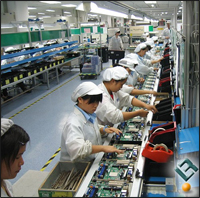
Manufacturers likely to turn to temporary labour

-

The UK manufacturing sector is likely to turn to temporary recruitment due to poor visibility on how the sector is likely to fare, according to Chris Williamson, director and chief economist at Markit.

The latest data from Chartered Institute of Purchasing and Supply (CIPS)/Markit shows UK industrial production was down 1.5% in the last quarter (March to June) compared to the previous three month period, with manufacturing down 0.2%.

Industrial production rose 0.9% in May, offsetting a 1.7% decline seen in April. Manufacturing saw a strong 1.8% rise in June, though this also needs to be looked at in the context of the 1.5% fall seen in April.

Williamson told Recruiter: “The rate of growth in manufacturing has cooled very significantly since earlier in the year. We were seeing good payroll growth then. Over the next few months what we are likely to see is firms becoming increasingly reluctant to take on extra staff. Those that they do take on, they will be tempted to take on as temporary or contract workers.

Get our essential weekday HR news and updates.

This field is for validation purposes and should be left unchanged.
Keep up with the latest in HR...
This field is hidden when viewing the form
Optin_date
This field is hidden when viewing the form


“Firms are operating under flexible conditions because there is uncertainty about the next 12 months. I think that despite AWR [Agency Workers Regulations] legislation, companies will continue to have workers on short-term contracts and see how the next few months go.

“There is so little clarity at the moment in terms of both domestic demand that they will be tempted to hold off hiring permanent employees, and if it means using staff for less than three months, then so be it.”

Latest news

Personalising the Benefits Experience: Why Employees Need More Than Just Information

This article explores how organisations can move beyond passive, one-size-fits-all communication to deliver relevant, timely, and simplified benefits experiences that reflect employee needs and life stages.

Grant Wyatt: When the love dies – when staying is riskier than quitting

When people fall out of love with their employer, or feel their employer has fallen out of love with them, what follows is rarely a clean exit.

£30bn pension savings window opens for employers ahead of 2029 reforms

UK employers could unlock billions in National Insurance savings by expanding pension salary sacrifice schemes before new limits take effect in 2029.

Expat jobs ‘fail early as costs hit $79,000 per worker’

International assignments are ending early due to family strain, isolation and poor preparation, as rising costs increase pressure on employers.
- Advertisement -

The Great Employer Divide: What the evidence shows about employers that back parents and carers — and those that don’t

Understand the growing divide between organisations that effectively support working parents and carers — and those that don’t. This session shows how to turn employee experience data into a clear business case, linking care-related pressures to performance, retention and workforce stability.

Scott Mills exit puts spotlight on risk of ‘news vacuum’ in high-profile dismissals

Sudden departure of a long-serving BBC presenter raises questions about how employers manage high-profile dismissals and limit speculation.

Must read

Jane Sunley: L&D and embedding service excellence – getting the basics right!

Learning and development (L & D) and embedding service excellence into your organisation aren’t rocket science. However, it’s surprising how many businesses still aren’t even getting the basics right whilst ignoring the ‘easy wins’ that cost little or nothing at all. This guide will help you to get your people to where you need them to be – competently and enthusiastically delivering first-class customer service.

Esther Smith: Employee engagement – a good place to start

Esther Smith defines employee engagement as the ‘emotional commitment the employee has to its organisation and its goals’. As engagement manager at UK Power Networks, Esther discusses what contributes to an effective engagement strategy.
- Advertisement -

You might also likeRELATED
Recommended to you
